
The Washington visit isn’t really about the leaders
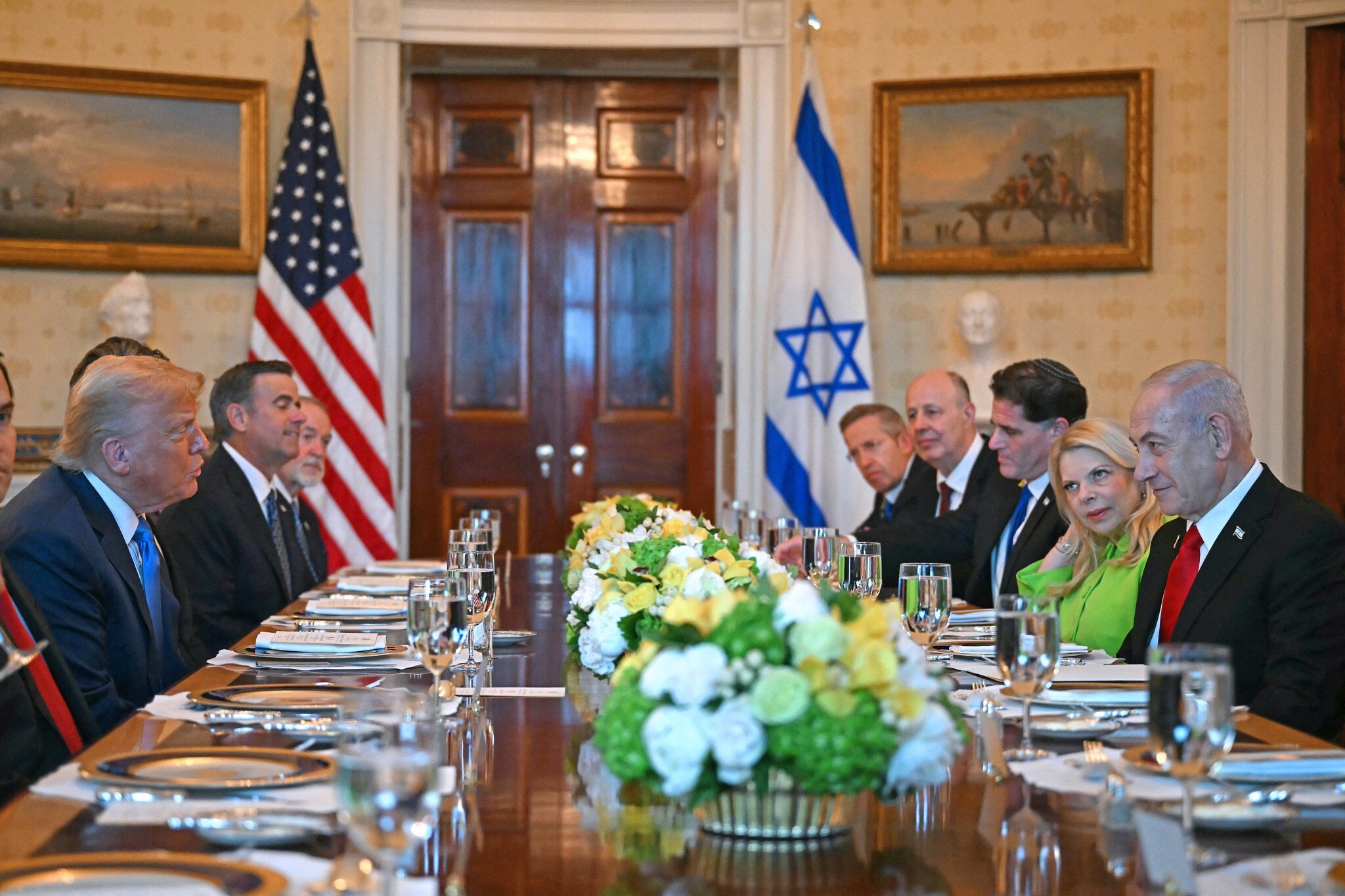
While much of the media this week fixates on photo-ops, handshake politics, and whether Mr. Netanyahu’s visit will boost or complicate the American and Israeli political season, the real conversation in Washington runs deeper. It is not about Gaza or even Iran. The core issue is how the United States can reshape its economy and global posture in an era where resilience, strategic autonomy, and industrial innovation are national security imperatives.
The recently passed Big Beautiful Bill — formally the “American Economic Resilience and Security Act of 2025” — underscores this shift. It authorizes over $380 billion in federal spending over five years, with three clear priorities: rebuilding a high-tech, middle-class-driven economy; upgrading US military capabilities to secure trade routes and strategic zones; and fortifying domestic infrastructure against global shocks. While the public remains focused on personalities — Trump, Netanyahu, and others — the underlying legislative momentum signals a broader economic transformation.
Here, Israel plays a pivotal role — not just as a partner, but as a real-world test case.
Since October 2023, the US has provided over $26 billion in direct and supplemental support to Israel, including $15 billion in emergency aid during the initial phase of the conflict. This funding has underpinned real-time deployment of advanced technologies under combat conditions. Israel’s Iron Dome intercepted over 9,200 rockets with a 92 percent success rate, now enhanced through AI and machine learning via US–Israeli partnerships. Its multi-layered missile defense system — including David’s Sling and Arrow 3 — successfully neutralized long-range and hypersonic missile threats from multiple fronts, a historic first for Western-aligned systems. Over 450 Israeli dual-use and defense tech startups received investment during this period, with dozens now exporting or integrating with US defense contractors.
The convergence of defense, tech, and economic policy has had tangible impact. Israel’s GDP grew 2.7% in Q2 2024, defying wartime expectations. Venture capital funding hit $2.6 billion, up 17% from the previous quarter, and defense-related tech exports rose 18% year-over-year. Tech sector unemployment remains below 4%, and state-led investment has fueled infrastructure upgrades, energy independence, and AI integration in civil and military domains.
For US planners, these are not just statistics; they are lessons. Israel’s ability to fuse national security with economic resilience shows how a modern economy can adapt under extreme conditions without collapsing into austerity. With the US confronting its own vulnerabilities — exposed by COVID-19, supply chain shocks, and energy insecurity — Israel offers a rare, real-world proof of concept.
This shift goes beyond military hardware. The integration of dual-use technologies — systems for both civilian and military purposes — has helped Israel build a more flexible, export-ready innovation economy. US legislators, through the Big Beautiful Bill, aim to replicate this domestically: using defense spending not just to sustain military capacity, but to create jobs, revitalize industrial regions, and support strategic tech sectors like semiconductors, clean energy, and cybersecurity.
This reframing of US–Israel relations — as a partnership in economic transformation rather than unilateral aid — is central to the current moment. Netanyahu’s visit comes as Washington evolves from patron of Israeli defense to co-builder of mutual resilience.
None of this ignores the moral and political complexities in Israel: domestic unrest, judicial crises, and the toll of ongoing conflict. These issues matter and demand attention. But from Washington’s strategic lens, Israel’s recent experience stands out — a demonstration of how a tech-driven democracy can withstand multi-domain threats and, in some respects, emerge stronger.
In short, the real story this week is not political drama, but strategic alignment. The US is pivoting to a new economic doctrine — where innovation, military readiness, and industrial policy converge. And Israel, by design and circumstance, has become the model.
This is the true conversation underway. The headlines may spotlight personalities and conflict, but the policies being shaped are about securing and growing a 21st-century economy where resilience equals power. In that light, Israel’s wartime innovation is no longer just about survival; it is a template for something far larger.