The wells we cannot see
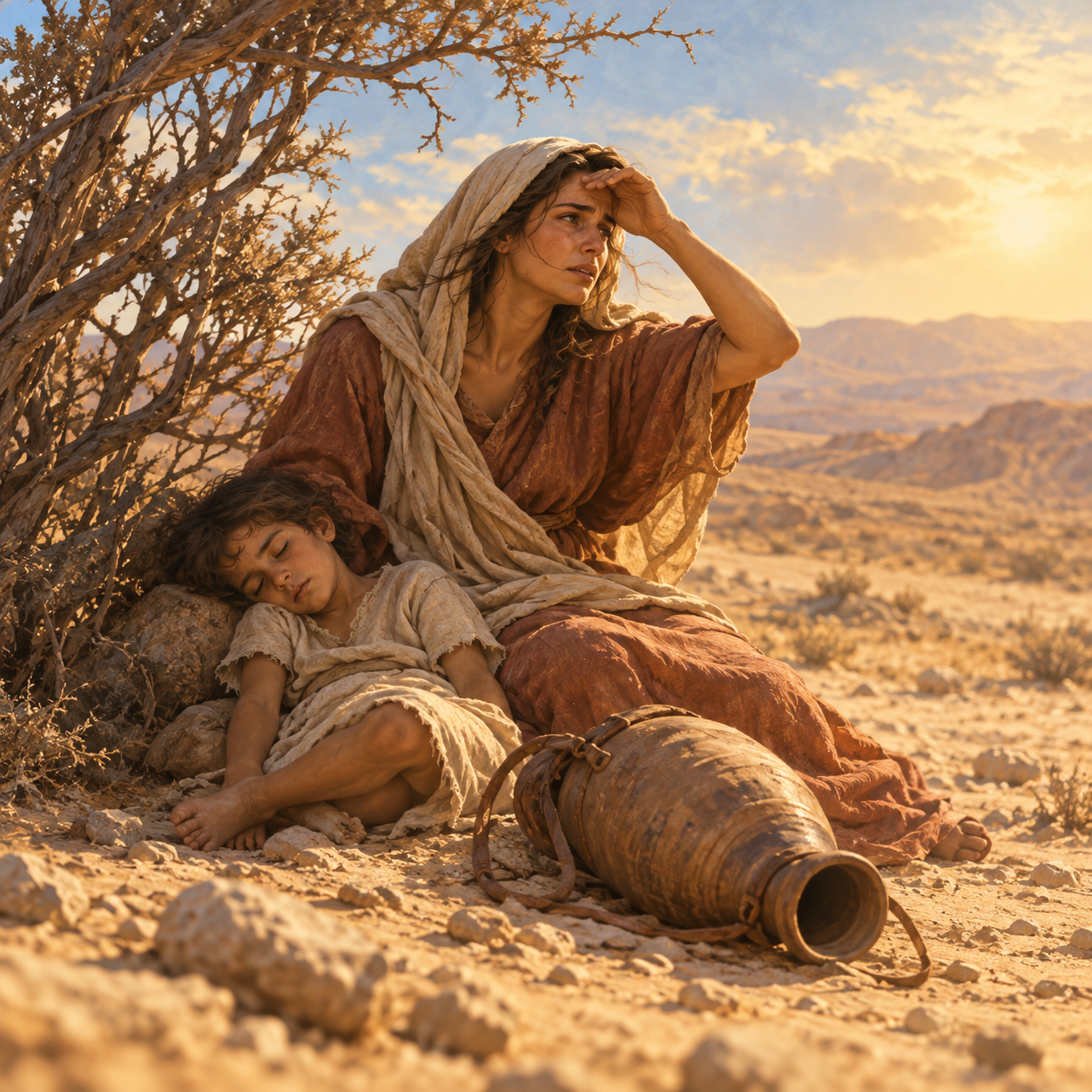
Every Rosh Hashanah, we return to a woman in the desert who has stopped believing there is a way out. Hagar is wandering with her son Ishmael. The water is gone, the desert is merciless, and she has reached the point where hope itself has become unbearable. She places her child beneath a bush and walks away, saying, “Let me not look on as the child dies.” And then comes one of the most beautiful and easily overlooked miracles in the Torah:
God opened her eyes, and she saw a well of water.” (Genesis 21:19)
Notice what the verse does not say. God does not create a well. Water does not suddenly burst from the ground. No supernatural spring appears in the middle of the desert. The well was already there. The miracle was that Hagar could finally see it. Perhaps despair had blinded her. Perhaps exhaustion, fear and grief had narrowed her field of vision until all she could see was the empty water skin, the burning sand and the child she believed she was about to lose. The solution was close enough to save them both, yet in that moment it might as well have been a thousand miles away. I keep returning to that image as another Rosh Hashanah approaches.

We have lived through years in which it has sometimes been difficult to see anything beyond what frightens us. Israelis have learned to wake to news alerts, casualty reports, political battles and the names and faces of people whose absence has become part of our national landscape. Jewish communities around the world have carried their own anxiety, anger and uncertainty. So many of us have become experts at scanning the horizon for danger. There are good reasons for that. Pain should not be denied, and fear cannot simply be wished away. But Hagar’s story suggests that survival sometimes requires another kind of vision as well.
There are wells in the desert. Over the past year, I have seen them everywhere: in communities that quietly held people together when institutions could not; in neighbors who cooked meals for families they barely knew; in teenagers who raised money and volunteered instead of surrendering to helplessness; in people who opened their homes, their wallets and their hearts; in friendships that became stronger under pressure; in strangers who discovered that responsibility for one another is not an abstract Jewish value but something you do with your hands. None of this erases what has been broken. A well does not make the desert disappear. It simply makes life possible within it. That distinction matters, especially on Rosh Hashanah.
We often think of these Days of Awe primarily as a season for noticing what went wrong: Where did I fail? Whom did I hurt? What must I repair? These are essential questions, but perhaps there is another kind of accounting we owe ourselves. What did I fail to notice?Whose kindness did I begin to take for granted? What love became so familiar that I stopped seeing it? Which sources of strength were beside me all along? Where, even during a terrible year, did goodness stubbornly continue to grow?
There is a Hebrew expression, hakarat hatov, usually translated as gratitude. But literally, it means something more interesting: recognizing the good. Before we can be grateful for something, we have to notice that it exists. That may be one of the spiritual disciplines our time demands most urgently. Not optimism that pretends everything is fine. Not gratitude used to silence grief. Not a sentimental insistence on finding a silver lining in suffering. Simply the courage to keep our eyes open wide enough to see the whole landscape.
And perhaps this is why Hagar’s story belongs on Rosh Hashanah. The new year does not arrive by magically replacing the world we have with a better one. We enter it carrying much of the same uncertainty, the same unfinished struggles and the same wounds. What can change is the way we see. And once Hagar sees the well, she does something important: she gets up. She fills the water skin. She gives her child a drink. Seeing is not the end of the miracle. It is the beginning of responsibility.
So perhaps the question for this Rosh Hashanah is not only, What wells are hidden from my eyes? It is also: Once I see them, what will I do with the water?
May this new year open our eyes to the goodness we have overlooked, the people we have taken for granted, the strength we did not know we possessed and the possibilities that despair had hidden from view. May we find wells in the places that still feel like deserts.
And when we find them, may we drink deeply and then fill our water skins so that someone else can drink too.
Shanah tovah