
The West Bank Map That Was Never Supposed to Last
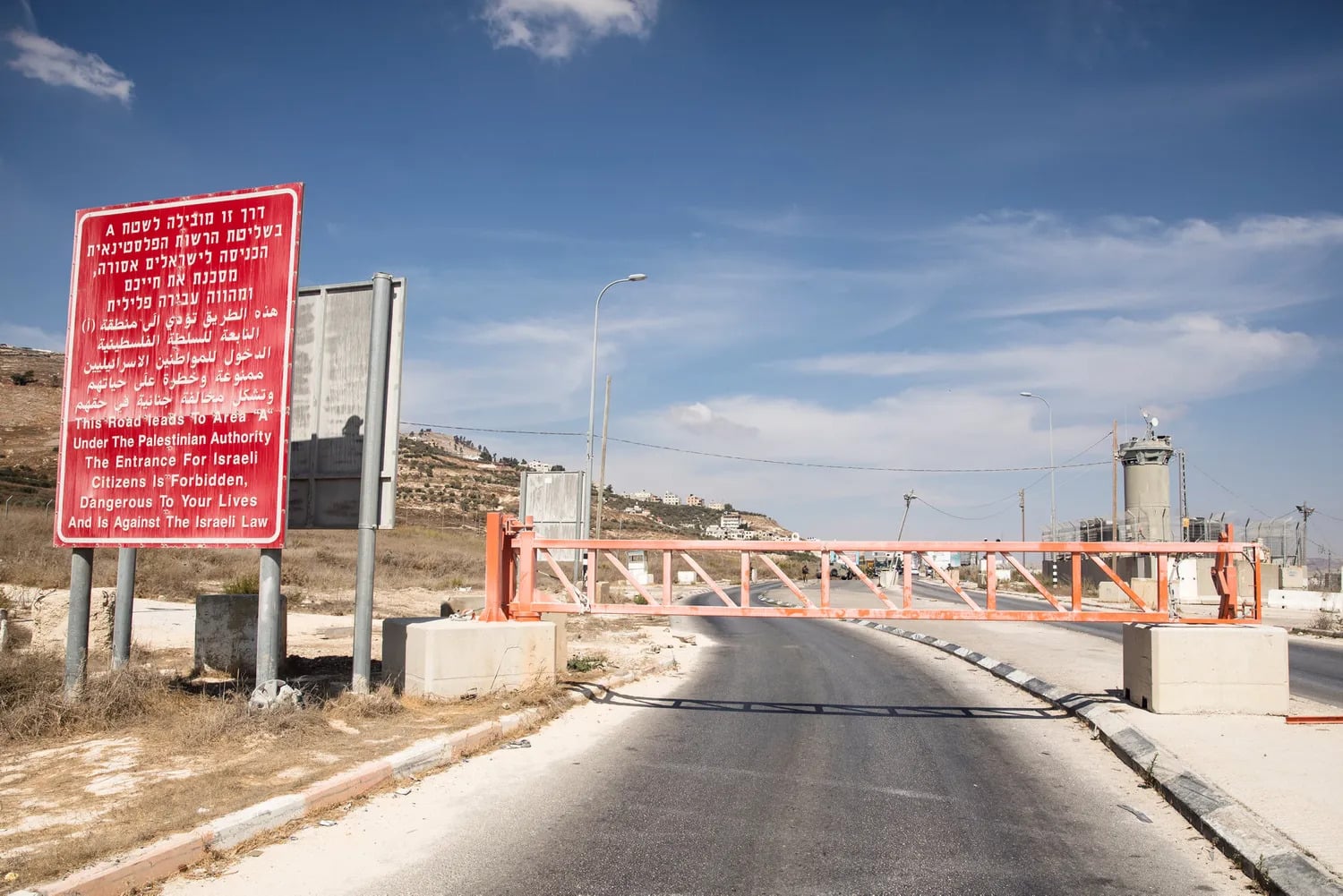
More than 30 years after Oslo, Israelis and Palestinians are still living inside a map that was supposed to disappear.
Open almost any political map of the West Bank and three letters dominate the landscape: A, B and C. They sound bureaucratic. They are anything but.
Those letters help determine who governs, who provides security, who controls planning and construction, and where the Palestinian Authority exercises varying degrees of authority. But the most important fact about this map is easily forgotten: it was never supposed to become permanent.
Areas A, B and C were formalized in the 1995 Israeli-Palestinian Interim Agreement, known as Oslo II. They divided responsibilities while Israelis and Palestinians were supposed to negotiate borders, Jerusalem, settlements, refugees, security and sovereignty.
Those negotiations never produced a final agreement.
The peace process collapsed. The temporary map survived.
Temporary Became Permanent
Area A covers roughly 18 percent of the West Bank and includes many major Palestinian population centers. The Palestinian Authority was given responsibility for civilian affairs and internal security there.
Area B encompasses roughly another 22 percent. The Palestinian Authority exercises civilian authority and responsibility for Palestinian public order, while Israel retains significant security responsibilities.
Area C constitutes approximately 60 percent of the West Bank and remained under Israeli control over major security, planning and administrative matters that had not been transferred.
These divisions were never intended to settle sovereignty. They were supposed to manage a transition. Instead, the transition became the system.
Israelis and Palestinians are now fighting over territory through an administrative framework created for a peace process that no longer exists.
Oslo Institutionalized the Limbo
Oslo rested on a gamble: gradual cooperation would build enough trust for leaders to confront the hardest questions. History moved in the opposite direction.
Israelis endured suicide bombings, terrorism and the Second Intifada. Palestinians watched Israeli settlements expand and increasingly concluded that the territorial foundation of a future state was disappearing.
Yitzhak Rabin was assassinated by a Jewish extremist. Hamas and other Palestinian terrorist organizations rejected reconciliation and attacked Israeli civilians. Leadership failed. Trust collapsed.
What emerged was neither peace nor separation, neither Palestinian statehood nor formal Israeli annexation. It was limbo.
And limbo is not a strategy.
Area C Is Where Tomorrow’s Map Is Being Drawn
The struggle over Area C matters because it represents approximately 60 percent of the West Bank.
For Israel, parts of this territory carry enormous security, strategic, historical and religious importance. Hundreds of thousands of Israelis live beyond the Green Line. Any serious diplomatic proposal must confront that reality.
For Palestinians, Area C is crucial to territorial continuity, economic development and any viable claim to future statehood.
Those realities collide around E1, the strategic corridor between Jerusalem and Ma’ale Adumim. Critics argue that major Israeli development would further fragment Palestinian territorial continuity. Supporters argue that Israel has legitimate security, historical and demographic interests in developing territory adjacent to Jerusalem.
Beneath the construction dispute lies a larger question: this is not ultimately a battle over housing units. It is a battle over the map that will exist when diplomacy eventually returns.
Facts created today become negotiating realities tomorrow.
October 7 Changed the Security Equation
No serious discussion of the West Bank can dismiss Israeli security fears as merely an obstacle to diplomacy. The Second Intifada transformed Israeli attitudes toward territorial withdrawal. October 7 made the question far more urgent.
Israelis now have every reason to ask: What happens the morning after Israel relinquishes security control?
Who prevents Hamas, Palestinian Islamic Jihad or another armed organization from exploiting a vacuum? Who stops weapons smuggling or attacks against Israeli communities? Who guarantees that territory relinquished in the name of peace does not become territory used for war?
October 7 demonstrated the catastrophic consequences of getting security assumptions wrong.
But Israel must confront an equally difficult reality: security control is not, by itself, a political strategy. Indefinite rule over millions of Palestinians carries profound security, diplomatic, political and moral consequences.
Israel therefore has to hold two truths simultaneously: Security is non-negotiable. Permanent political limbo is unsustainable.
Palestinian Leadership Must Face Its Own Reckoning
The failure of Oslo cannot honestly be told as a story of Israeli responsibility alone.
Palestinian leadership faces a deep crisis of legitimacy. Democratic renewal has repeatedly failed to materialize, while corruption allegations, institutional weakness and declining public confidence have damaged the Palestinian Authority.
Palestinian terrorism has repeatedly devastated Israeli willingness to accept greater risks for peace. October 7 brought that danger into horrifying focus.
There can be no credible Palestinian state-building project without institutions capable of governing, maintaining security, rejecting terrorism and accepting that Israel is not temporary.
International recognition cannot manufacture those institutions. Statehood is more than a flag and a map. It requires a government capable of governing.
Oslo Cannot Simply Be Restarted
One of the greatest illusions surrounding the conflict is that Oslo remains somewhere in the background, waiting for leaders courageous enough to press restart.
There is no restart button. There is no returning to 1995.
Israeli society has changed. Palestinian politics has changed. The settlement landscape has changed. The Middle East has changed. After October 7 and the Gaza war, mutual distrust is deeper than Oslo’s architects could have imagined.
Yet the skeleton of their interim agreement remains: Area A. Area B. Area C.
The next framework cannot merely resurrect Oslo. Israel requires enforceable security arrangements. Palestinians require political rights, accountable institutions, economic opportunity and a credible political horizon.
Neither population is disappearing. Neither can wish the other away. Neither side can indefinitely substitute management of the conflict for decisions about its future.
The Map Is the Warning
The West Bank map is more than geography. It is a warning.
Every year without a political destination creates additional communities, roads, security requirements, grievances and facts on the ground. Every year makes yesterday’s temporary arrangement harder to replace.
Eventually, temporary becomes permanent – not because anyone formally chose it, but because nobody chose anything else.
That is the real legacy of Areas A, B and C.
Oslo’s negotiators drew these lines as a bridge toward something else. More than 30 years later, Israelis and Palestinians are still standing on that bridge.
The question is no longer whether Oslo succeeded. It didn’t. The question is what replaces it.
Whatever comes next must begin with the realities of today, not the assumptions of 1995.
Because after three decades, one lesson should be impossible to ignore:
The most dangerous map is not necessarily the one drawn badly. It is the temporary map that everyone eventually forgets was temporary.
- Activism
- ADL Anti-Defamation League
- AIPAC
- AJC American Jewish Committee
- Anti-Zionism
- Antisemitism
- Arab Israelis
- Chabad
- East Jerusalem
- Gaza
- Gaza Border
- Gaza Reconstruction
- Israel At War
- Israeli Foreign Policy
- Israeli-Palestinian Confederation
- Jerusalem
- Palestinian Authority
- Palestinian Elections
- Palestinians
- The Holocaust
- Zionist Youth Movements