The will to keep dreaming: A Zionist ethic of care
My grandmother was a delegate to the 1929 World Zionist Congress in Zurich, followed by her first visit to Palestine. She witnessed gunfights from her Jerusalem hotel balcony and met refugee orphans from Hebron during the infamous riots of August 1929.
One reflection on the Congress made it into her diary, only so she could dismiss it: a gentleman from Texas who suggested that polygamy would be the ideal solution to grow the Jewish population in their homeland. Fast forward to the 1980 and ’90s, my father would attend the Zionist Congresses in Jerusalem, and came home with stories of people throwing chairs and locking those they disagreed with out of the voting hall. In 2020, when I was a delegate, the pandemic forced us onto Zoom, which may have avoided some bodily injuries. If we are being honest, the Zionist dream has always had its sharp elbows, wild proposals, and rancorous debate.
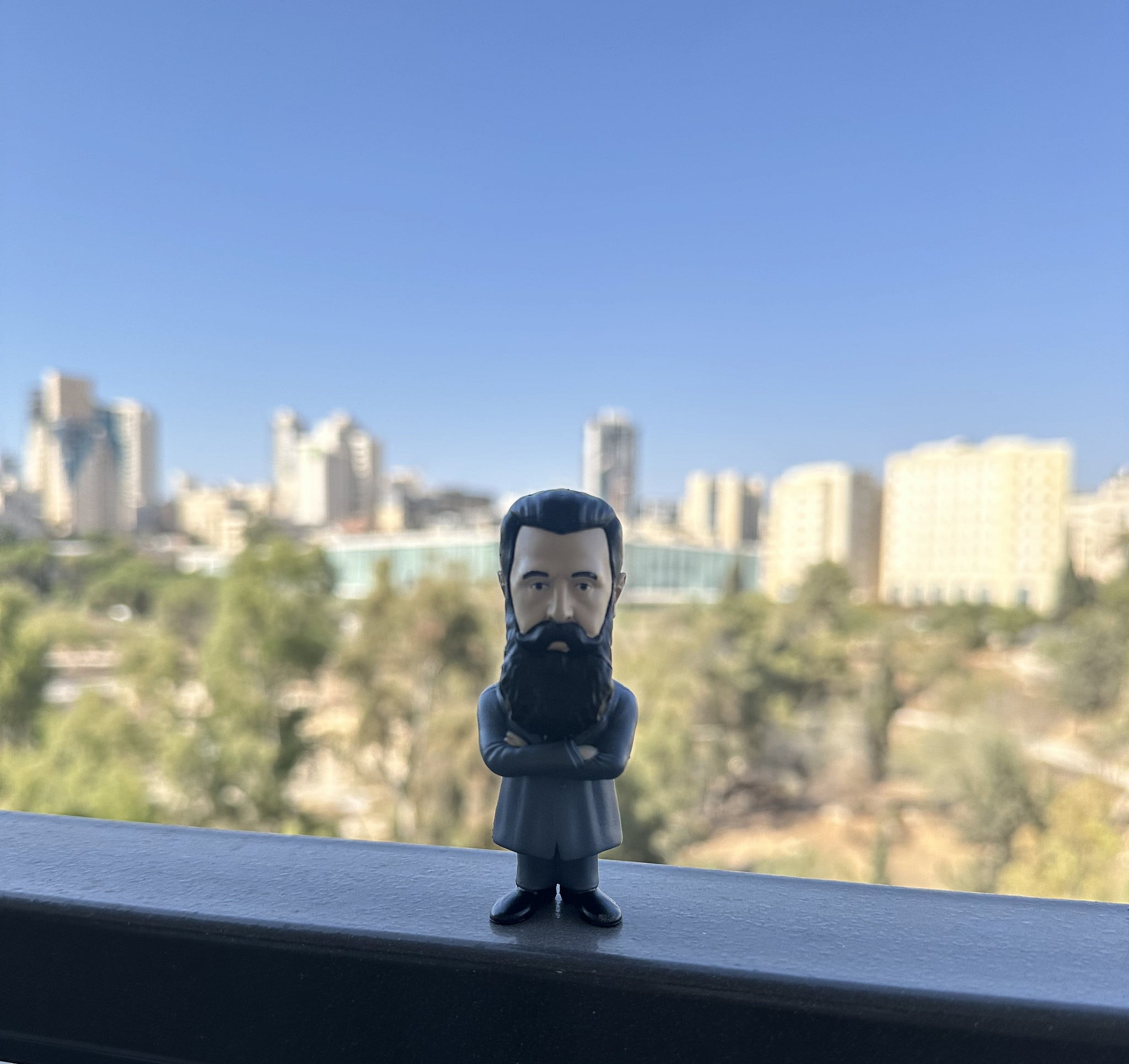
My American Zionist education was tethered by Herzl’s famous mantra, “If you will it, it is no dream.” The nightmarish scenes from two years of war, from the accompanying Israeli political arena, and from antisemitic furor around the world, have been a devastating blow to Zionism as an abstract concept. Perhaps that abstraction is precisely the problem. When we reduce Zionism to an ideology or a tactical political agenda and debate it, the real people whose lives are at stake get lost. We forget that it is personal. Real people are caught in the crossfire, physically and metaphorically.
Today, we have to come to grips with a startup nation that operates in a land of milk and honey that also bleeds the mournful scenes from the Book of Eicha (Lamentations), images that have come back to haunt us after thousands of years.
Almost a century after his great-grandmother visited Palestine by boat, my eldest child is a lone soldier completing advanced training for combat in the IDF; I am in Israel for his beret ceremony is this week. For an American mother whose Zionism has been expressed through family history, teaching, and working closely with Israelis, my son’s choice to serve in a complicated, extended war is both a dream and a nightmare. It is also very, very real. For all of the punditry, analysis, and boundary-drawing of the public discourse, I keep coming back to the fact that Zionism is ultimately about the fate of actual people. We are not an abstraction. We are a diverse, dispersed people who live in many different countries with different “rules” for survival and acceptance. Israel is part of our destiny, whether we love it or not. We don’t always understand each other, and yet, we are responsible for each other.
That is why I have dozens of Israeli colleagues who offer to do my son’s laundry and ask me to give him their phone number even though they have never met him. And that is why when an Israeli shows up in Los Angeles and needs a place for Shabbat, there is a seat at my table. These moments of giving, of paying it forward, come from a place of genuine caring. That care infuses the Jewish spirit. If the debate about Zionism leads us to stop caring about each other as people, the dream fades and unravels.
“If you will it.” Caring about people is not about a dream, but about the willpower that makes care a priority when dreams collide and everyone stands to lose. What are the boundaries of Zionism? Within an abiding commitment to care for our people and our neighbors, it is the will to pursue one’s own dream, but in doing so, to recognize that having a democratic country with supporters around the world and a diverse population within its borders requires strategy, ingenuity, courage, and compromise.
—
This essay was invited for the Peoplehood Papers, Volume 35, Zionism 2025: Reinterpreting Vision, Mission and Boundaries. The collection can be found at: https://www.jpeoplehood.org/_files/ugd/64e1e9_a9ed62804feb4726bf3e83e9efcf8ebc.pdf