
The World Is Moving Toward Palestine. Israel Risks Being Left Behind.
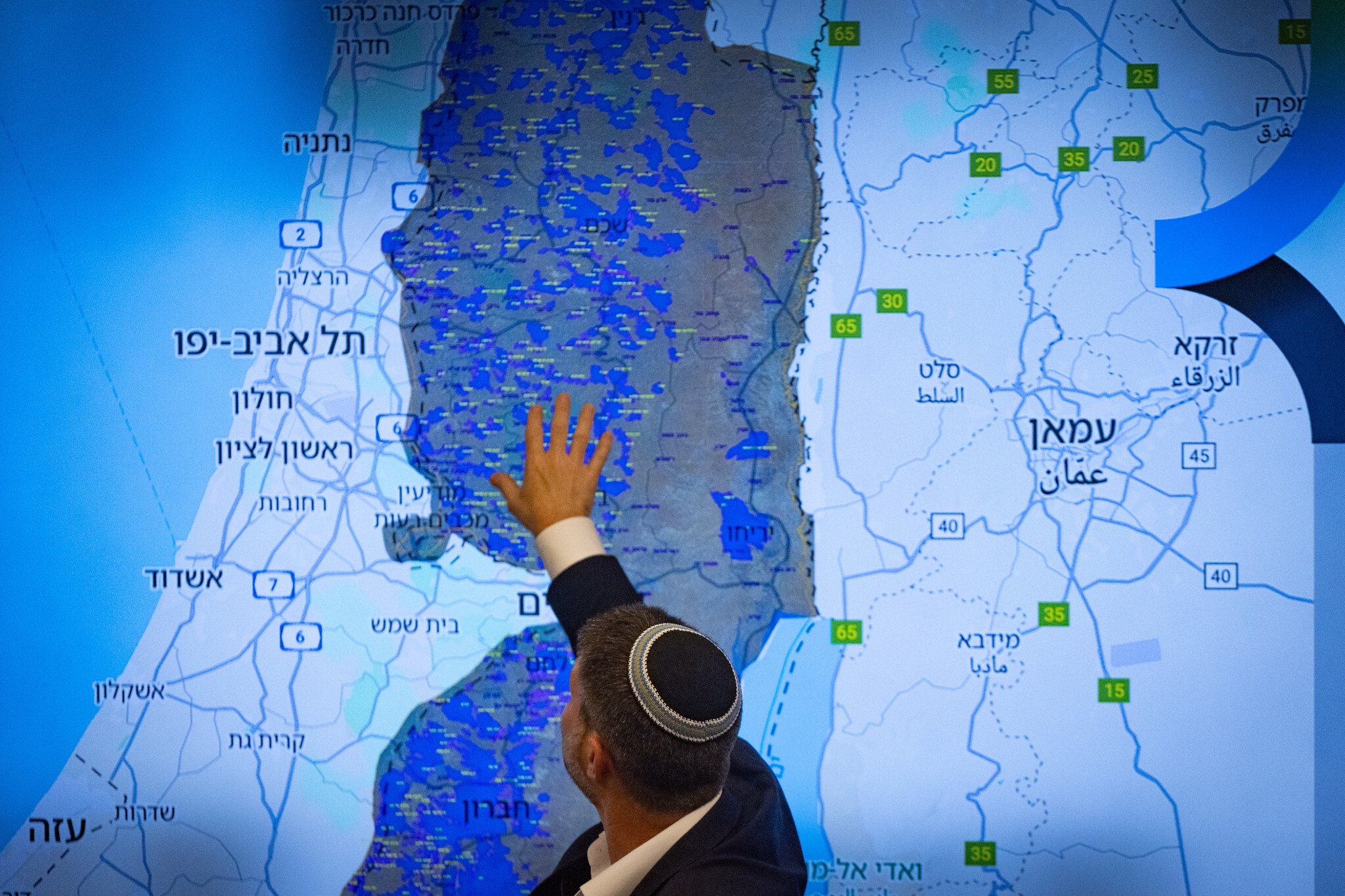
The question of Palestinian statehood is no longer theoretical. France and Saudi Arabia are pressing recognition. The European Union is weighing economic levers. Most of the world already treats Palestine as a state. Israel’s leaders, however, continue to resist. That resistance isn’t just a political choice—it is a gamble with Israel’s own security, legitimacy, and future.
Israel’s leaders have long argued that Palestinian sovereignty poses a mortal threat—that a state could become a launchpad for terror, fall under Iranian influence, or collapse into chaos. Security officials warn that rockets from the West Bank could reach Ben Gurion Airport in minutes, or that a weak Palestinian state could mirror Gaza under Hamas. These fears are not entirely unfounded. Security dilemmas are real, and no serious policy can ignore them.
But the antithesis is equally strong. Permanent occupation has not delivered security. On the contrary, it has produced repeated wars in Gaza, growing settler violence in the West Bank, and rising international isolation. The absence of sovereignty has not “pacified” Palestinians but rather strengthened the radicalized groups among their society. The alternative to a Palestinian state is not stasis; it is perpetual conflict, demographic imbalance, and the erosion of Israel’s democratic character. In strategic terms, denying statehood may pose the greater long-term danger.
Recognition of Palestine won’t solve everything overnight. But it would re-anchor the conflict in law and diplomacy instead of in endless military campaigns. French President Emmanuel Macron put it bluntly: “Whatever the circumstances, I have stated my determination to recognize the state of Palestine.” Saudi Arabia has drawn the same line, tying normalization with Israel to concrete steps toward Palestinian statehood. This isn’t symbolism; it’s the price of credibility in the Arab world.
Yet Israel’s government is moving the other way. Likud MK Boaz Bismuth, Netanyahu’s handpicked chair of the Knesset Foreign Affairs and Defense Committee, said in August that annexing the West Bank — what he calls applying Israeli “sovereignty” — is more urgent than normalization with Saudi Arabia. Finance Minister Bezalel Smotrich openly boasts of burying the very idea of a Palestinian state by approving new settlements. The message is unmistakable: territorial control comes first, even if it means diplomatic isolation.
Conflict comparisons show the perils of this approach. In Cyprus, decades of division without recognition or settlement produced a frozen conflict that still obstructs regional politics. In Nagorno-Karabakh, the refusal to resolve status led to periodic eruptions of war, culminating in mass displacement and devastation when force ultimately decided what diplomacy would not. Kosovo demonstrates the opposite lesson: once recognition and partition were accepted, conflict did not vanish, but the clarity of borders and sovereignty created a framework for protecting minorities, stabilizing politics, and drawing international support. The lesson for Israel and Palestine is direct. Denying recognition does not neutralize conflict—it entrenches it. Recognition, by contrast, can open the path to institutional guarantees, clearer rules, and the possibility of stability.
Recognition itself could become the starting point for far greater pressure. As Marc Lynch and Shibley Telhami noted in Foreign Affairs, recognition without consequences risks being hollow. But if recognition is paired with conditions—demands to freeze settlement expansion, protections for Palestinian civilians, accountability through international courts—then it becomes a tool not just of symbolism but of coercion. The risk is clear: the world could not simply recognize Palestine and walk away. Other steps may follow, and Israel will face escalating costs if it blocks Palestinian sovereignty.
Above all, this debate cannot be reduced to Israel’s security calculations. Self-determination is not a privilege to be granted at convenience—it is a right. The International Court of Justice has ruled that Israel’s presence in the occupied territories is unlawful and must end “as rapidly as possible.” That judgment frames Palestinian statehood not as a diplomatic option but as a legal imperative. Denying it corrodes the very norms that hold international order together. And it is deeply provocative for a people who once demanded and received recognition of their own right to self-determination to now deny that same right to another nation.
Palestinian statehood is not charity and not a bargaining chip. It is the form of a people’s right to self-determination, now backed by international law. For Palestinians, it is justice long denied. For Israelis, it is the only viable path to long-term legitimacy and regional acceptance. For the world, it is a test of whether international law still binds. Denying it has already produced endless war. Recognizing it may be the only way out.