
CFO | Empower Society for Good I Author
The World Resets Again
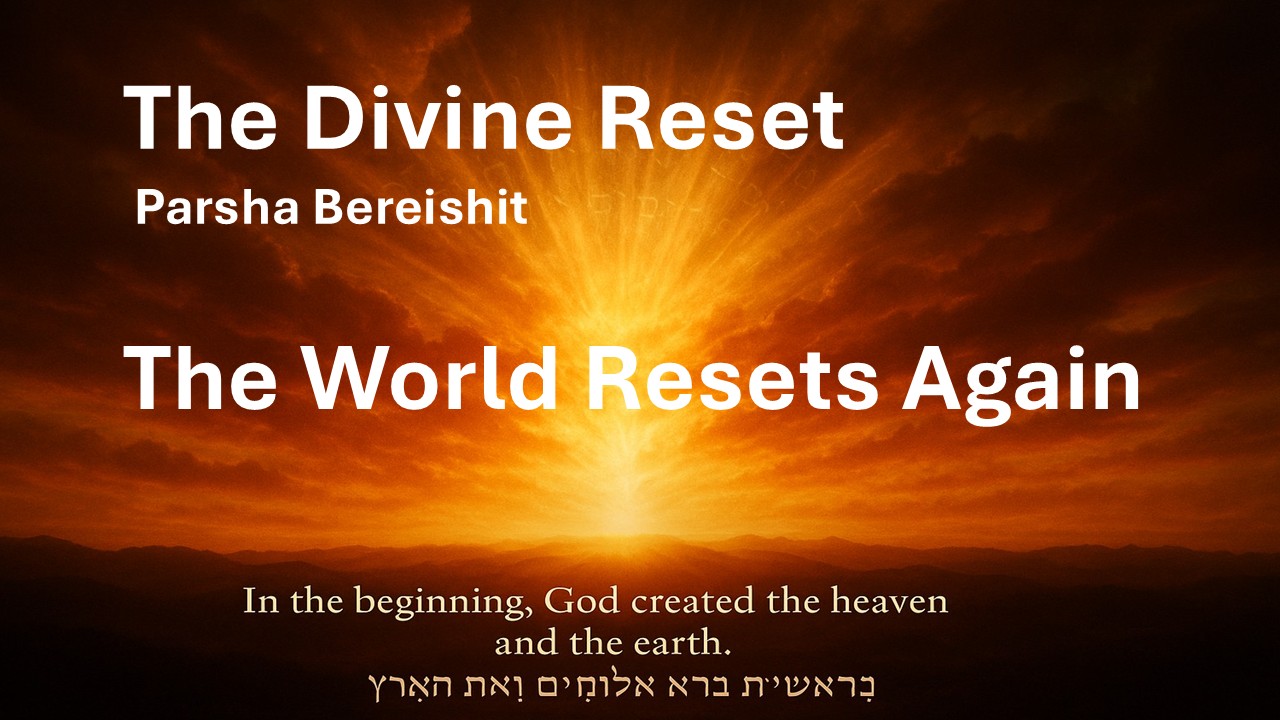
Each year, as Jews around the world close the Torah at V’Zot HaBeracha and immediately reopen it at Bereishit, something profound happens.
We don’t simply finish reading — we begin again.
Unlike any other book, the Torah never ends. Just as life continues, so does the story of creation. This isn’t a ritual of nostalgia; it is a spiritual engine that drives the Jewish people. The cycle of Torah teaches one of the deepest truths of existence:
This is the difference between the Torah and every other book. The Torah is not read. It is lived. And every year, when we return to Bereishit, the question is not what God did then — but what we will do now.
Creation is not a one-time event. Creation is a choice we must make again and again.
This year, these opening words feel different:
“Bereishit bara Elohim et hashamayim ve’et ha’aretz”
“In the beginning, God created heaven and the earth”
— The words feel heavier. They burn differently in the soul.
This is more than tradition. It is a spiritual revolution. The Torah is not read as history, but as ongoing creation. Bereishit reminds us that the world is not finished — that creation is still unfolding — and that we are part of it.
After all the pain and chaos of this past year, war, after hatred, after broken families and kidnapped souls — reading Bereishit now feels less like a story and more like a lifeline. It is a reminder that from darkness, we still begin again.
Why have I chosen a theme of Divine Reset for this year’s Torah Cycle?
The Book of Bereishit (Genesis) is not just the story of how the world began — it is the story of how the world begins again and again. It is a book of resets. At every moment of human collapse, moral failure, or darkness, God opens a path to renewal. In a world searching for direction today — morally shaken and spiritually unsure — Bereishit teaches that history is not doomed to repeat itself. It can be reset.
Each Parsha reveals a new kind of beginning:
- Bereishit — God creates light from chaos. Creation teaches hope.
- Noach — The world collapses in violence (chamas), but God brings a new start through Covenant.
- Lech Lecha — God chooses Abraham to restore morality. A spiritual reset begins with one person.
- Vayera — Faith must walk with justice and compassion.
- Chayei Sarah — Legacy and continuity are built through love and purpose.
- Toldot — Identity is forged through struggle.
- Vayetze — God is found even in exile.
- Vayishlach — We must confront evil and wrestle with conscience.
- Vayeshev — God’s presence is hidden but still guiding.
- Miketz — Wisdom transforms suffering into purpose.
- Vayigash — Forgiveness heals history.
- Vayechi — Blessing carries the future.
The Divine Reset is the heartbeat of Bereishit: whenever humanity falls, God invites us to begin again — not by erasing the past, but by transforming it.
This series explores how each Parsha offers a blueprint for renewal — personal, national, and spiritual. Because the Torah’s first lesson is also humanity’s greatest hope:
With God, there is always another beginning.
The Divine Reset Begins with Us
Bereishit is not only about how the world began, but about how the world must begin again — especially now. We feel the urgency of these words because we are standing, once again, at the edge of moral collapse.
We see lies spreading faster than truth.
We see terrorism defended as “resistance.”
We see universities, media, and even governments abandon morality.
We see the sickness of antisemitism returning like a virus that the world never bothered to cure.
And yet — we also see hope pushing through the cracks.
We see hostages finally beginning to return home.
We see Jews standing united as one people for the first time in a generation.
We see communities rediscovering faith and identity.
We see millions of decent people — Jews and non-Jews — who still choose light over darkness.
Like creation itself, the reset has begun.
Responsibility Is the First Act of Creation
Why does the Torah begin with God creating the world? Why not begin with Jewish law? With Abraham? With revelation?
Why does the Torah begin with God creating the world? Why not begin with Jewish law, Abraham, or the revelation at Sinai? The Torah seems like it should begin with mitzvot (commandments), with morality, with covenant — but instead it begins with the story of Creation.
Rashi answers: because before there can be law, there must be legitimacy. Before there can be morality, there must be truth. And the first truth the Torah declares is that God is the Creator of the world and the Author of history.
Rashi (11th-century commentator) teaches that God began the Torah with Creation so that when the nations of the world accuse Israel and say, “You stole the Land of Israel,” we can answer: “The entire world belongs to God. He created it and gives it to whomever He wills. He gave it to us.” The Torah begins with the Jewish right to the Land of Israel — biblical, historical, eternal — not because it is a political claim, but because it is a divine truth.
And yet, how astonishingly ironic that today the nations of the world — who love to preach about justice, human rights, and historical recognition — are the very ones who refuse to recognize the Jewish people’s indigenous, biblical, and historical homeland. They demand a Palestinian state built on historical denial while rejecting the oldest land deed in human history — the Torah itself. They condemn Israel while excusing terror. They rewrite history while accusing Jews of all types of crimes. This is not just hypocrisy — it is rebellion against truth itself.
Rabbi Jonathan Sacks said, “God begins the story, but humanity is called to continue it.”
Today, humanity is failing that test. The world does not suffer from a lack of information (although there is a lot of ignorance), but from a lack of integrity. What we are witnessing is not a political crisis but a moral crisis — a Divine reset moment.
The Torah’s opening line calls on every nation: take responsibility for truth, not lies; for history, not revisionism; for justice rooted in reality, not ideology. Denying Israel is not an argument with the Jews. It is an argument with God.
The Creation story is about responsibility for the world.
Bereishit is not a children’s story. It is a mission statement.
- Adam fails when he blames instead of taking responsibility.
- Cain fails when he refuses to see his brother as human.
- Humanity fails when it builds towers of ego instead of bridges of compassion.
This is why the world collapses again and again — because man refuses responsibility.
This is why the world collapses today.
The Torah Begins With Chaos
Before creation, the Torah tells us:
“V’ha’aretz hayta tohu vavohu — and the earth was chaos and void, and darkness was over the face of the deep.”
The world didn’t begin in peace. It began in darkness. Creation was not a quiet sunrise — it was an act of defiance against chaos.
And what was the first thing God created?
Not creatures. Not land. Not angels.
Light.
“Vayehi or” — And there was light.
God did not eliminate darkness. He introduced light into it.
That is the call of Bereishit. That is the Jewish mission. Not to escape the darkness — but to bring light into it.
The Sins of Bereishit – Why the First World Collapsed
Before we rush into Noach and the Flood next week, we must understand something: Bereishit is a diagnosis. It shows us the spiritual diseases that destroy societies.
These sins are not ancient — they are alive today:
- The Sin of Blame – Cowardice Over Responsibility
When Adam eats from the Tree, he blames Eve:
“The woman You gave me — she made me do it.”
The first sin is not disobedience. The first sin is refusing responsibility.
Today, this lives on:
- Leaders blame each other.
- Victimhood replaces ownership.
- People justify murder, rape, terror and violence and then blame “context.”
When blame replaces responsibility, morality dies.
- The Sin of Envy – The First Murder
Cain murders Abel not from hunger, but jealousy. When God asks, “Where is your brother?”, he answers:
“Am I my brother’s keeper?”
This is the root of barbarism — moral indifference. Today, this echoes in a world that watches human suffering and shrugs.
- The Sin of Corruption – Power Without Ethics
“And the powerful took for themselves whoever they wanted.” (Bereishit 6:2)
This is abuse of power and the breakdown of boundaries. When society normalizes taking whatever it wants — violence follows.
- The Sin of Lies – When Truth Collapses
Finally:
“And the earth was corrupt and filled with chamas.” (6:11)
Chamas means violence and moral theft. Lies become law. Justice becomes theatre. And civilisation collapses. (Ironically, Hamas chose this name!!)
These aren’t ancient sins.
They are today’s headlines.
Bereishit isn’t mythology — it’s prophecy.
Bereishit in Our Time
We live in a world working hard to forget God and erase moral law. Lies spread faster than oxygen. People worship power instead of truth. The culture sells comfort instead of courage.
But there is also a hunger now — a longing for meaning. Something inside us knows we were not created to drift through life passively. We were created to build. To heal. To stand for something holy.
We are watching a broken world reach for a second chance. Hostages are returning home. Nations are reassessing their values. Families are rediscovering faith. The world is not yet healed — but a reset has begun.
And Bereishit is that reset.
This week, ask yourself:
- What truth will I speak, even when it’s unpopular?
- What responsibility will I accept — instead of blaming others?
- Who is my “brother” that I must not ignore?
- Will I add to the world’s darkness — or its light?
Because Bereishit is not about the beginning of the world.
It is about the beginning of your purpose.
Related Topics
Related Posts