The Wrong Person for the Job: Finding Myself in a Forgotten Jewish Cemetery
Last year, I flew to Göttingen, Germany for a work conference at the German Primate Center. I was there to present a small but important study—we had just published a new primate rehabilitation protocol. The plan was simple: give my talk, tour the primate facility, and enjoy a few quiet days in Germany.
Life had other plans.
During my stay, I became close with the conference organizer, Dr. Tamara Becker, and her husband, Dr. Hermann Esselmann. They welcomed me not just into their professional circle but into their home, their family celebrations, and eventually into a journey I could not have imagined. On the way to a family birthday party at a sprawling estate with people dressed in traditional Bavarian clothes, Hermann casually pointed out the car window and said, “In that forest, there is an abandoned Jewish cemetery.”
That offhand comment was about to send me on an unexpected detour.
How does a primate researcher end up in a Jewish cemetery?
The next day, Hermann asked if I could help document the gravestones in the Bremke cemetery. At first, I thought this would be a quick side project — a handful of photos, some notes. But over the next year, the project grew, slowly drawing me in.
A breakthrough came when we found Rolf Bergmann, a local historian from Bremke, who had copies of documents prepared in the 1980s by Professor Schaller. Back then, the stones were in much better condition, and Schaller had recorded both Hebrew and German inscriptions. Today, most of the German is gone and the Hebrew inscriptions are damaged.
I dusted off my old microscopy skills and tried to match the faint scratches of letters with Schaller’s spreadsheet. There was only one problem: I didn’t know how to read Hebrew gravestones.
Lucky for me, I live in Jerusalem. My community is full of kind and knowledgeable people who generously gave their time to teach me the basics. I scribbled notes, asked questions, and slowly learned. Word by word, line by line, I managed to identify 28 stones. But what about the others?!
I realized I was becoming weary, but also slipping into a kind of quiet fixation. At some point, I understood that I had to go there myself.
Arrival
One year later, I stepped off the train in Göttingen, Germany dragging my bag filled with supplies. Hermann met me and we drove to the apartment he shares with Tamara in a 1910 building with soaring ceilings, original terrazzo floors, teal tiles, and green plants everywhere. The atmosphere reminded me of my grandparents’ art nouveau style home in Samarkand, Uzbekistan.
Tamara welcomed me with homemade Lithuanian yogurt soup — pink from beets, bright with dill, topped with quartered eggs. She bakes her own bread, makes her own yogurt and jam. I sat in their kitchen, far from everything I knew, and thought: how strange that distance can dissolve, and the feeling of home can appear in the most unexpected places.
Then we drove to Bremke.
The sky was low and heavy with storm clouds. We drove off the road onto a gravel path and stopped in the middle of farmland. Yellow bales of harvest lay rolled, scattered beneath heavy skies bruised purple and gray.
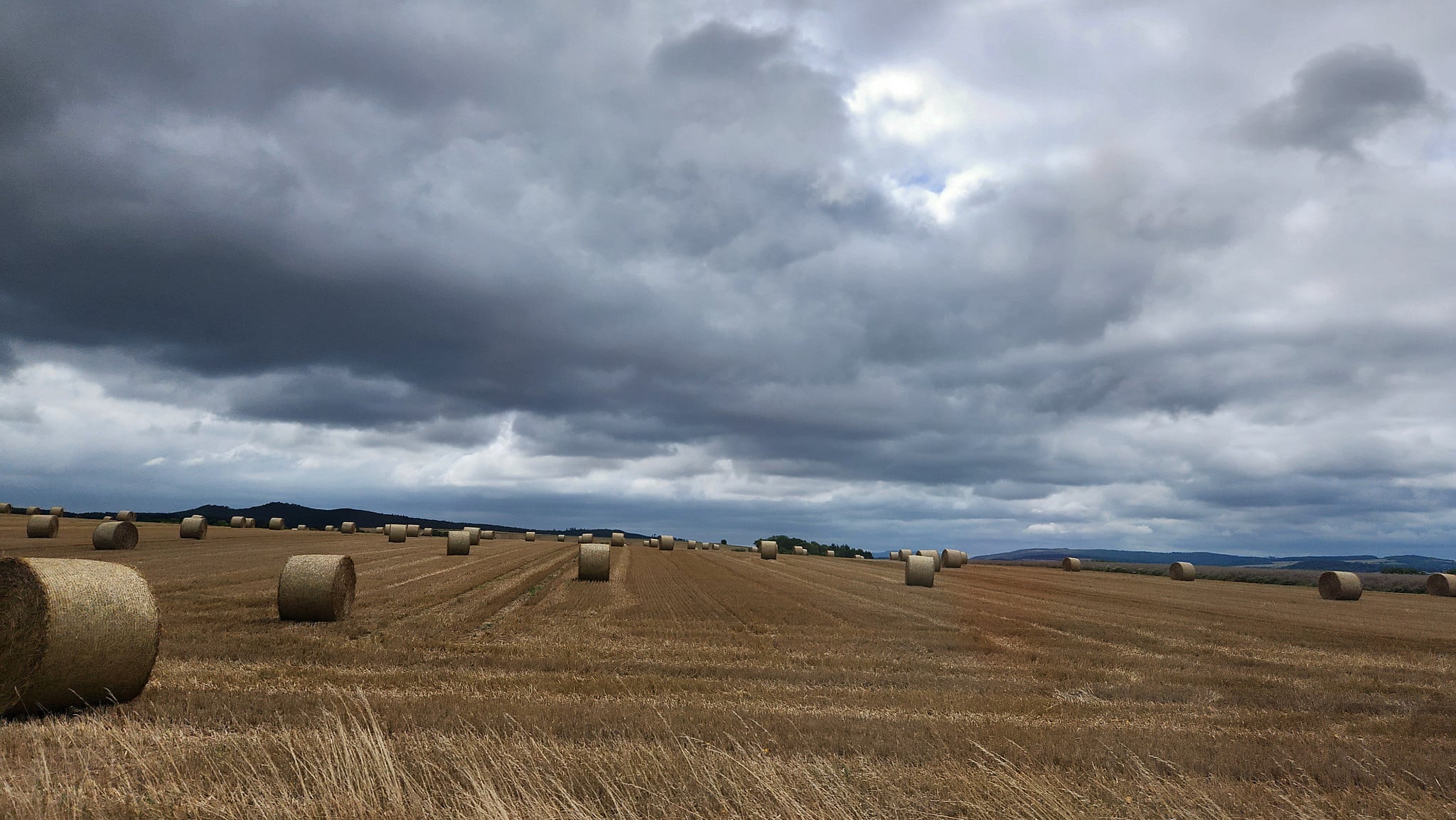
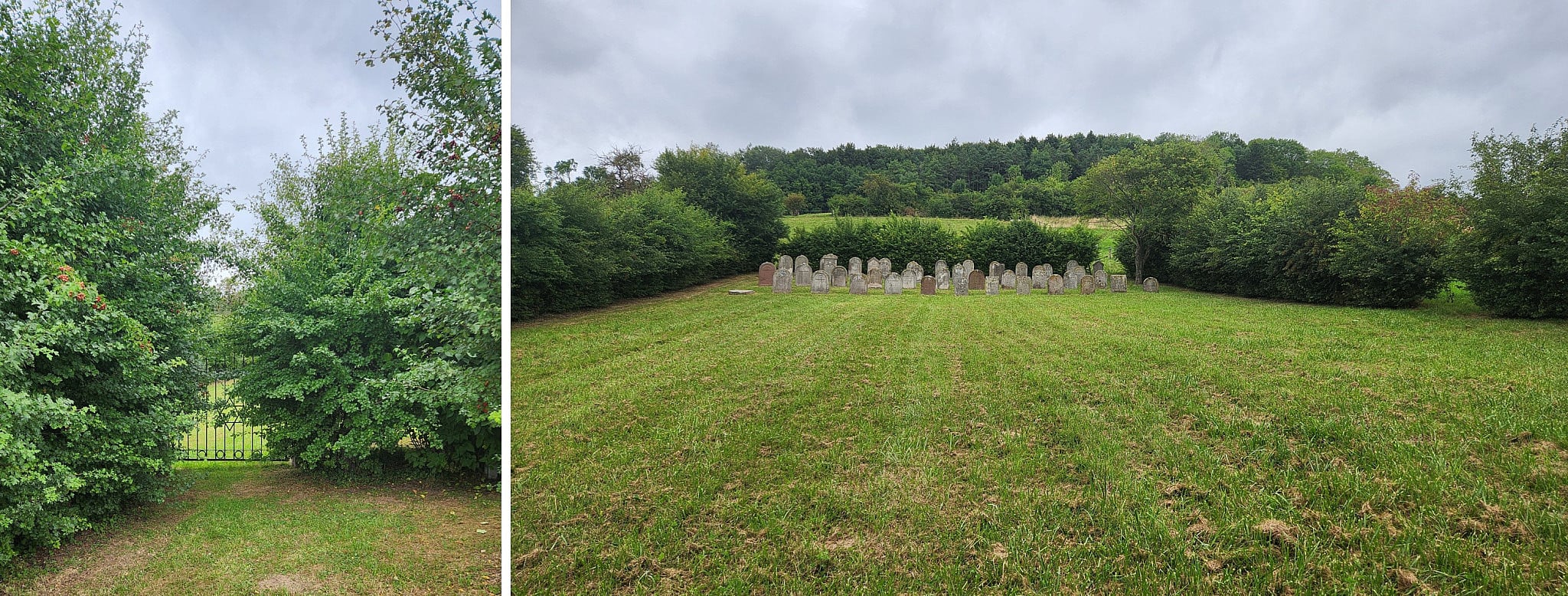
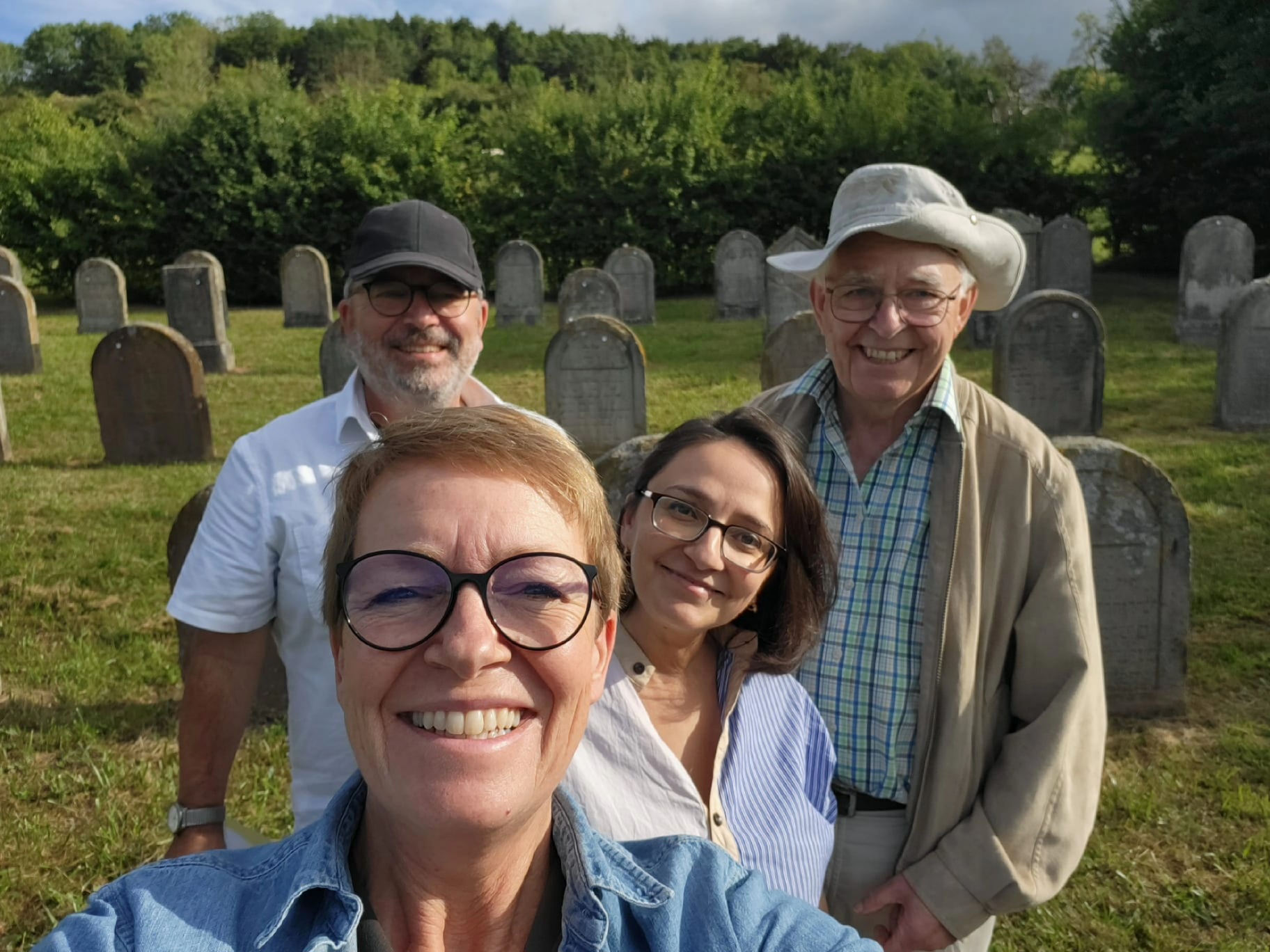
It felt like it was almost evening, when in reality it was just early afternoon. There were horses running in a field in front of us. Apple trees stood with tiny fruit scattered all around them. And up the path we saw a man with white hair and a big hat with one side folded and pinned. This was Rolf. Together the four of us walked to the cemetery — hidden behind overgrown branches, marked by a small gate with a large Magen David.
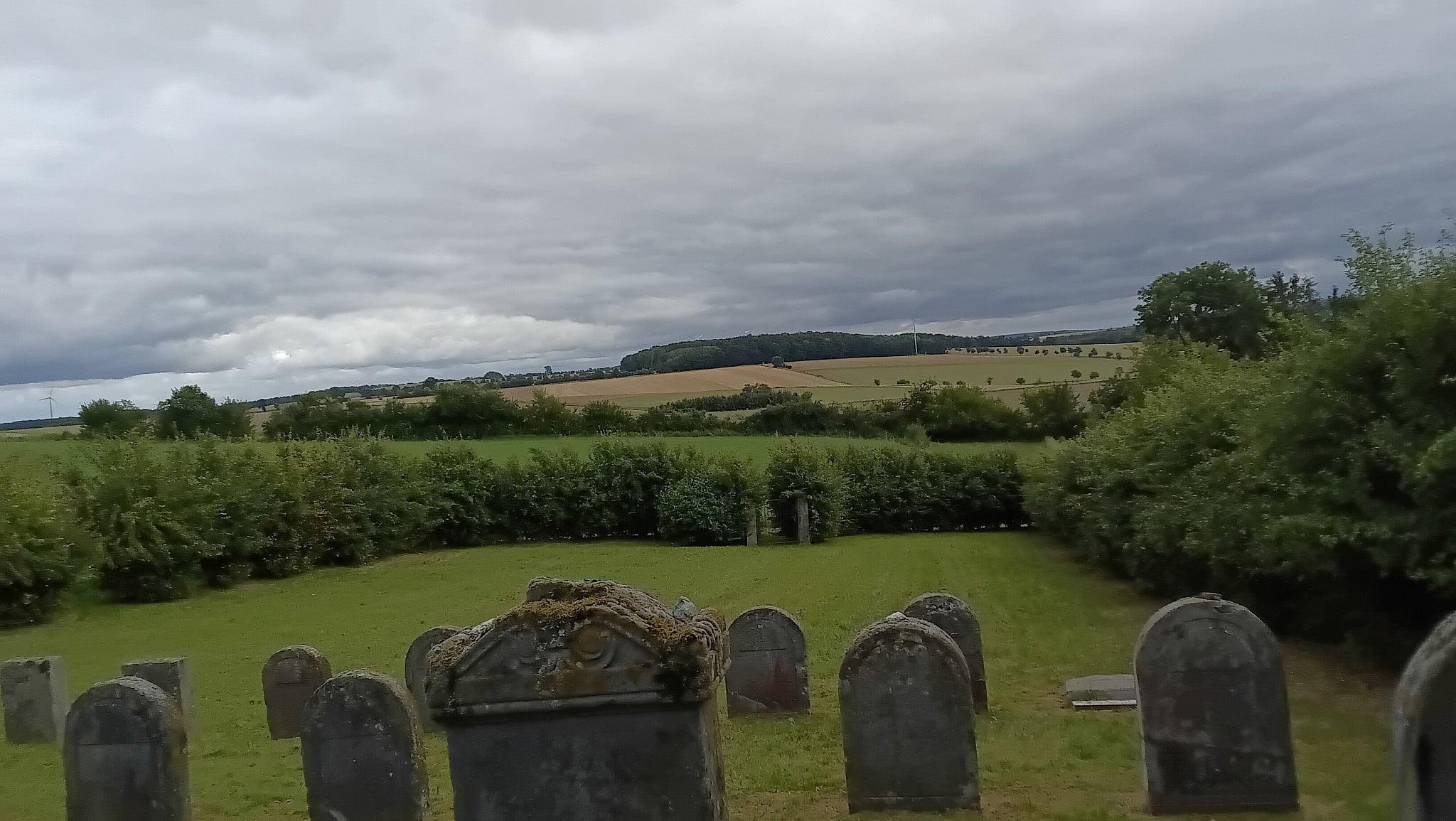
Inside, 44 stones stood in four rows. I had waited so long to see them. And in some strange way, I felt they had been waiting for me too.
Shadows and Inscriptions
It wasn’t easy. One stone had fallen face-down and was too heavy to lift, and two others were little more than silhouettes, their inscriptions dissolved into silence. I came armed with charcoal sticks and crayons, a spray bottle, stickers, and a laptop with my translations. Hermann lugged a bucket of water. We sprayed, traced, shaded, trying to coax the letters back to life. We identified about 30 stones, with 14 more to go.
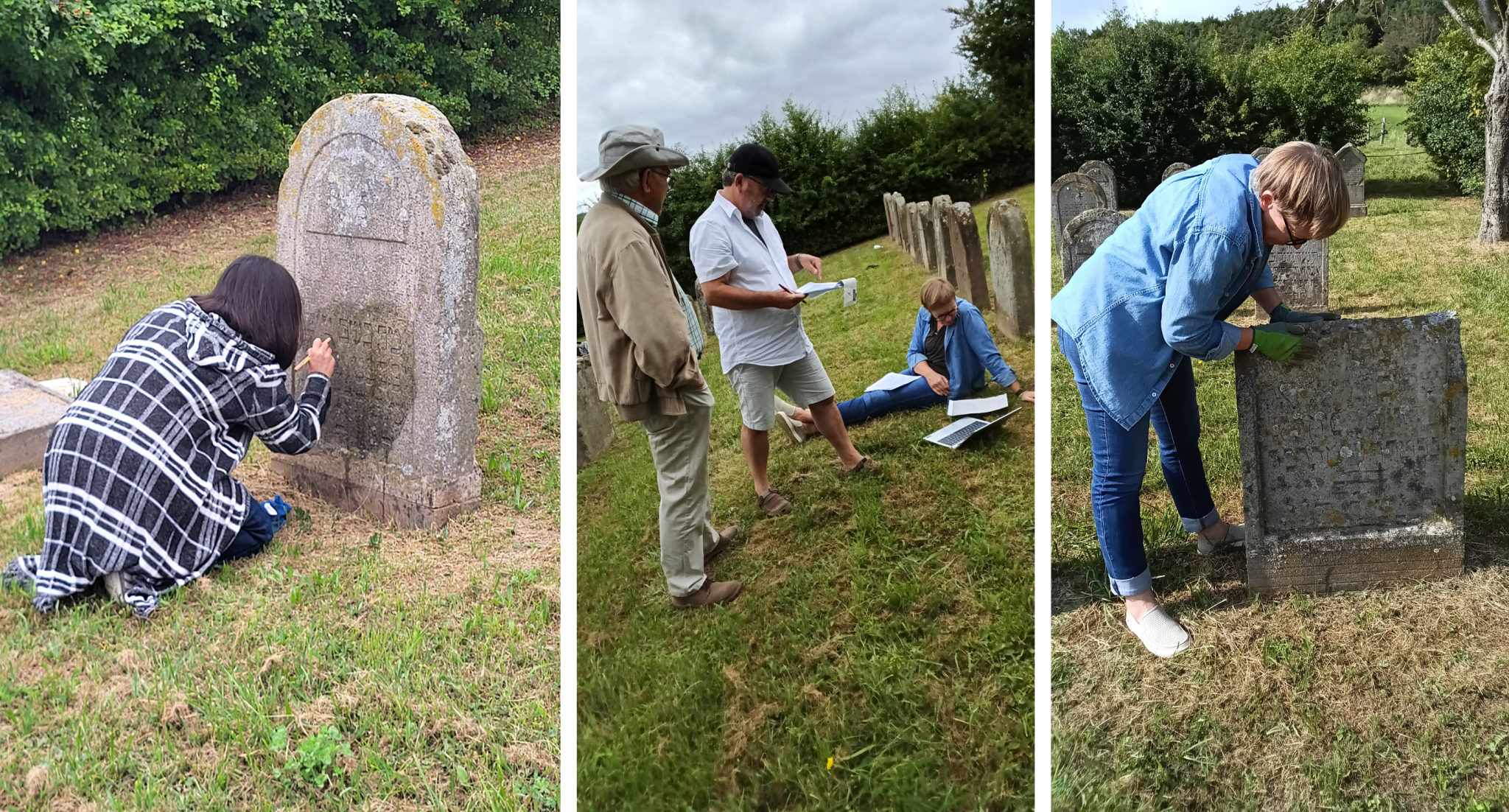
At one point, I sat with my eyes closed, feeling for letters with my fingers: the diagonal slash of an aleph with 2 dots on either side, the three arms of a shin, the curve of an ayin, the dalets, reshs, heys, and chets were sometimes hard to tell apart.
But nothing worked. I was frustrated. I thought, This is ridiculous. I’m not the right person for the job. I started to think about all the people in Jerusalem who helped me with translations. They are the ones who should be here doing this. Instead, Bremke got me.
And then — it happened.
A cloud shifted. A ray of sunlight hit the stones at the perfect angle, and suddenly the letters glowed black. All of them. Even the hardest to read inscriptions appeared as if carved yesterday.
We gasped. I grabbed my tablet and ran frantically, snapping photos before the light changed. It felt like a miracle.
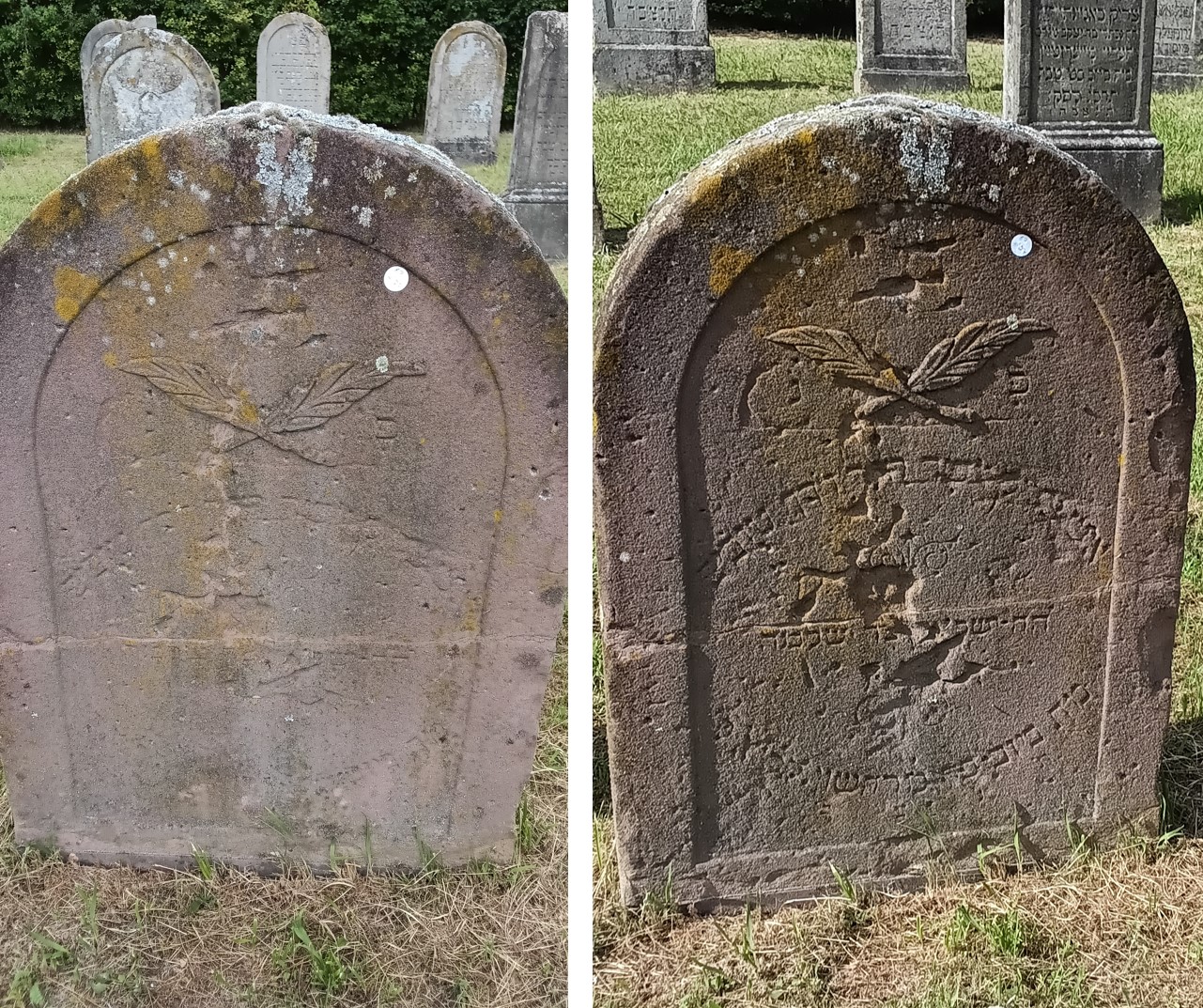
By the end of the day, we had deciphered and catalogued 41 stones. We even caught mistakes in Professor Schaller’s records. Rolf, the historian, was surprised at our achievement.
I asked Rolf if there was any way to know the names of the other people who were buried at Bremke. I had read that many more graves once stood, but their stones had been taken long ago to build roads. Rolf reached into his bag and unfolded a copy of a burial record from the Bremke synagogue: 110 names. Names without stones, lives without markers. Seeing that list, I realized we weren’t just cataloguing stones. We were reclaiming memory.
In the following days I organized all the information that we gathered from the Bremke cemetery and forwarded it to the JewishGen Online Worldwide Burial Registry (JewishGen.org).
Beyond Bremke
The adventure didn’t stop there. That same weekend, in conversations with Tamara and Hermann’s friends, more stories surfaced — mentions of other forgotten Jewish cemeteries in neighborhoods around Göttingen. And there I was, following my guides, hiking through farmland and forests in search of gravestones — in Adelebsen, Dransfeld, and Bovenden. Each one had its own history, its own silence, its own fragments of Jewish life.
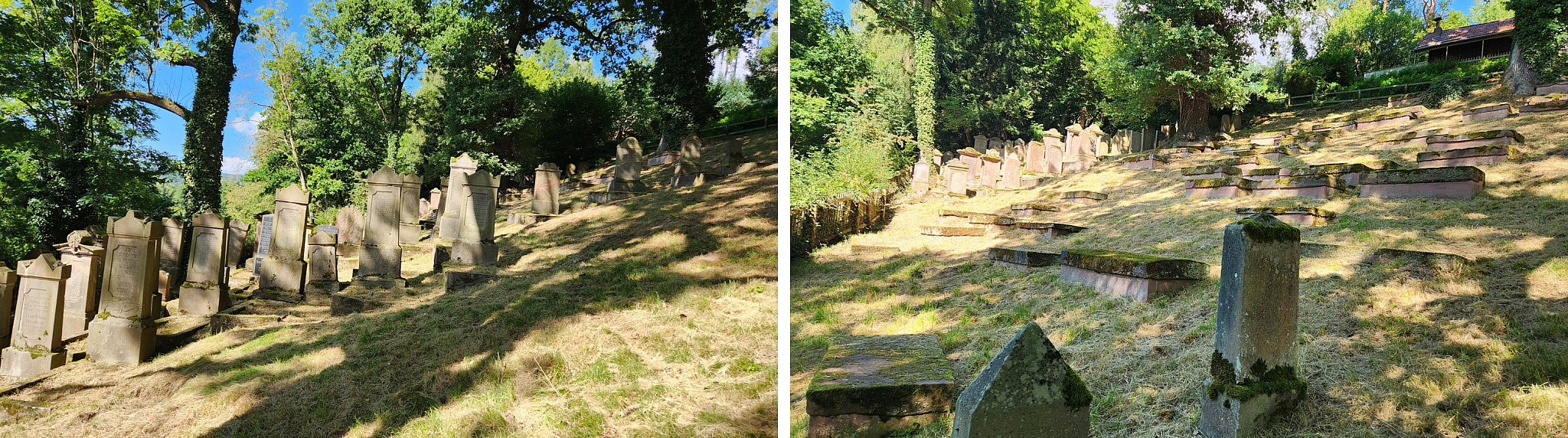
In Adelebsen, once nicknamed “Little Jerusalem” for its vibrant Jewish life, the cemetery clings to a steep forested hill. The newer, vertical gravestones still bear both Hebrew and German inscriptions, but the older ones lie horizontally, in the ancient style. I stood before the grave of Noa Rothschild — born in 1869, deported to Theresienstadt, and miraculously returned home. He died in May 1948, just ten days after the State of Israel was declared. His life stretched like a bridge between catastrophe and rebirth.
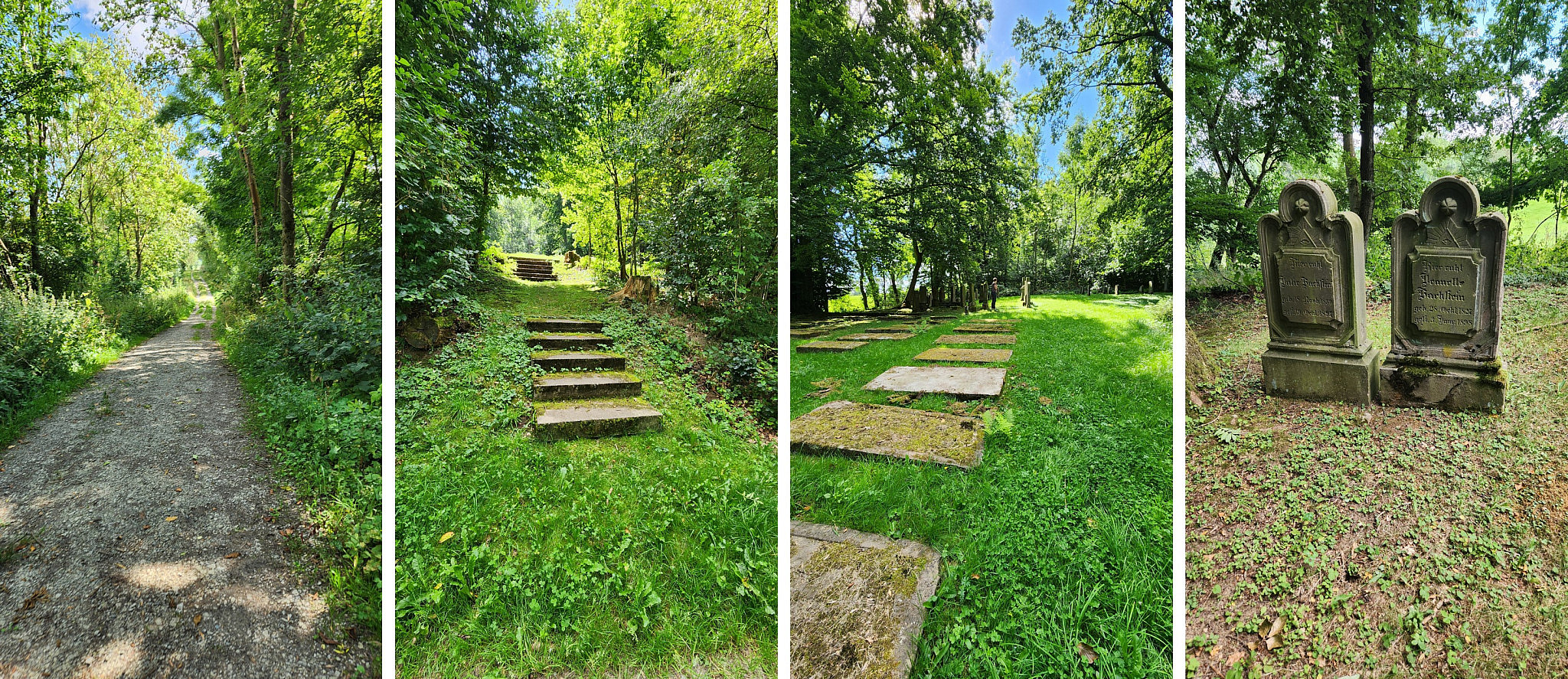
The Jewish presence in Dransfeld dates back to the late 14th century, with a permanent community established in the 17th century and flourishing through the 18th and 19th as families worked as traders and peddlers. By 1826, a formal community had taken shape, with a synagogue built in 1836 and a small Jewish school operating until the 1930s. The cemetery, founded in the early 19th century and formally acquired in 1853, became the resting place of some 800 Jews. Reaching it today means walking through farmland and down a gravel path into the woods, where stone steps lead to a metal gate marked by a Magen David. Inside, the burial ground feels both hidden and protected — a serene lawn ringed by tall trees, where we wandered among stones trying to connect family names and recurring symbols.
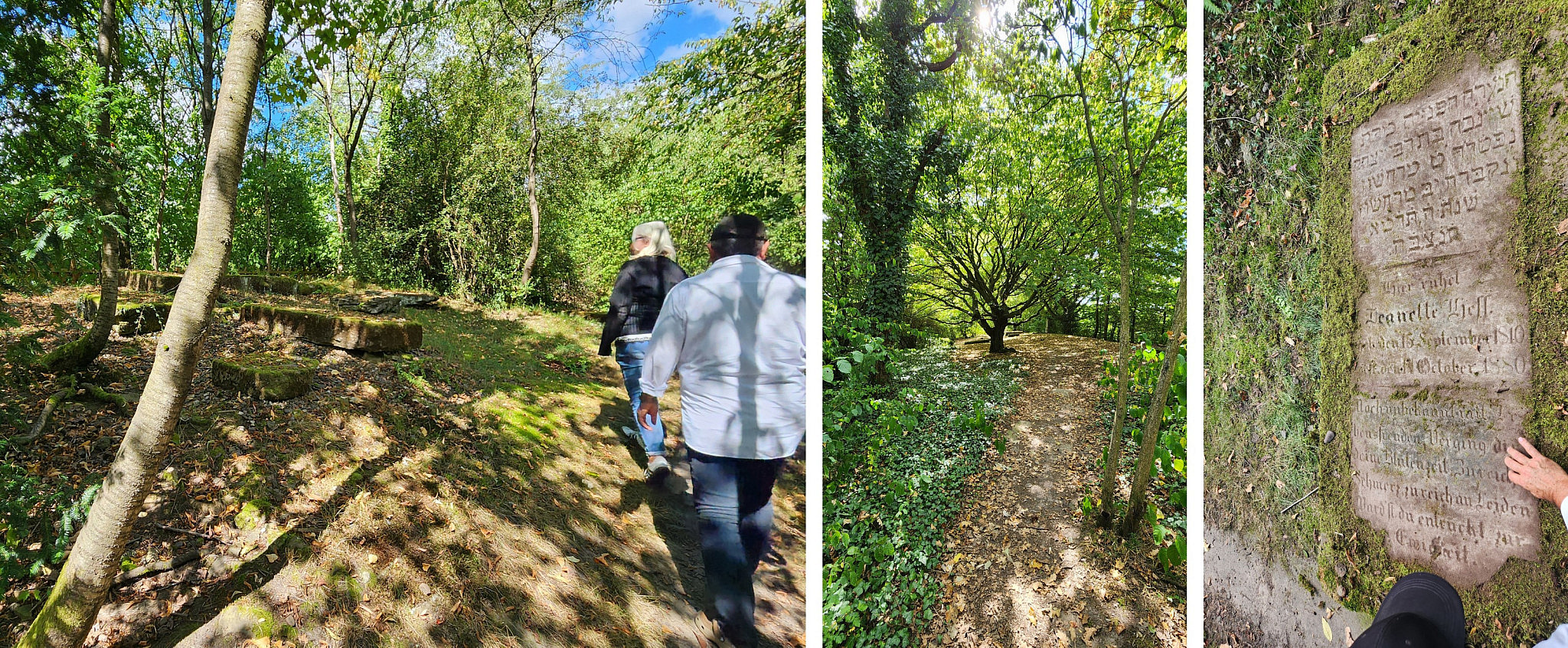
On our last cemetery visit we were accompanied by Tamara’s childhood friend, Juliane (Moppi), into the woods of Bovenden, where a narrow strip of land holds a cemetery established around 1680. Stretching nearly 300 meters along the ridge of the Lohberg, it contains 65 massive stones, the oldest dating to the 1770s and the newest to 1926. Many were almost entirely covered by moss, their inscriptions hidden until we began to scrape them clean. On one stone we revealed the German words “she knew no sin” and, beneath layers of moss, the Hebrew name שיינכה alongside the German name Jeanette — not a child, as we first thought, but a 70-year-old woman born in 1810 who seemed to have endured much in her life. The graves clustered along the path past a majestic tree that rose like a great menorah, its branches spreading wide over the hidden fragments of memory.
Each cemetery was hidden, waiting to be discovered. If four were found around a town as small as Göttingen, it makes me wonder how many more are scattered across Germany. And the thought of what still lies buried in the forests and fields of Europe is almost too much to think about.
The wrong person for the job
Before this trip, I thought everything there was to know about the Jewish presence in Germany had already been researched, documented, archived. I assumed that every stone, every name, every trace of Jewish life had been accounted for. But I was wrong.
It turns out there are still so many forgotten fragments — little cemeteries tucked into farmland, forests, and hillsides. A whole archipelago of memory.
And somehow, improbably, I was the one to stumble into it. Me — a Bukharian Jew, a neuroscientist, “the wrong person for the job.”
But maybe that’s the point. These fragments don’t only belong to historians or rabbis or professional epigraphers. They belong to all of us. They’re part of German history, yes, but they’re also part of Jewish history. Part of our history.
And if we don’t claim them, if we don’t learn their names, if we don’t tell their stories — then we risk losing them. Again.
I am only one person, stumbling into this by chance. What’s truly needed is a shared effort — Jews and Germans working together — to uncover these fragments of life, and to bring back into memory the centuries when our communities lived side by side.