Leadership With Heart
There Is No “Other Jew”
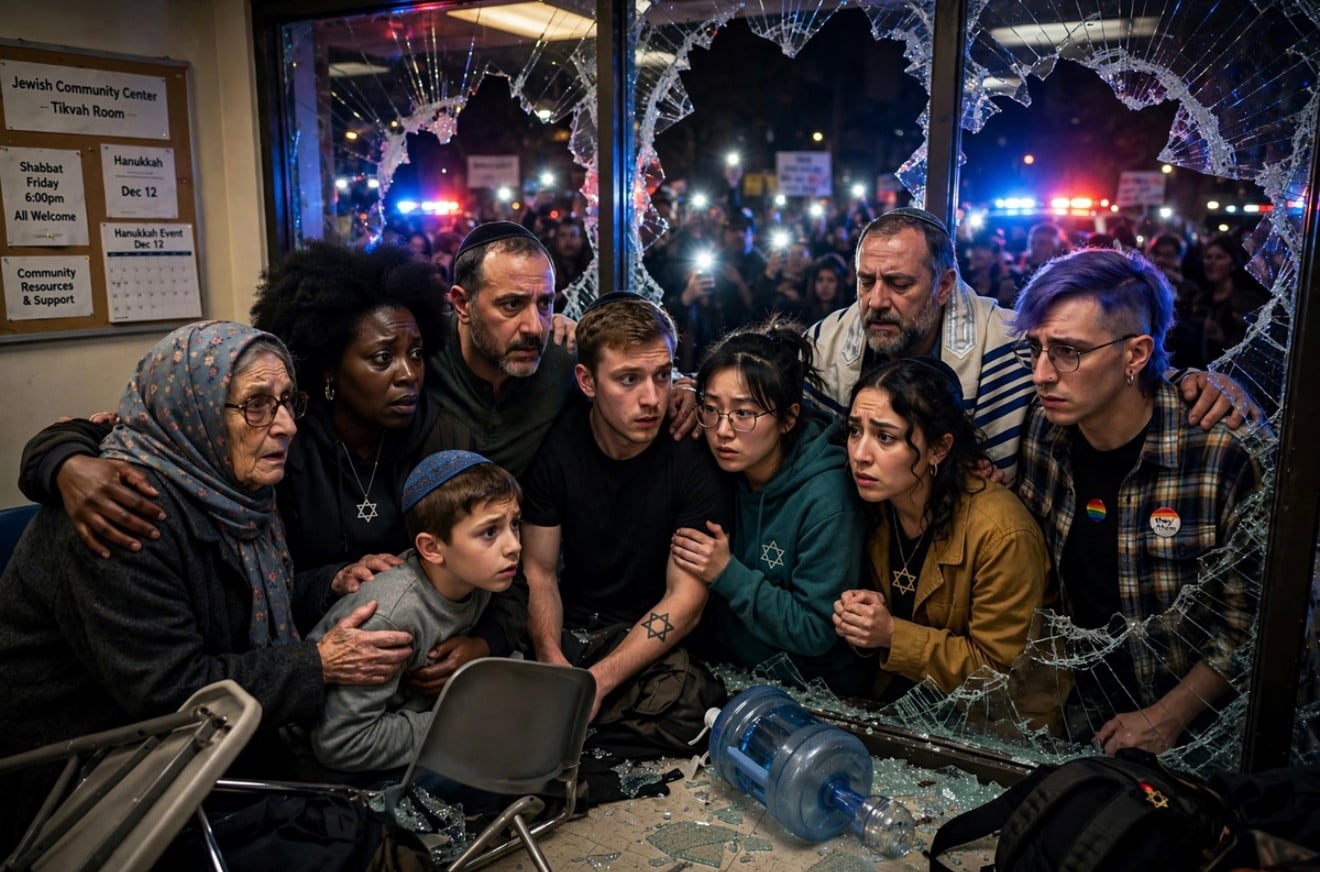
AI generated image
“Of course antisemitism is getting worse,” a Jewish friend told me recently. “But it’s not really happening to us.”
I’ve heard variations of that sentence constantly since October 7. Sometimes it’s masked: “Our neighborhood is different.” “My office is fine.” “This is just an Ivy League problem.”
The details shift, but the delusion remains the same: Antisemitism is real, but it happens to somebody else.
I understand the impulse. Nobody wants to believe the ground is giving way beneath a home they built, a career they nurtured, or a community they love. America has granted Jews extraordinary safety and opportunity, and most Americans are decent people who naturally reject anti-Jewish hatred.
But gratitude isn’t safety. Comfort isn’t security.
Too many of us are blurring those lines. We recognize antisemitism when it hits a campus our kids don’t attend, a city we don’t live in, or Jews whose politics, observance, or relationship to Israel look nothing like ours. We shake our heads, call it terrible, and quietly convince ourselves it has nothing to do with us.
That is a dangerous path.
The Distance Is an Illusion
The numbers aren’t abstract anymore. In 2023, the Anti-Defamation League recorded 8,873 antisemitic incidents—a 140 percent surge over 2022. In 2024, that number climbed higher to 9,354, matching FBI hate crime data showing anti-Jewish violence at historic highs.
Data can still feel distant. Charts allow us to treat hatred as a policy issue happening elsewhere. But the real world doesn’t offer that luxury.
Consider May 2025, when Yaron Lischinsky and Sarah Milgrim were murdered outside the Capital Jewish Museum in Washington, D.C., after leaving an event. Days later, an attacker used incendiary devices against a hostage vigil in Boulder, Colorado, injuring a Holocaust survivor. Less than a year later, a driver rammed a truck into Temple Israel in West Bloomfield, Michigan, aiming for a synagogue preschool with 140 children inside.
These weren’t overseas dispatches. They happened at a museum in D.C., a public square in Colorado, and a synagogue preschool in suburban Detroit.
Fear shouldn’t govern our lives, but we have to stop treating danger as theoretical simply because it hasn’t broken down our own front door yet.
The Categories We Build
What troubles me isn’t that Jews miss the threat; it’s that we struggle to see ourselves in it.
We compartmentalize. Secular Jews assume hatred targets the visibly Orthodox. Suburban professionals think it stays on college campuses. Progressive Jews watch the far right; conservative Jews watch the radical left. Some convince themselves hatred only targets “Zionists,” while others assume keeping a low profile on Israel will buy them immunity.
We quietly rely on our credentials—the right degree, the right neighborhood, the right political affiliations—as if a good résumé is a shield.
It isn’t. Antisemitism has never demanded consistency. Historically, Jews have been blamed simultaneously as rootless subversives and shadowy elites, ruthless capitalists and communist instigators, foreign occupiers and weak outsiders. The ideological rationale changes to fit the political fashion of the day. The target stays the same.
Hatred usually starts with the most exposed: the visibly religious, the student, the vocal Zionist, the Israeli. But history shows it rarely stays contained there.
We don’t need to hyperventilate about Weimar Germany to understand how societies change. America today is not Germany in 1938. But the lesson of history was never that every crisis looks like Kristallnacht; it’s that normal, democratic societies erode in stages. A culture becomes hostile long before laws change—when antisemitism becomes routine enough to rationalize, political enough to excuse, and targeted enough that bystanders convince themselves it will stop with someone else.
It happens when a student is quietly told to drop their Star of David, when an employee is advised not to make colleagues uncomfortable, or when a synagogue is told to lower its profile.
History doesn’t become relevant only when buildings start burning.
The Myth of the “Other Jew”
Jews argue. We fight over theology, politics, Israel, and identity. That friction is healthy; it’s what keeps Jewish life vibrant.
But solidarity was never about agreement. Solidarity means that when one of us is targeted, the rest of us don’t get to look away.
The Orthodox man harassed on a subway train and the secular student intimidated in a lecture hall aren’t living in parallel universes. The Jew targeted for supporting Israel and the Jew targeted simply for having a Jewish surname are facing the exact same impulse. To those who hate us, our internal distinctions mean nothing.
The moment we start deciding which Jews are worth defending—and which are too religious, too political, or too inconvenient—we break our own line.
There is no “other Jew.” There is only us.
Clarity Over Comfort
This isn’t a call to panic; panic is useless. It’s a call for clarity.
Clarity means living openly. It means going to shul, wearing the star, supporting our institutions, and ensuring the answer to intimidation is more Jewish life, not less.
It also means being clear-eyed about the long term. That includes taking aliyah seriously—not as an act of defeat or an immediate exit plan, but as a fundamental reality of Jewish destiny. Israel exists so that no Jew is ever without a home. Knowing how that door works isn’t paranoia; it’s basic literacy.
Where we live now, resolve requires action. It means hardening our infrastructure, documenting every incident—no matter how small—and forcing institutions to respond before minor harassment turns into major violence. It means building relationships with local neighbors, faith leaders, and law enforcement today, so we aren’t introducing ourselves in the middle of a crisis.
Loving America doesn’t require us to be naive about it. We can appreciate the extraordinary freedom this country offers while refusing to sleepwalk through its current shift.
We don’t need hysteria. We need the quiet strength to see what’s right in front of us, and the courage to stop pretending it belongs to someone else.
Related Topics