From memory to meaning to action
They Came to Hear a Survivor. I Walked In Instead.
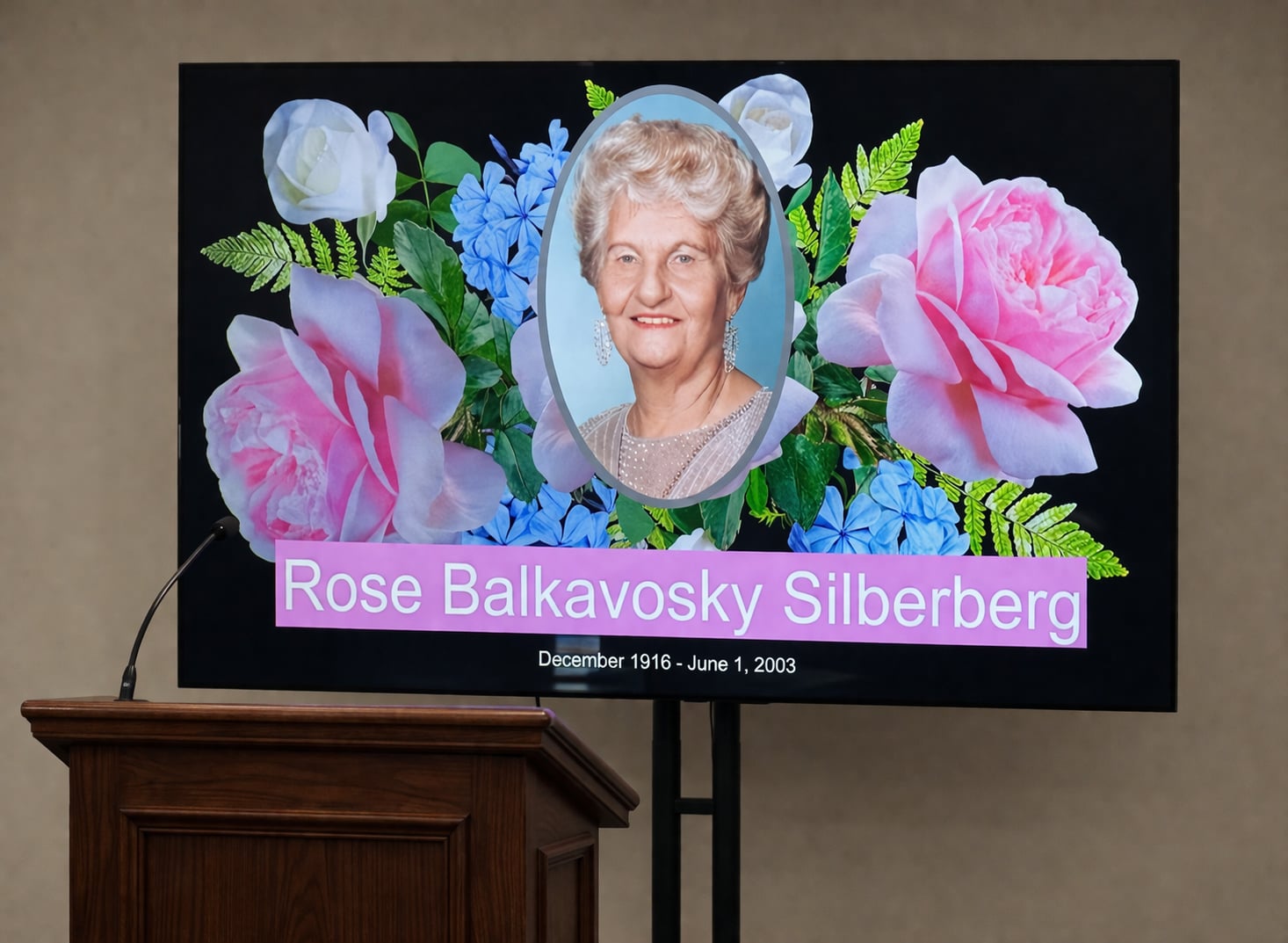
A presentation of Rose Silberberg’s story, shared with an audience as part of Holocaust education.
The speaker was supposed to be a Holocaust survivor. She got sick and couldn’t come. Then another survivor was asked to step in, and she couldn’t make it either.
In my area, there are not many survivors left who can speak. Most live further north. So in moments like this, someone like me is asked to step in.
I’m a granddaughter. A storyteller. Not a witness.
I feel it every time. Not just the responsibility of speaking, but the awareness that I am not who the audience was expecting. They came to hear someone who was there. I understand that. I would want that too.
I did not live through what my grandmother lived through. I did not see what she saw. I did not experience the fear, the hunger, or the loss.
What I have is what she gave me: her story, her voice, and the responsibility to carry it.
My grandmother never spoke publicly about her experiences. Even when she was encouraged, she couldn’t do it. Her story was mostly unspoken, passed down in pieces, and eventually recorded. If I don’t tell it, most people will never hear it.
Even if she were alive, she would not be the one standing in that room. And that changes what this moment is. When I stand there, I am not stepping in for her. I am the one carrying what she was unable to say out loud.
There are things survivors often don’t say about themselves. They don’t describe their actions as brave or emphasize their humanity in the moments when it mattered most. They tell what happened, often with a kind of humility that is hard to explain.
From where I stand, I can name what I see in those stories. I can say that choosing to help someone when you are starving is an act of courage. I can say that holding onto your humanity in a place designed to strip it away is extraordinary.
These are things my grandmother would never say about herself. But I can say them.
I also think about the way we listen to these stories. I have heard people say they’ve already heard a particular survivor speak, as if that means they don’t need to hear it again. But no one would say that about a person they love. We don’t listen to someone once and feel finished with them. My grandparents told me their stories repeatedly and I learned something new every time.
A survivor’s story is not something to check off. It is a life.
And every time it is told, it is another chance to see that life again.
I am not a survivor. I cannot replace the presence of someone who lived through it.
But I am here, and I am still telling her story.
Not as a witness, but as someone who carries what she was given and tries, in her own way, to make sure it is heard.
Related Topics