
They were going to get married no matter what
The first time you marry off a kid, one of the pro-tips you get is to double-check that the photographer knows who your people are. The immediate family, grandma, aunts, uncles, best friends, the ones who flew in from the other side of the globe.
It’s mainly a job for the couple, but maybe they overlooked someone. So, it might be one of those tasks you do before the reception begins, and the guests start streaming in. That’s also when you look to see that the seating chart was updated and that the chuppah is balanced properly on its poles; those last-minute finishing touches, in that quiet before that storm.
Things are different when the storm comes before the quiet.
When sirens blare and the country enters a state of high alert hours before the meticulously planned Friday morning wedding, the only pro tip you get is: don’t. Do not bring a crowd of guests to congregate. Do not expect a celebration. Do. Not. Have. A. Wedding. The country is at war. More missiles are expected. All ears to the phone, all eyes to the sky, get near shelter.
At 9 am, we would have been dressed in our finery and leaving our Jerusalem hotel for the nearby site, a glorious shady forest location on the outskirts of the city. Instead, it was chaos and exhaustion. The emergency announcement had dragged us from our beds at 3 am. We soon understood that this wasn’t the usual Houthi attack from Yemen. It was a war with Iran.
I have a WhatsApp message from my friend Susan from that night at 3:37 in the morning asking if we’re OK. My answer is “physically, yeah.” Susan then asked, “And the other?” and I wrote back: “We had no plan B.”
I went into my son’s hotel room. He was on the phone with his future mother-in-law. His bride’s parents and a couple of her many siblings had come in from Melbourne for the big event. The bride herself, who was staying with her parents at their rental apartment, was still asleep. Should they wake her? My son said no, not yet.
The photo I snapped of him at that moment shows a man in chaotic circumstances taking charge of the greatest moment of his life; deciding that even though both hell and high water had come, he – they – were getting married that day.
The yard of the place where they live on a bucolic moshav near Jerusalem would be the location.
With sun-up, he was dressed in his wedding clothes. My rabbi-brother-in-law told my son that if they wanted to be married on one of the scariest days in Israel’s history, he’d be there to conduct the ceremony no matter where or when.
The couple’s landlords rose to the occasion and opened their ample backyard for use. Not only did the musicians not cancel, they realized that without a sound system, they’d need their drummer, so he came along. The florist friend who was doing their flowers at cost as a wedding gift brought the flowers. The photographers showed up.
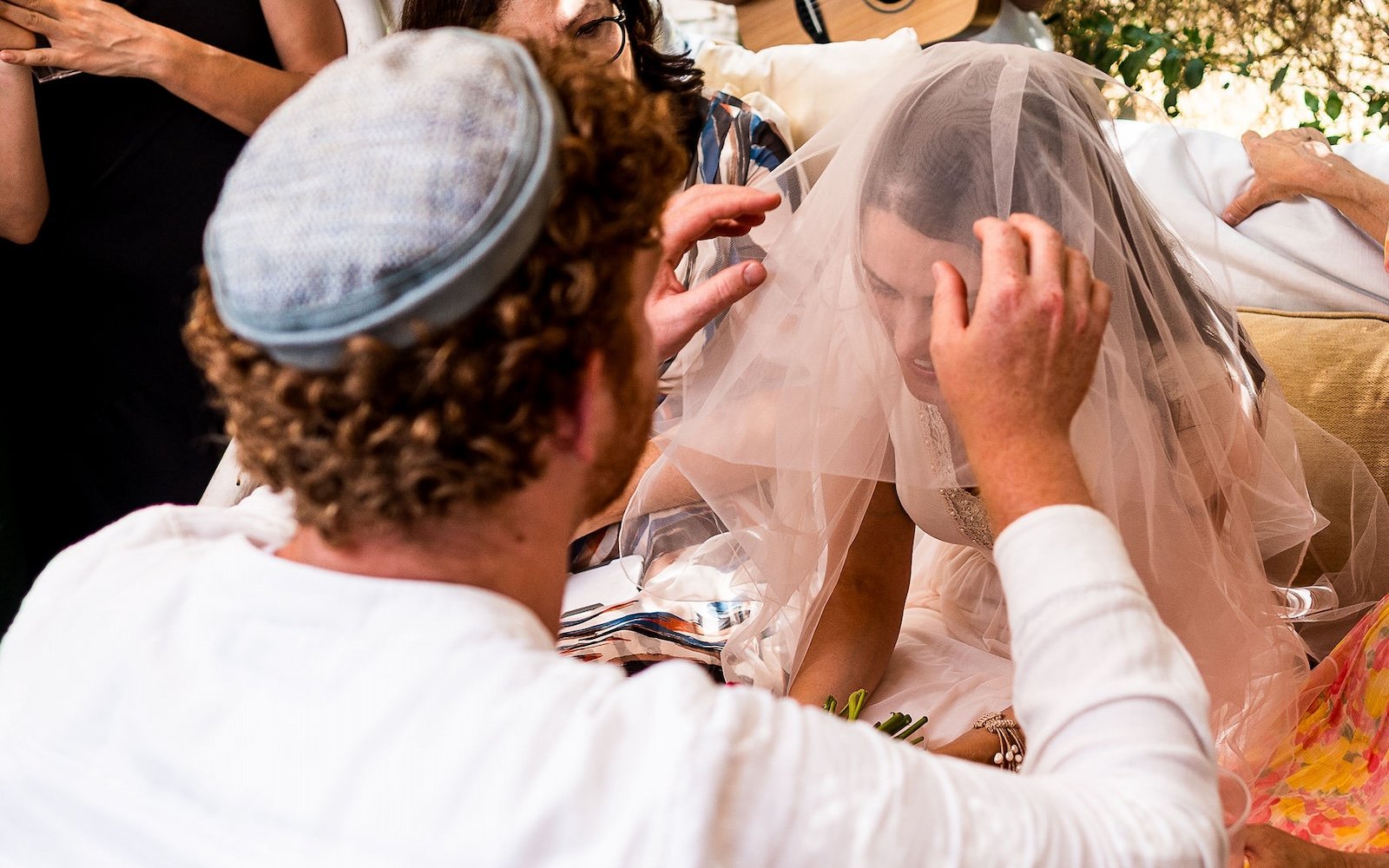
At first, attendance was to be limited to 30, which is the number of people their bomb shelter could hold. But as the hours passed, the state of alert was relaxed somewhat, and that, together with a series of miscommunications, led to a rather large group of people hopping in their cars and showing up, although plenty of beloved friends and family stayed home, where, rationally, they belonged. But so many of our loved ones somehow made it, aunts, uncles, cousins, my mother-in-law, who is nearly 90, and the bride’s large family, and all those friends who, thankfully, got the wrong message and came.
The bride, gorgeous in her wedding dress, pinned up her own hair on the car ride over. The beautiful ketuba their close friend made for them needed an edit – the location, “Jerusalem,” was carefully scratched out with a kitchen knife and replaced with the name of the moshav.
None of the detailed plans and lists and spreadsheets were relevant. Instead, it was all volunteers and all improvised. Friends and siblings took over. There were so many stories of little and big things people thought to do to make it work. Shade was rigged up. Someone brought a little treasure chest for gifts. Side areas were set up for the groom’s and bride’s tishs. Our daughter stepped into action in ways big and small, including DJing after the band left.
We were stuck with no arrangements for refreshments. Food and beverages were brought from here and there: The bride’s sister got bagels and platters from a bagel shop where they insisted they couldn’t help until she burst into tears and explained why she needed the food. At which point they sat her down, gave her iced coffee, and scraped together everything they could manage from their war-depleted inventory.
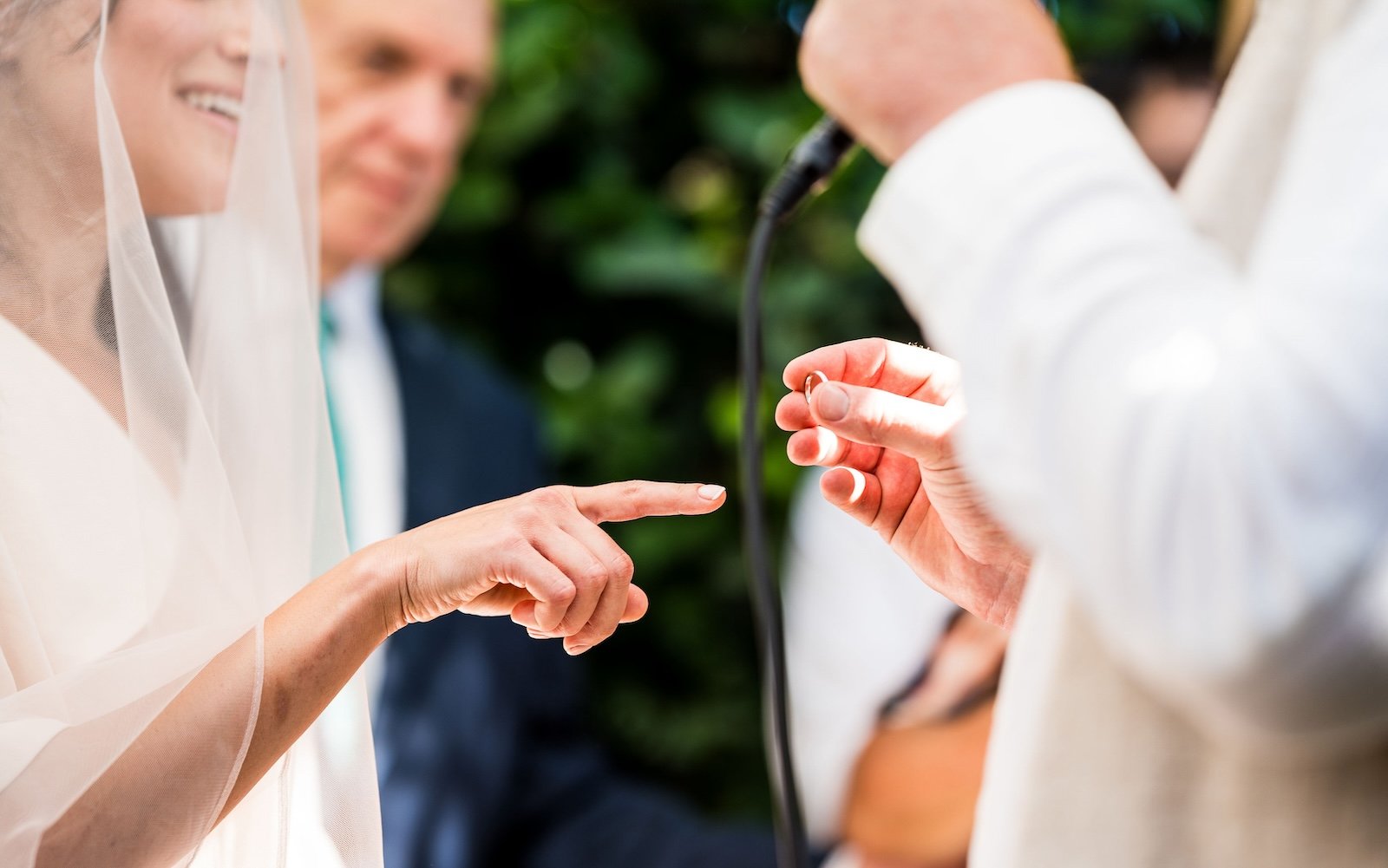
And, on a boiling hot Friday the 13th, on the first day of what we now call The 12-Day War, Yishai and Nomi got married in the calm between sirens, which resumed that evening. At 3:30 in the afternoon, we stood under the chuppah that a friend and I made for my best friends’ wedding, giving it to them on condition I could use it if I ever got married. Which I did. (And which many other couples have done as well, including their daughter and now my son.) The chuppah was held up by poles that had been made by the couple’s carpenter friend as an afterthought the day before.
Some people saw this wedding as an act of defiance or courage. I don’t quite think so. It was kind of harebrained – it could have gone terribly wrong. What it was, though, was the potent life-force of love. This wedding had its own momentum – it was coming no matter what.
I am not prone to religious expression, but that morning, when I realized my son was determined to go ahead with it, I was feeling some very big feelings. I grabbed his shoulders and said, Zeh hayom asah ado-nai. It’s a verse from Psalms that means “This is The Day the Lord has made,” and continues, nagila ve’nismecha vo – we will rejoice and be glad in it.
My son answered, “You know, ‘Ze hayom’ [this is The Day] is not a reference to a specific day, it can be any day.”
He was citing the Midrash Tehillim commentary on the Psalms, which ponders whether the words “the day” refer to a specific festival or event. And the Midrash Tehillim answers, essentially, no, it’s not a specific day. Every day in which God gives us light is The Day that the Lord has made.
To have such light that day, of all days, a light made up of thousands of sparks, and of the brightly burning love my son and daughter-in-law have for each other – to have that light on such a dark day was an epic astonishment.
We got the photos a few days ago, and oh my goodness, are they beautiful. Painful, too, for the people who aren’t there. Knowing what I know now, if I’d had that quiet time to talk to the photographer, I would have had to tell him that every person there was “our people.”
And not just them – the bagel store people and the generous landlords and the people who watched and cheered on Zoom and our well-wishers, including the strangers who, when they heard about the wedding, sang and clapped in the hotel lobby and in the elevator and at the park.
It turns out that all of them are our people.
–
This essay originally aired as a segment on an episode of The Promised Podcast.