This Yom Kippur, are we listening?
If you’ve read any Jewish publications lately, you would get the impression that every Jew in America is kvetching about what their rabbi is saying – or not saying – about Israel.
It’s the “elephant in the room,” as one article, entitled “This Rosh Hashanah, give your rabbi a break,” called it.
I find this truly remarkable. Suddenly, after thousands of years of rabbis putting people to sleep, apparently everybody is listening to the sermon! It’s a miracle!
All kidding aside, I do sympathize with my rabbinic colleagues and the conundrum they face. The Yom Kippur drash ought not to be a Shakespearean soliloquy.
But at the risk of alienating literally everybody, I think we rabbis may be taking ourselves a bit too seriously.
What the rabbi chooses to talk about is utterly irrelevant for the 90+% of American Jews who either don’t belong to a synagogue at all, or only show up on High Holidays.
Sadly, the overwhelming majority of American Jews may never hear a rabbi say anything. But on Yom Kippur, we might get their attention for a few minutes. If there’s one voice we can get them to tune into, whose do we want it to be?
Perhaps, it’s not the rabbi’s at all. Not even the cantor’s.
In the stirring prayer Unetaneh Tokef (The Power of This Day), our liturgy visualizes God sitting in judgment on the High Holidays.
The great shofar will be sounded, and then a still, soft voice will be heard.
I believe that in just a few words, this prayer is hinting at a profound idea: If on Rosh Hashanah we are commanded to listen to the Shofar, then on Yom Kippur, we are commanded to listen to the still, soft voice. What—and whose—is it?
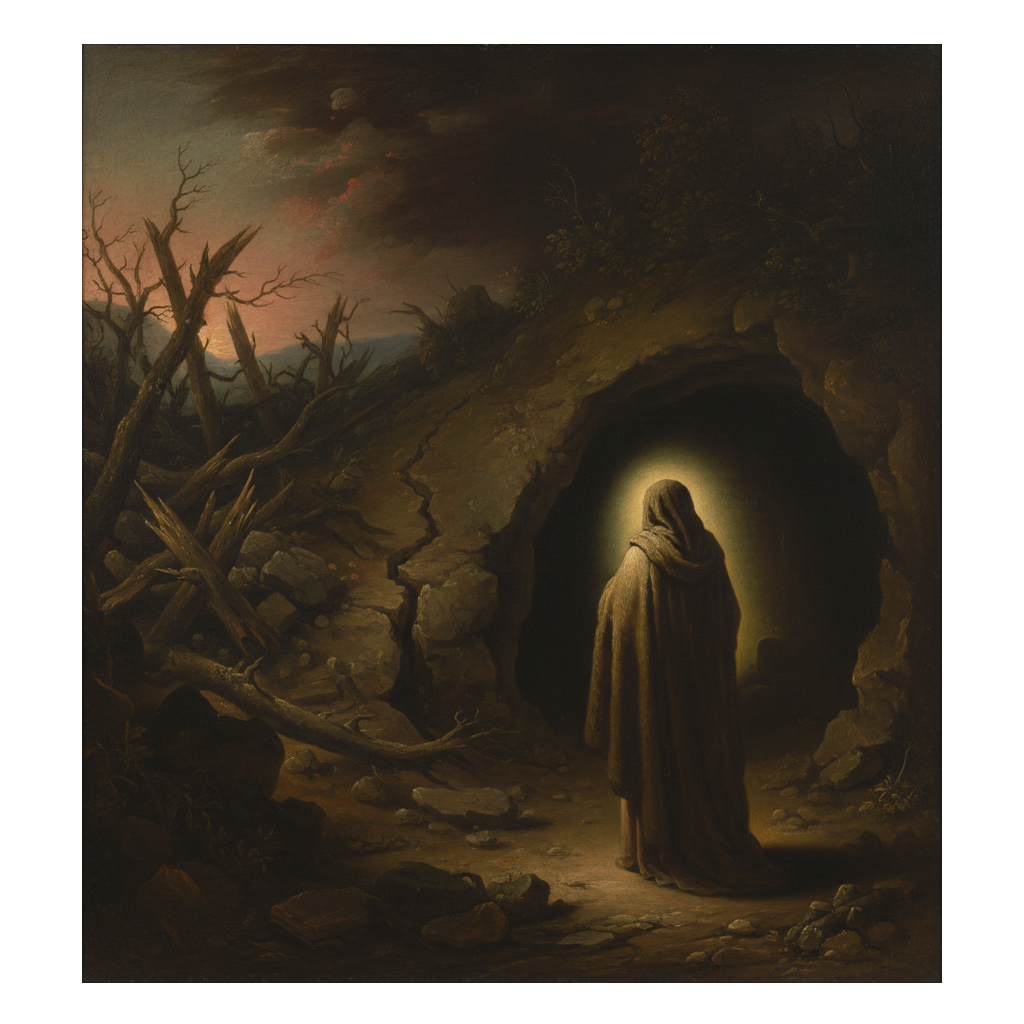
This “still, soft voice” is a reference to I Kings 19:10-12, when God is revealed to Elijah the Prophet. God sends a hurricane, and earthquake, and a fire—but He is in none of them. Only in the faint sound that follows.
It’s a sound which is always present, but is usually drowned out by the noise and chaos around us. It’s a voice which comes from deep inside of you and me.
It’s the sound of our Divine soul, reaching out. And, one day a year, we can actually pick up its frequency, if we tune in.
Granted, it’s not easy. We live in a world of never-ending hurricanes, earthquakes, and fires – literal and figurative. We are distracted, distressed, and dysregulated. The news cycle and the algorithm monetizes adrenaline and outrage. We can barely hear ourselves think.
But in a world like that, we need Yom Kippur more than ever.
It’s a day when we can quiet the noise and overstimulation. No food. No work. No notifications. No politics. Nothing to kvetch about. Just ourselves and our souls, standing before God.
So here’s the invitation, for you, and for me:
This Yom Kippur, let’s tune in not just to the sermon – but to the still, soft voice inside us.
Because if we can’t do that today, when will we?
G’mar Chatimah Tovah.