


Thomas Guénolé Interview | Alexandre Gilbert #344
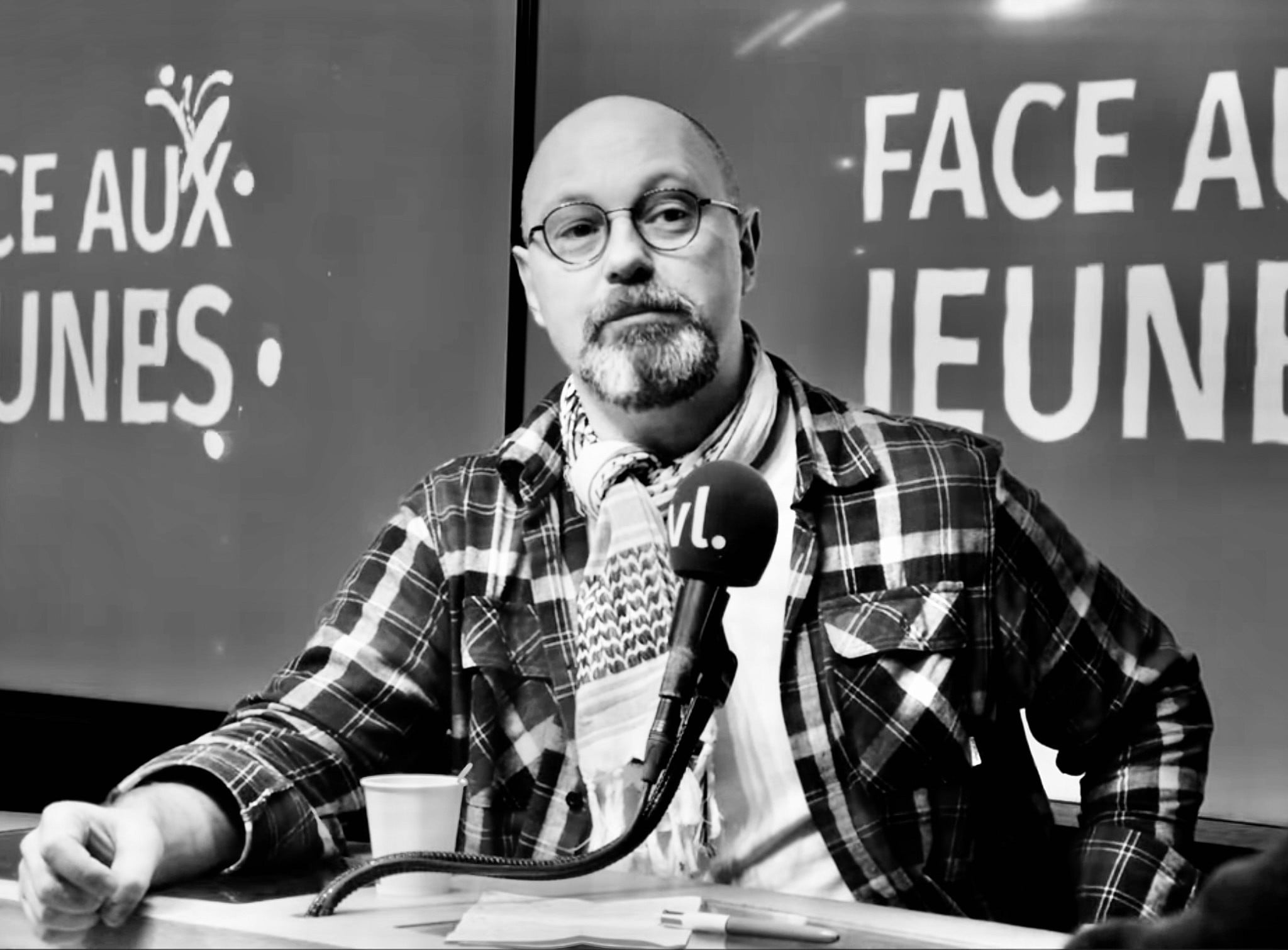
Thomas Guénolé, a French political scientist, essayist, Sciences Po Paris alumni and left-wing commentator associated with founding LFI’s internal training school (“École de formation insoumise”), has published Hommage aux Palestiniennes with Armand Colin, following L’art d’avoir toujours raison quand on est de gauche, released by Éditions du Rocher in 2025. He has spoken publicly about having Ashkenazi Jewish heritage on his mother’s side.
Emmanuel Todd, known for predicting the fall of the Soviet Union and linking the size of “Je Suis Charlie” protests to regional Catholic history anointed you as his disciple. What do you take from his way of thinking?
TG: Emmanuel Todd had a profound influence on my work: in particular, my deconstruction of the French xenophobic myth of the “monstrous suburban youth” is an inverted mirror of Todd’s concept of the “MAZ bloc” — meaning aging, “zombie Catholic” middle classes. To sum up: older, white, prosperous men of Catholic culture feel fear, hatred, and contempt toward young people of Maghrebi origin, poor, and of Muslim culture.
It was also under the influence of Emmanuel Todd’s work that I joined the neorealist school of international relations, which gave rise to my theory of the “Clash of Empires in the 21st Century.”
And above all, it was Emmanuel Todd who, ten years ago at a dinner, when I confessed to him that I wanted to write a book on a serious subject — globalization — rather than continue writing about politicians, convinced me to go propose this change of direction to my publisher: that gave rise to “La Mondialisation malheureuse” (“Unhappy Globalization”), one of my most important books.
What other great thinkers influence you?
TG: Seneca, for my general ethical framework. Sartre, for the way I try to be a genuinely usefully engaged left-wing intellectual. And the economist Bernard Friot, because his work convinced me that a political and economic system founded entirely on direct democracy and cooperatives is possible.
(Editor’s note: Jean-Paul Sartre (1905–1980) was a French philosopher, playwright, novelist, and political activist, and the leading figure of 20th-century existentialism. Educated at the École normale supérieure, he developed a philosophy centered on radical human freedom and responsibility, laid out in his major work L’Être et le Néant (Being and Nothingness, 1943), and argued that “existence precedes essence” — humans have no fixed nature and must create meaning through their choices. He was also a prolific novelist and playwright (La Nausée, Huis clos, Les Mouches), co-founded the journal Les Temps modernes, and declined the 1964 Nobel Prize in Literature. Politically, he was a committed left-wing intellectual engagé, active in anticolonial causes (notably opposing French colonialism in Algeria and supporting Palestinian self-determination), and became the paradigmatic model of the publicly engaged intellectual who takes sides in the struggles of his time rather than observing from a distance. He had a lifelong intellectual and personal partnership with Simone de Beauvoir.
Seneca (Lucius Annaeus Seneca, c. 4 BC – 65 AD) was a Roman Stoic philosopher, statesman, dramatist, and tutor and advisor to Emperor Nero. Born in Córdoba, Hispania, he became one of the most influential voices of Stoicism, known for works like Letters to Lucilius (Epistulae Morales), On the Shortness of Life, and On Anger, which emphasize virtue, rational self-control, acceptance of fate, and indifference to external fortune (wealth, status, pain) as the path to a good life. He amassed enormous personal wealth and political influence despite preaching detachment from material things — a tension often noted by critics. Implicated in a plot against Nero in 65 AD, he was ordered to take his own life, which he did with philosophical composure, an event later mythologized as an exemplary Stoic death.)
In Islamopsychose, you draw on René Girard’s theory of mimetic desire to develop a theory of hatred concerning the treatment of religious minorities in France. Does this argument still hold up?
TG: Actually, my theory of hatred is even more relevant today than when the book came out. René Girard described the anthropological concept of the scapegoat ritual, whereby the city blames everything that’s wrong on someone before driving them out to purify itself of all its problems. I theorized that France — and in fact all human societies — practices scapegoating in order to avoid confronting its internal tensions, fears, and failures. France did this to the Jews with the Dreyfus Affair after its catastrophic defeat in the Franco-Prussian War. Today, in accelerated relative decline, it’s unleashing itself on the Maghrebi-Muslim scapegoat. Consider this: the far right will probably win the 2027 general elections, with hatred toward the Maghrebi minority as its sole message.
(Editor’s note: René Girard (1923–2015) was a French historian, literary critic, and philosopher of social science, best known for developing the theory of mimetic desire and the scapegoat mechanism. Born in Avignon, he studied at the École des Chartes in Paris before moving to the United States, where he spent most of his academic career, eventually becoming a professor at Stanford University. His foundational idea, first developed in Mensonge romantique et vérité romanesque (Deceit, Desire, and the Novel, 1961), is that human desire is not autonomous but mimetic — people desire objects because other people (models) desire them, which generates rivalry and conflict. He extended this into a broader anthropological theory in La Violence et le sacré (Violence and the Sacred, 1972) and Le Bouc émissaire (The Scapegoat, 1982). His connection to the Dark Enlightenment runs primarily through Peter Thiel, who studied under Girard at Stanford and later funded Imitatio to promote Girard’s ideas, but he also became a major backer of neoreactionary thinkers like Curtis Yarvin.)
What of Sartre is there in your conception of the intellectual and their role in society?
TG: Jean-Paul Sartre is my model. I try to play, in the France of this early 21st century, the same role he played in that of the 1960s-70s, and really from the 1950s onward. For him, the intellectual must be engaged, in service of truth and justice, in service of the great political and moral causes of their time, among those who resist rather than above them. I’m not saying I’ve already managed to rise to my model’s level — but I’m working at it. One cannot understand the scope of my commitment to the Palestinian cause without keeping in mind Sartre’s anticolonial commitments, including on behalf of Palestinians, for that matter.
Soral claims to draw on Lucien Goldmann, best known for pioneering genetic structuralism and Georg Lukács, literary realism theorist, and politician, who introduced the concept of reification that deeply influenced the Frankfurt School, existentialism, and modern cultural studies. He also invokes Carl Schmitt, through the figure of the Katechon, which he compares to Putin, claims intellectual closeness to Alexander Dugin, and calls himself a Marcionist. Should he be taken seriously?
TG: The impact of his antisemitic-conspiracist preaching on today’s male youth, who are rediscovering him, and on a whole segment of my own generation, born in the 1980s, must be taken very seriously: we all know people who quote Alain Soral on the sly. That’s why I decided to go confront him in debate, on the topic of his antisemitic theses, which I intend to refute one by one. The mistake would be to keep practicing the “cordon sanitaire” [isolation strategy] when, in the age of social media, that cordon is a sieve: Alain Soral’s videos get tens to hundreds of thousands of views.
(Editor’s note: Alain Soral (born 1958) is a self-professed Marxist before evolving toward the far right during the 2000s, joining the National Front and serving on its central committee before leaving after two years. In 2007 he founded Égalité & Réconciliation (E&R), based in Saint-Denis, with former Groupe Union Défense activists Jildaz Mahé O’Chinal and Philippe Péninque, He has taken openly antisemitic positions, allying with comedian Dieudonné, and in February 2023 the Global Project Against Hate and Extremism classified E&R as a “conspiracy” and “antisemitic” group.)
TG: Aurélien is a friend. So I’ll read his book with pleasure. As for Freemasonry, you’ll understand that, being a member of the Grand Orient de France myself, I can’t offer any comment on that.