
Three Benefits of Plurality Bloc-List Voting
Plurality Bloc-List Voting (PBLV) vs. Party-List Proportional Representation (List-PR)
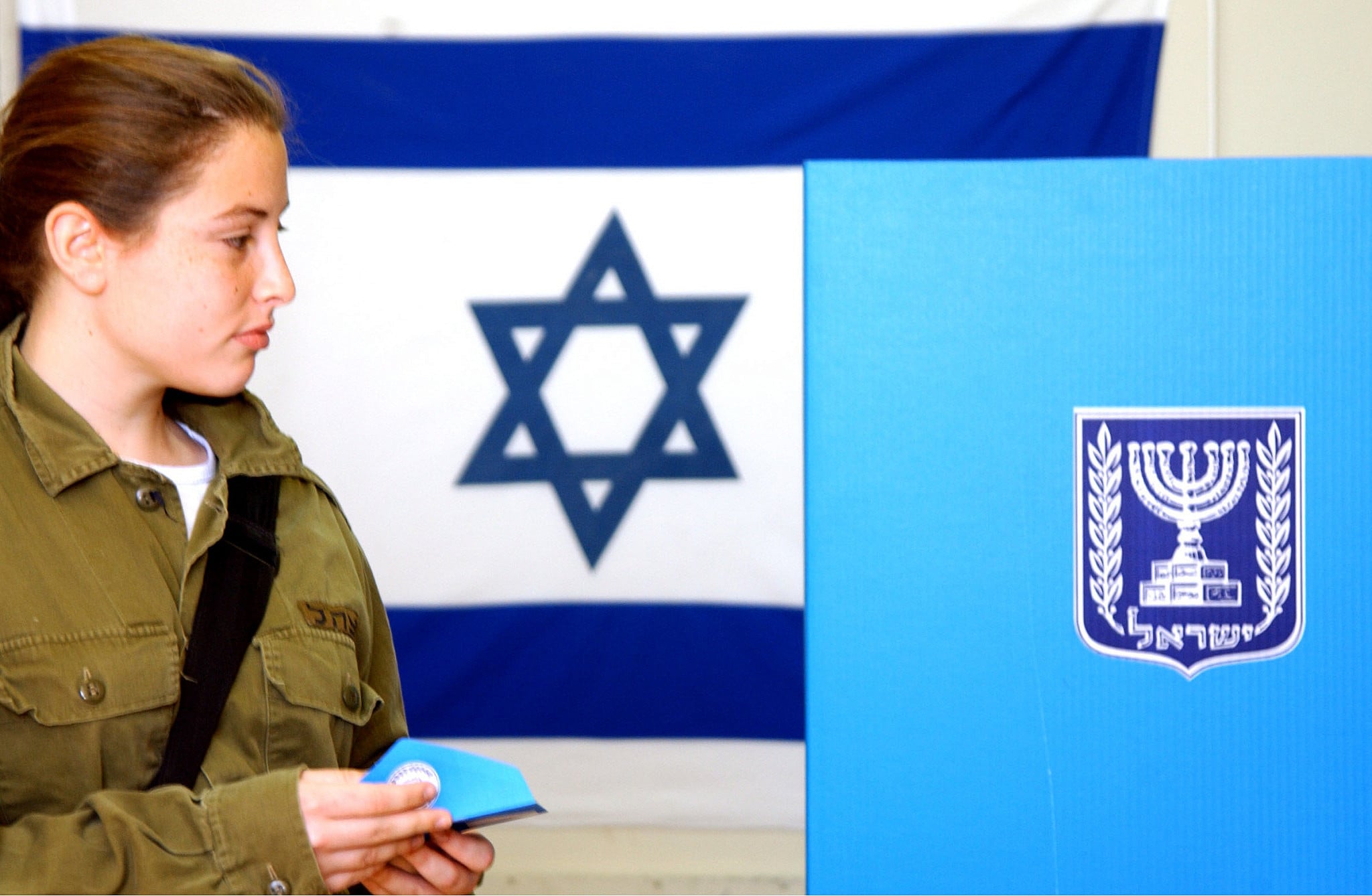
Israel’s current and longstanding election system functions along the List-PR method. Familiar to Israelis and followers of Israeli politics; parties produce lists, voters cast a single vote for one of these party lists, and parties are allocated legislative mandates proportional to the share of their electoral support.
A joint proposal by the Israel Democracy Institute and Kohelet Policy Forum among other organizations to the Knesset Caucus for Changing the Electoral System seeks to jettison List-PR in favor of PBLV. In this new system, parties would still produce and present electoral lists, but voters will have up to 120 votes (equal to the 120 available legislative mandates) to cast on individual candidates (rather than entire lists) which can be split between lists, with the 120 most vote-getting candidates filling the 120 Knesset seats.
Although this would be a dramatic departure from the List-PR system that has held since the British Mandate, there are three significant reasons to support PBLV.
Voter Choice
In a country whose democratic character seems to be increasingly contentious, the PBLV provisions of vote-splitting between lists and voter discretion within lists would objectively provide Israeli voters with more electoral choice than any democratic peer. A Sephardi Haredi may split votes between Likud and Shas candidates, a liberal Tel Avivi may split votes between the myriads of opposition factions, one could even split votes for candidates on both sides of the coalition lines.
Within parties, hardcore Bibist can vote for Netanyahu without also having to give a mandate to someone like Yoav Galant. A smol emuni (religious leftist) can vote for some Democratic party candidates without having to hold their nose for Naor Narkis.
PBLV would give Israeli voters far greater control over who actually enters the Knesset by allowing them to support individual candidates rather than being forced to accept an entire party list. The system turns elections into a direct expression of voter preference rather than a rigid endorsement of party leadership’s slate, enabling voters to split their votes across parties and within lists.
Unity Politics
Israel’s List-PR status quo is designed to incentivize the creation of niche parties, sectoral and narrow-interest parties who with as little as 3.25% of national support can command the direction of the state. Further, the exclusivity of the List-PR vote, meaning that an Israeli can currently only support one list to the exclusion of all other lists, serves as a structural incentive for the vitriol, negativity, and divisive rhetoric which plagues Israeli politics.
PBLV as a plurality system subject to Duverger’s law would instead incentivize the unification of these niche parties into a small number of large joint lists, seeking to balance mass appeal with voter discipline. In the previous election, the Likud won a plurality with 23.4% of the vote and received a proportional 32 Knesset seats. If these elections were instead run as PBLV with all votes the same but as down-ballot candidate votes, then the Likud would win all 120 seats; the 120 Likud candidates would fill the top 120 vote-getting spots at 23.4% each. In other words, a list with plurality national support and high voter discipline can sweep a PBLV election.
PBLV would accordingly push Israel’s fragmented parties to assemble broad joint lists capable of winning larger pluralities, while simultaneously requiring those alliances to maintain strong voter discipline to ensure their supporters concentrate votes efficiently on the list’s candidates rather than dispersing them across competing blocs.
This would not, however, resemble the highly-polarized two-party systems observed in places like the United States because of the non-exclusivity of PBLV vote. Although both Republican and Democrat candidates are incentivized to maximize their voting appeal, ultimately voters are presented with an exclusive choice, creating a political incentive for negative and divisive campaigning. Though parties in PBLV would like to maximize voter discipline, the ability of voters to split votes across lists incentivizes parties to prioritize mass appeal as to not leave any votes on the table.
The abundance of voter choice in PBLV forces politicians to compete for the approval of voters; parties are forced to prioritize unity over division, positivity over poison, and real delivered results over demagoguery.
Stable Governance
The structural incentivization towards unity in PBLV does not stop on election day. The aforementioned combination of larger, more cohesive blocs and strategic voter alignment reduces the number of parties in the Knesset and the likelihood of fragile, multi-party coalitions. By strengthening the link between voter support and legislative outcomes, PBLV increases accountability and discourages opportunistic alliance-building purely for parliamentary arithmetic. The result is a political environment where governments are more durable, policies can be pursued consistently, and voters have clearer responsibility for outcomes.
Plurality bloc-list voting transforms Israeli politics by giving voters unprecedented control over which candidates enter the Knesset, allowing them to split votes across parties and within lists. By incentivizing the formation of larger, disciplined joint lists, PBLV reduces fragmentation and encourages parties to compete for broad voter support rather than rely on narrow sectarian appeals. This combination of greater voter choice, party unity, and strategic accountability fosters more stable, effective governance with clearer links between electoral outcomes and political responsibility.