Jewish values, leadership, and honest conversation
Three Synagogues in One Week. Canada, This Is Your Crisis Too.
Global News, March 9, 2026
This post is co-written by Rev. Jason Byassee, Senior Pastor of Timothy Eaton Memorial Church, Toronto and Rev. David Larmour is Senior Pastor of King Street Community Church, Oshawa.
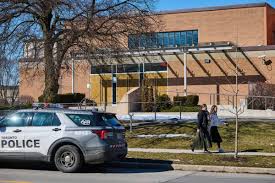
Three Toronto-area synagogues. One week. That is where we are. A week ago Monday, shots were fired at Temple Emanu-El in North York, hours after families had gathered there with their children for Purim celebrations. Then, in the early hours of Saturday morning, bullets struck Shaarei Shomayim on Glencairn Avenue and Beth Avraham Yosef of Toronto in Thornhill — two more congregations, two more sets of shattered windows, two more communities waking up to the possibility that they are no longer safe in this city. No one has been injured, thank God. But that is not the point. The point is that someone — or several someones — is firing weapons at Jewish houses of worship in Canada, and they are escalating.
Canada has a decision to make. Not the Jewish community. Canada.
We write as three faith leaders — a rabbi and two Christian ministers — who share a conviction that transcends our traditions: what is happening on our streets is not a Jewish problem that the rest of Canada is free to observe with sympathy from the sidelines. It is a test of whether this country means what it says about pluralism, safety, and the equal dignity of every community. And right now, Canada is failing that test.
Since October 7, 2023, antisemitic incidents in Toronto have accounted for nearly two-thirds of all reported hate crimes. Seven synagogues in the Greater Toronto Area have now been targeted with gunfire. Political leaders have issued statements. Police have increased patrols. And yet the shootings continue — not despite these responses, but through them, which tells us something important: what we have done so far is not enough.
One of Rabbi Wernick’s congregants recently shared a conversation he’d had with his parents, both Holocaust survivors. When he returned from his first trip to Israel, he asked them why they had never moved there. Their answer: they chose Canada because they did not want their children to live in fear. They did not want the violence of the old world to follow them into a new one. Canada, they believed, was different.
We are writing this piece because we are no longer sure that is true. And we believe Canadians need to hear that directly.
The shootings took place during the week of Purim, the Jewish festival that commemorates survival in the face of annihilation. In the Book of Esther, Mordecai refuses to be silenced by fear — and he refuses to allow those with power and access to remain passive. His message to Esther is not a request. It is a demand: “Do not think you will escape this.”That demand belongs now to every Canadian who has watched these events unfold and has not yet asked what they are going to do about it.
The Christian tradition is equally unambiguous. “Blessed are the peacemakers” is not a call to quiet tolerance. It is a call to active, costly pursuit of justice. Peacemaking requires naming what is happening, confronting it, and bearing some of the weight of it yourself.
So let us name it plainly: targeting Jews in Canada for the policy decisions of the Israeli government is wrong. Not complicated. Not a matter of perspective. Wrong. No political position — however sincerely held — justifies firing a weapon at a synagogue. No foreign conflict licenses violence against a community at prayer in Thornhill or North York. The people pulling these triggers are not making a political statement. They are committing hate crimes. And the communities that have, through rhetoric and silence, made those acts feel culturally permissible bear some responsibility for what is happening.
We are calling on political leaders at every level of government to move beyond condemnation. Prime Minister Carney has pledged federal resources to identify those responsible — that matters, and we are grateful. But identification and prosecution are not the same as prevention. We need robust and visible enforcement of hate crime laws, coordinated federal and provincial strategy, concrete accountability for those inciting violence, and a genuine public reckoning with the networks and rhetoric driving this escalation. We need leaders who are willing to say not only “this is not who we are,” but to act as though they believe it.
The Holocaust survivors who chose Canada understood something the rest of us are being forced to relearn: a society’s commitments are only as strong as what it does when those commitments are tested. Canada has always prided itself on being a country where difference is not danger, where people of every background can live with dignity on these streets.
That covenant is not self-sustaining. It requires active defense. And this week, it is under assault.
The question Mordecai puts to Esther is the question this moment puts to every Canadian: You are here. You have a voice. What are you going to do?
Related Topics
Related Posts