
3,000 Jewish women raise the roof in Manhattan
It’s not easy being a Jew these days. As our forbears used to say: “Schver tzu zayn a yid.” An excruciating war, the anguish of the hostages and their families, anti-Jewish hate crimes, antisemitism sweeping social media. The election of the proudly anti-Israel Mamdani as mayor of New York City. And then, at the start of Hanukkah, the horrifying terror attack in Sydney. It would be understandable to feel a sense of despair, even hopelessness, and to ask, as the prophet Isaiah did thousands of years ago, “Ad matai, Hashem?” How long will our unbearable situation continue? But more importantly, I began to fear for the younger generation. How would they cope with the significant challenges they face as Jews in today’s world?
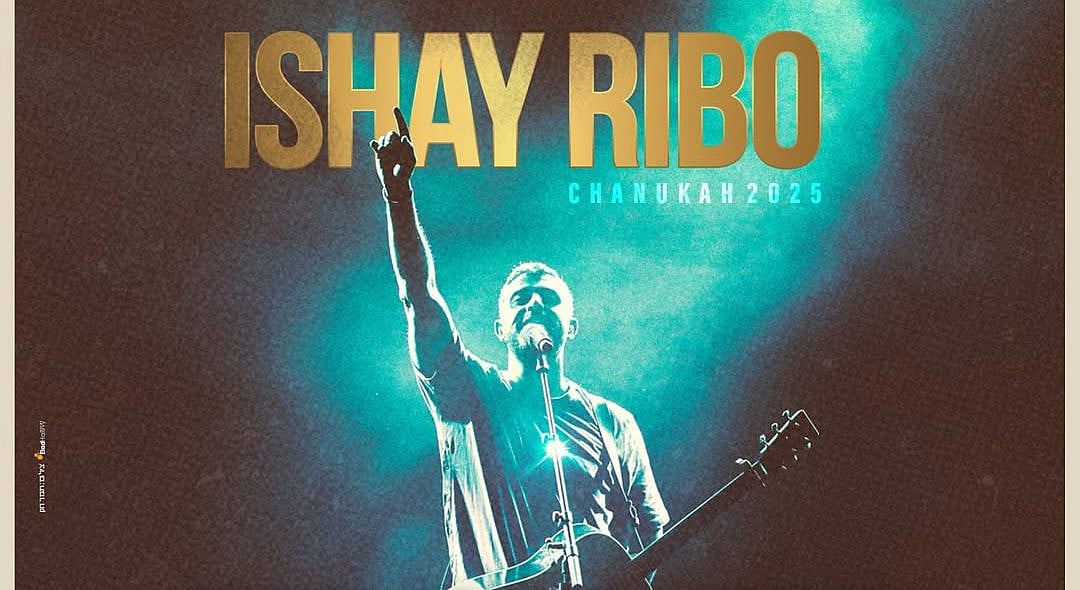
Then, on Monday night, just as the lights of Hanukkah were growing dim, I was invited to a Ishay Ribo concert for women at the United Palace Theater in Manhattan, featuring words of inspiration from Sivan Rahav Meir. The show was a fundraiser for the organization Efrat, and the theater was packed — including the balcony upstairs — with women of all ages. But if you glanced around the hall, you could see that it was mostly filled with Orthodox teenage girls.
Picture a pop/rock concert for young Jewish Orthodox women hailing from the main girls’ high schools of New York and New Jersey, as well as Stern College, along with a high-spirited group of girls visiting from Mexico (if you think Americans are loud, you haven’t spent time with our sisters south of the border). Like every pop concert worth its salt, the music was deafening, the lights bright and glaring, and the atmosphere electrifying.
Although Ishay Ribo was billed as the show’s main attraction, the concert opened with superstar singer Bracha Jaffe, who appeared on stage dressed in a sparkling silver gown. She reminded me of an Orthodox Jewish version of Taylor Swift (albeit in much more modest attire). The overriding themes of her songs are faith in God and the strength of the Jewish people (as emphasized in her iconic song, “Yid,”—”Cause a Yid never breaks, and a Yid never bends, a Yid never gives up in the night…A Yid understands that Hashem has a plan.”) and it was obvious that the girls idolize her and couldn’t get enough of her delightful voice and energetic dance moves.
But this was just a warm-up for the show stopper, the king of religious Jewish pop, Ishay Ribo. He entered the stage to rousing cheers of “Ishay, Ishay!” And Ishay thrilled them with his fan favorites. The girls rose to their feet and sang exuberantly while swaying side-to-side, arm-in-arm with their friends, and they were literally dancing in the aisles. I was amazed that so many of the girls, including the young ladies sitting behind me, knew all the words to Ishay Ribo’s most popular songs, such as Sibat HaSibot and HaLev Sheli. Ishay’s soulful songs are about seeking a deeper spiritual connection with God and the unity of the Jewish people. He ended his part of the program draped in an Israeli flag, urging his American Jewish sisters to come home.
And then came Elitzur. I’m embarrassed to admit that I had never heard his name before. It turns out the Yair Elitzur is the Breslov Hasidic singer and rapper who released the religious pop song, “Tamid Ohev Oti,” in June 2024 during the Swords of Iron War, which has become a new unofficial Israeli anthem.
When Elitzur began to sing the first notes of his beloved song, the crowd went wild. Standing on their feet, they belted out the uplifting chorus with passion, turned on their phones’ flashlights and waved them above their heads.
It is incredible that the “anthem” that has emerged from this exceedingly difficult period in Jewish history is a song all about God’s love for the Jewish people and how everything will be “od yoter tov” — just keep getting better and better. But standing in a room filled with young, dynamic Jewish women, it was easy to believe it. The theater was bursting with jubilation and pride. Yes, there has been a deluge of bad news lately, but we must not give in to despair. On the cusp of 2026, there is hope for us yet. Three thousand young Jewish women keep singing on.