Seeking honest leadership, and new narratives.
Three years after October 7, Jewish humanity should need no defense
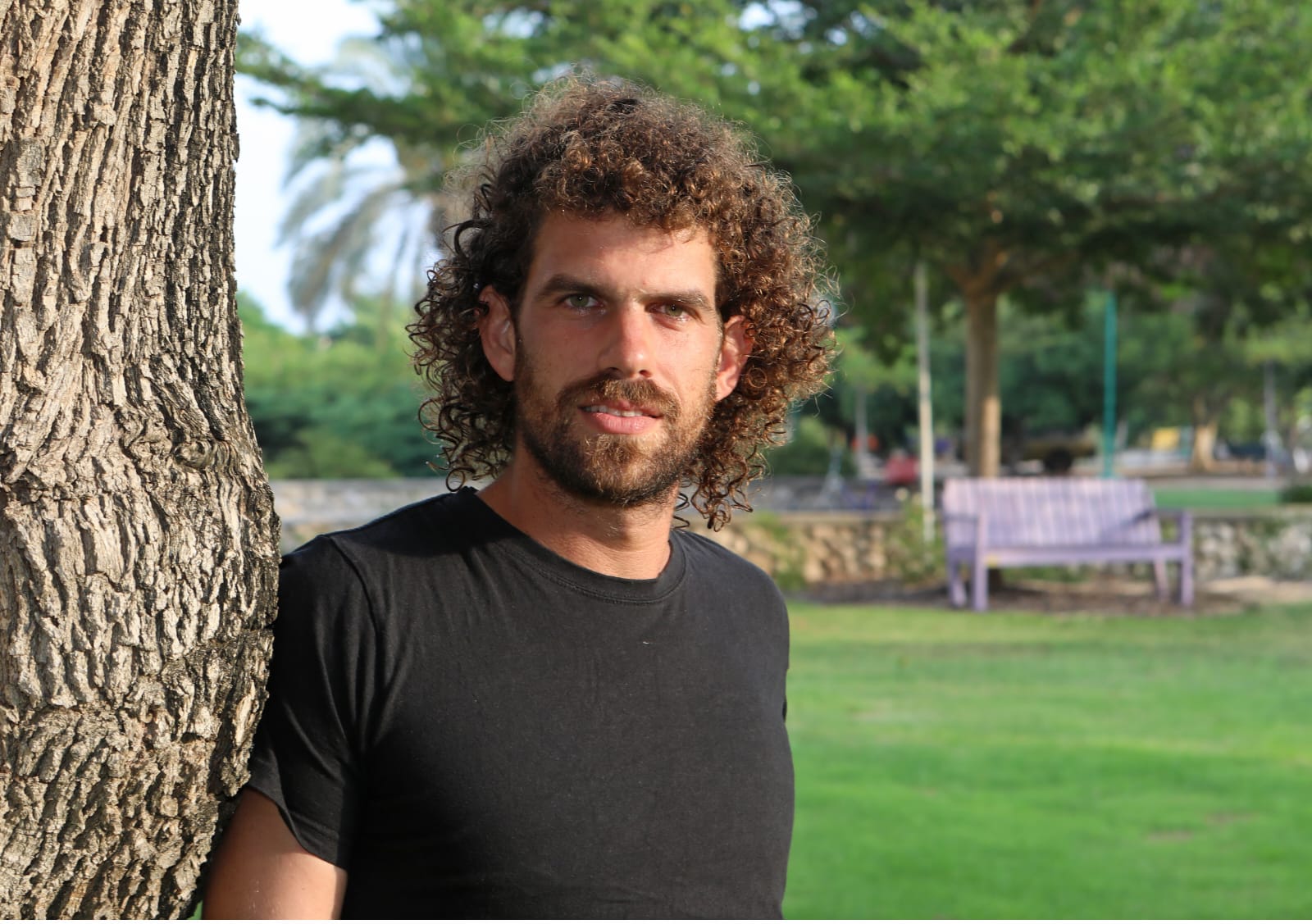
Hayim Katzman z"l, murdered by Hamas on October 7th on Kibbutz Holit. (credit: Eliyahu Hershkovitz)
Three years after October 7, remembering the victims means defending a principle that should never have become controversial: Jewish and Israeli civilians are entitled to safety and compassion without first passing a political test.
The people Hamas murdered in their homes and at a music festival had families, disagreements, hopes, and unfinished lives. Their political opinions had no bearing on their right to live. Remembering them requires us to hold on to that elementary truth when we look at the living.
Among my many “responsibilities,” I am also the chair of Kehilat Moriah, the oldest conservative (Masorti as we call this movement) in Israel. At Moriah, our Simchat Torah (the celebration of concluding reading the Bible with the book of Deuteronomy and starting again with chapter one of the book of Genesis), brought these questions home. For me, this day will always be a “day that will live in infamy,” a day that as the seconds and minutes unfolded, we began to realize the magnitude of the calamity.
This year, I was faced with the challenge of celebrating a festival whose joy carries the memory of October 7, with room for those who want to sing and celebrate the conclusion of the reading of the Torah as our people have done for centuries, and those, like me who needed silence.
Jewish tradition teaches us that the broken tablets Moses was first given by G-d at Mount Sinai were preserved alongside the whole ones in the Ark. That image expresses something essential about our lives today: we carry the loss with us as we continue to build a community and care for one another. Behind sweeping declarations about “Zionists” and “Israelis” are Jews and gentiles alike, seeking to remember the dead and help the living find their way forward. Our right to grieve, to belong and to experience joy again should require no political justification.
Therefore, seeing what is still happening in the world, the approach towards Israel and Jews has made that responsibility painfully urgent.
The world we are now experiencing has reared its ugly head in various forms. Sports, where one would think the “love of the game” transcends all politics recently proved this point.
The Ireland–Israel football controversy, brought this tension onto the football pitch. At the October 4 Nations League match in Serbia, Irish captain Caoimhín Kelleher declined to shake hands with Israeli captain Dor Peretz, whose armband bore “7.10” in remembrance of the October 7 victims. Ireland’s players wore black armbands commemorating victims of the conflict in Gaza. Mourning Palestinian deaths and protesting Israeli government policy are legitimate expressions of conscience. Yet withholding even the ordinary courtesy of a handshake risks turning Israeli nationality into a personal indictment. Respecting an opponent does not endorse his government, and acknowledging Israeli grief diminishes no Palestinian loss. Three years after October 7, we should be able to expect that solidarity with one people will leave room for the humanity of another.
On October 4, the Green Party of England and Wales voted 1,022 to 813 to treat Zionism as racism and support a single Palestinian state with equal rights for all. The party says its opposition concerns a political ideology and rejects equating anti-Zionism with antisemitism.
There are profound differences between demanding accountability from an Israeli government and declaring the Jewish national movement inherently racist. Zionism contains competing political traditions. People who believe in a Jewish national home can also oppose occupation, demand equal citizenship, and support Palestinian self-determination.
Defining Zionism solely through oppression erases those positions. It tells a Jew who supports a secure Israel that this commitment itself makes them suspect. I believe that crosses the line into discrimination, however sincere supporters of the motion describe their intentions.
The slogan has a history. The UN General Assembly equated Zionism with racism in 1975 and revoked that determination in 1991. Reviving it does nothing to resolve the practical challenge of securing the rights of two people in the same land.
Four days earlier, on September 30, a co-pilot attacked the captain of FlyDubai flight FZ1073, bound for Tel Aviv. The UAE attorney general called it an attempted terrorist attack. Crew and passengers intervened, and the aircraft landed in Saudi Arabia.
On October 2, the Anti-Defamation League reported at least 25,000 X posts spreading conspiracy narratives about the incident within its first 48 hours, including claims that it was staged. The report documented amplification across political camps, including by the white supremacist Nick Fuentes.
Questions about airline security are legitimate. Claims that Israelis secretly manufactured their own peril require evidence. Substituting a conspiracy theory for that evidence turns people who narrowly escaped disaster into defendants. Their survival becomes another reason to accuse them.
Also on October 2, British police announced charges against two men over an alleged plot targeting Manchester’s Jewish community. Prosecutors subsequently identified the Heaton Park synagogue and a Jewish museum as alleged targets. These allegations must be tested in court; police say the plot was disrupted.
The synagogue had already suffered a deadly attack on Yom Kippur in 2025. Its worshippers deserve to gather without fear. No Jewish congregation, anywhere, should be made to answer for the decisions of an Israeli government.
A party resolution, an alleged bomb plot and an attack on an aircraft differ profoundly. There is no evidence tying them together, and no justification for equating their participants. The parallel I draw concerns the standards we apply to Jewish life: whether Jewish people can define their own identity, and whether their safety and suffering receive unconditional concern.
I write these words as an Israeli and as an American citizen who passionately believes that equality and human rights are commitments I want to honor consistently. I know that there are many likeminded people in the world today. Our voices are the ones that need to be carried everywhere, not those bent on the destruction of the State of Israel and the Jewish people.
The response to hatred should also leave room for solidarity. The captain, crew and passengers who helped avert disaster on Flydubai acted to save lives. Their courage deserves more attention than the conspiracists who tried to explain it away.
We should ask the same moral seriousness of political leaders: challenge injustice without assigning collective guilt and defend vulnerable people even when doing so complicates the story your supporters prefer to tell.
On this anniversary, the murdered deserves remembrance that preserves their individuality. The living deserve a future in which their identity does not make their suffering debatable. Three years after October 7, a Jewish life should require no political justification.
Related Topics