Unique perspectives, Insights and Stories from Jewish America and Israel
Through Turbulence: Bridging Israel and American Jewry
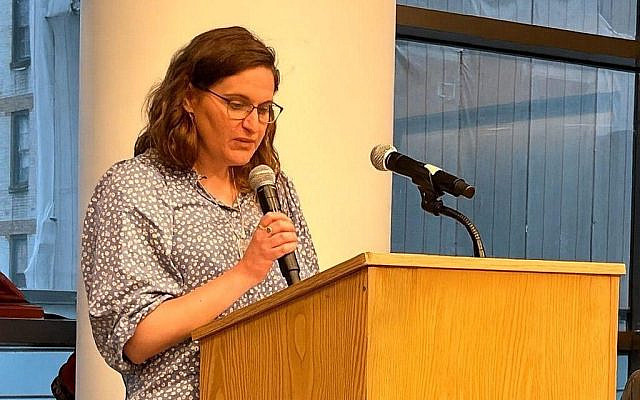
We often hear about the political, religious, and cultural divides that characterize American Jewish society. These divides are perhaps even more pronounced in Israeli society. Yet occasionally, someone emerges who transcends these barriers, creating spaces for meaningful dialogue and fostering respectful conversations across diverse perspectives. Gali Rabin, a secular Israeli kibbutznik with an unwavering dedication to social equality and justice, is one such person.
As a Senior Shlichah (emissary) for a New York City neighborhood known for its large Jewish population, Gali has spent the past three years under the auspices of the UJA-Federation of New York and the Jewish Agency for Israel. Her mission: to bridge the gap between Israeli society and a major Jewish community outside of Israel.
Her tenure coincided with one of the most tumultuous periods in recent history for American Jews and Israelis. Arriving in August 2022, Israel was under the leadership of Israel’s Naftali Bennett and Yair Lapid. Within three months, Gali witnessed the country’s transition to its most right-wing government in history. Protests over judicial reforms erupted in January 2023. Then came the horrific events of October 7th which profoundly altered the Jewish world and beyond.
The Upper West Side, home to nearly 80,000 Jews spanning every level of observance and affiliation, posed unique challenges as well as opportunities. Its diversity includes many Israelis disconnected from organized Jewish life. October 7th only deepened complexities, amplifying anti-Zionist rhetoric that bordered on and then merged into antisemitism, even within segments of the Jewish community. In this reality, Gali’s work fostering connections and deepening relationships became more critical than ever.
A Shlichah’s Mission
“What is the mission of a Shlichah?” I asked Gali during our conversation.
Her response emphasized the dual nature of her work: strengthening the connection between New York’s Jewish communities and the people, culture, and history of Israel, while also gaining a deeper understanding of Diaspora Jewry to share back in Israel. Unlike diplomats, Shlichim (emissaries) are meant to create personal, human connections. They serve as cultural and social bridges, narrowing the gap between two worlds that often misunderstand the other.
“The last three years have shown just how vital this role is,” Gali remarked. “Amid the events that unfolded, the need for mutual understanding has only grown.”
When Shlichim return to Israel, their mission continues. They bring with them the richness and intricacies of Jewish life outside Israel, serving as advocates for the shared story of the Jewish people. “We Israelis have a lot to learn,” Gali noted thoughtfully.
Gali’s Journey: From Kibbutz to Turin to New York
Gali’s path to becoming a Shlichah was shaped by her upbringing on a kibbutz that championed coexistence between Israelis and Palestinians. Her participation in a dialogue program at age 16 taught her to listen, articulate her own views, and respect differing narratives.
Her first challenge in her professional life was being responsible for coordinating American teens on Young Judea gap year programs in Israel. Her first assignment as a Shlichah was Turin, Italy, where she served the small Orthodox Jewish community. While coming from a secular background, she embraced the community to the point where she learned rituals she had never practiced before. She succeeded in creating programs that served the larger community as well as those that helped integrate Israelis – mostly students studying locally – with the resident community.
Her experiences in Turin, coupled with a subsequent position leading a pre-army leadership program known as Mechina focused on teaching leadership skills helped prepare her for the rigorous selection process to eventually be selected as a Senior Shlichah for a vibrant Jewish community outside of Israel- the Upper West Side.
Impact and Challenges
Gali cites building strong relationships across diverse groups within the community as her greatest achievement. These connections encouraged her initiative to tailor programs to a range of unique needs. She championed ideas from the communities themselves. Among her initiatives was Nifgashot (a play on the Hebrew words for “women” and “meetings”) a program successfully fostering connections between Israeli and American women through discussions and programs.
She also focused on engaging teens and young adults, exposing them to Israeli culture through music, art, and philanthropy. Her team included the Shinshiniot – Israeli teens on gap years who work with younger audiences throughout the neighborhood to introduce them to Israeli culture and life.
The horrors of October 7th imposed a layer of complexities and strain on her role that was without precedent. As a bridge between Israel and the community, Gali became a critical figure in responding to the crisis. She facilitated discussions among Upper West Side rabbis from different denominations, helping foster shared purpose. Throughout the ongoing ordeal, she maintained close coordination with the Hostage and Missing Families Forum to ensure their voices remained front and center. She organized survivor testimonies and helped give a stage to both families of hostages still being held captive and released hostages who came to share their stories. She also led efforts to thoughtfully reimagine community commemorations of Yom Hazikaron and Yom Ha’atzmaut, adapting them to reflect the gravity and complexity of this moment.
I got to know Gali by attending her weekly Israel update chug, held in Hebrew, which became a safe harbor for those of us deeply connected to Israel. She balanced the often-disturbing news with her insights and objectivity. The class always closed with a song. Because of Gali’s warmth and her ability to keep us on point, strong friendships blossomed – both among classmates and with her.
In addition to leading two missions to Israel during her tenure, Gali brought Israeli social, political, and cultural figures to engage American Jews with perspectives beyond the headlines. She organized events showcasing a diverse array of organizations and experts. Notable participants the Brothers and Sisters in Arms organization, the Tzedek Centers, and others, alongside thought leaders such as Professor Charles Freilich, former Israeli National Security Advisor; journalist Neria Kraus of Channel 13; entertainment producer Asaf Beiser, creator of The Jews Are Coming; and the Israeli-Palestinian music initiative Dugri. Their insights and stories sparked meaningful reflection and strengthened communal bonds.
Looking Ahead
As Gali returns to Israel, she plans to continue her work in education and dialogue. Her ability to foster respectful conversations among those with differing views will undoubtedly serve her well through whatever she chooses to do next.
Gali Rabin represents a bridge between the best of Israel and the best of Diaspora Jewry embodying the potential for understanding, patience, and progress. Israel’s political and cultural landscape could certainly benefit from leaders like her. Her experiences as a Shlichah will influence her future endeavors, and her leadership will leave an indelible mark on those she touched.
The Upper West Side community will miss her, but Israel will gain a leader whose insights and skills are needed now more than ever.
Related Topics