
Strategic Intelligence Consultant & Insights Advisor
Time to talk about the West Bank, or rather, Judea and Samaria
(Unsplash)
The area internationally known as the “West Bank,” but which Israelis prefer to call by its biblical name “Judea and Samaria,” is not merely a geographical territory. It is the core of the Jewish historical homeland, the place where the identity of the Jewish people was born and their civilization was founded. As a US official recently remarked, “Eighty percent of the Bible takes place in Judea and Samaria.” The significance of this region for Israel is historical, religious, political, strategic, and existential.
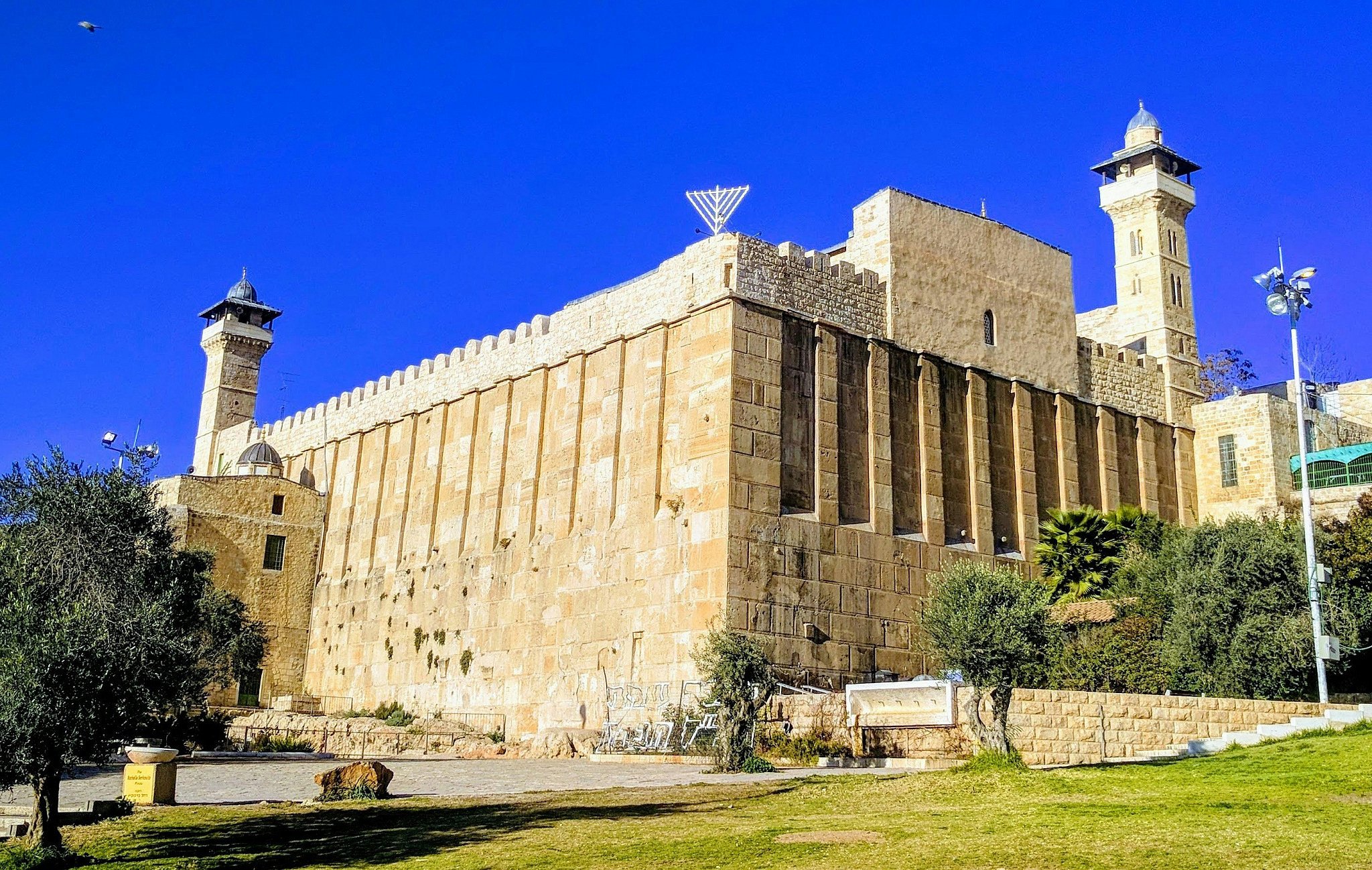
Judea and Samaria were the heart of the ancient kingdoms of Judah and, more broadly, of the ancient Land of Israel. In Judea, with Jerusalem as its capital, King David ruled; in Samaria, the northern kingdom flourished. There stood Shiloh, where the Ark of the Covenant was kept, and Hebron, home to the Tomb of the Patriarchs, the burial site of Abraham, Sarah, and their descendants. These lands are the setting of the Bible and the cradle of Jewish history.
Jewish presence in the area has been recorded for over three thousand years, long before any Arab settlement. From the time of the Patriarchs to the Roman exile, the Jews were the indigenous people of the Land of Israel. This historical continuity forms the foundation of the modern Israeli conviction that Judea and Samaria are not “occupied” lands but “ancestral” ones.
Judea and Samaria are the spiritual heart of Judaism. It is where the prophets lived and where the story of the Torah unfolded. Jerusalem and Hebron are the holiest cities for the Jewish people, while Bethlehem, Shechem (Nablus), and Jericho form the backdrop to biblical events.
For religious Jews and Zionists, Judea and Samaria are not geography but a sacred mission. The returns, pilgrim communities, and settlements are viewed as the continuation of an unbroken spiritual relationship with the Promised Land.
Israel’s position is also supported by legal arguments. The League of Nations Mandate for Palestine (1922) provided for the establishment of a Jewish national home in the territory that included the West Bank. When Israel declared independence in 1948, it became the only internationally recognized successor state to that Mandate.
Jordan illegally annexed the West Bank in 1950, a move recognized by only two countries. Jews were expelled from their historic towns. In 1967, during the defensive Six-Day War, Israel regained control of the region, which it considers the “liberated” land of its ancestors.
Israel rejects the term “occupied territories” and instead regards them as “disputed territories.” It maintains that there was no lawful sovereign before 1967, that its control arose from a defensive war, and that Jewish settlements are voluntary communities on ancestral land, not acts of colonization. Critics disagree, but for Israel, its presence there is a matter of historical justice and self-defense.
The geography of Judea and Samaria makes control of the region vital to Israel’s security. It is a mountainous ridge dominating the coastal plain; from the hills of Samaria, one can see Tel Aviv. If Israel were to withdraw to its pre-1967 borders, the state would be only 15 kilometers wide, strategically indefensible.
The Jordan Valley serves as a natural barrier from the east. Its control is deemed non-negotiable by Israel’s military establishment. From Prime Minister Rabin until today, Israel’s position has remained consistent: “Israel’s security borders are in the Jordan Valley.”
Past experience, particularly before 1967, reinforced the belief that losing the West Bank would expose the country to existential danger. The phrase “Never again without the Heights” captures this collective memory. The presence of settlements and military outposts is viewed as essential to preventing terrorism and attacks, as seen during the Second Intifada.
Judea and Samaria are also cultural and national symbols. Jewish communities lived there for centuries, in Hebron, Shiloh, and Jerusalem, until Jews were massacred or expelled, such as in the 1929 Hebron massacre. After 1967, many returned, reviving historic communities.
The first modern settlement, Kfar Etzion, was reestablished by descendants of families expelled in 1948. This act symbolized a “return.” Similarly, in Hebron, the old synagogue and the Tomb of the Patriarch Abraham were restored. Jews see themselves not as settlers, but as the continuers of their history.
Today, over half a million Jews live in Judea and Samaria. Most view their presence as a mission, to revive the biblical land. Even non-religious Jews feel that when they stand there, they touch their roots. Menachem Begin once called Judea and Samaria “the beating heart of the Jewish people.”
The West Bank, of course, also holds deep importance for Palestinians, who regard it as their homeland. After the Oslo Accords (1993), the area was divided into Zones A, B, and C: Palestinians took control of cities in certain areas, while Israel retained authority over settlements and security. Yet, three decades later, a definitive peace has not been achieved.
Israel argues that it has already made significant concessions and that the core of the conflict is not the settlements but the Palestinians’ refusal to accept the existence of the Jewish state. The withdrawals from Sinai (1982) and Gaza (2005) proved, Israelis say, that withdrawal does not bring peace. In Gaza, it led to the rise of Hamas and rocket fire, culminating in the brutal terrorist attacks of October 7th.
Therefore, from a strongly pro-Israel perspective, the West Bank cannot be relinquished without strict security guarantees. An uncontrolled Palestinian entity there could become another Gaza, threatening the heart of Israel.
Today, Judea and Samaria form a complex mosaic of communities, towns, and settlements. In some areas, Jews and Palestinians work side by side in businesses and shopping centers; in others, they clash. Despite the tensions, the region has become deeply integrated into Israel’s social and economic fabric.
The debate over sovereignty is not theoretical. For hundreds of thousands of Jews, Judea and Samaria are home. And for millions more, they are a place of sacred memory and national identity.
From a pro-Israel standpoint, Judea and Samaria are not “occupied territory” but an inseparable part of the Jewish homeland that has returned to its rightful owner. Historical memory, religious faith, international law, and security are inextricably linked.
Judea and Samaria is the biblical heart of Israel, the mountains where the prophets walked, the lands where David and Solomon reigned, the soil upon which the Jewish state was reborn. As many Israelis say: “We will not apologize for existing in our homeland.”
Peace can only come through mutual recognition of this historical reality. Judea and Samaria are not merely borders, they are the soul of the Jewish people and the heart of Israel.
Related Posts