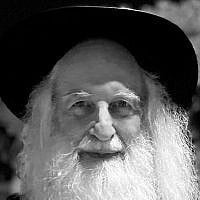
Grammy and Emmy nominated singer-songwriter, author, essayist
Tisha B’Av: The Sacralization of Memory, the Purging of Grief
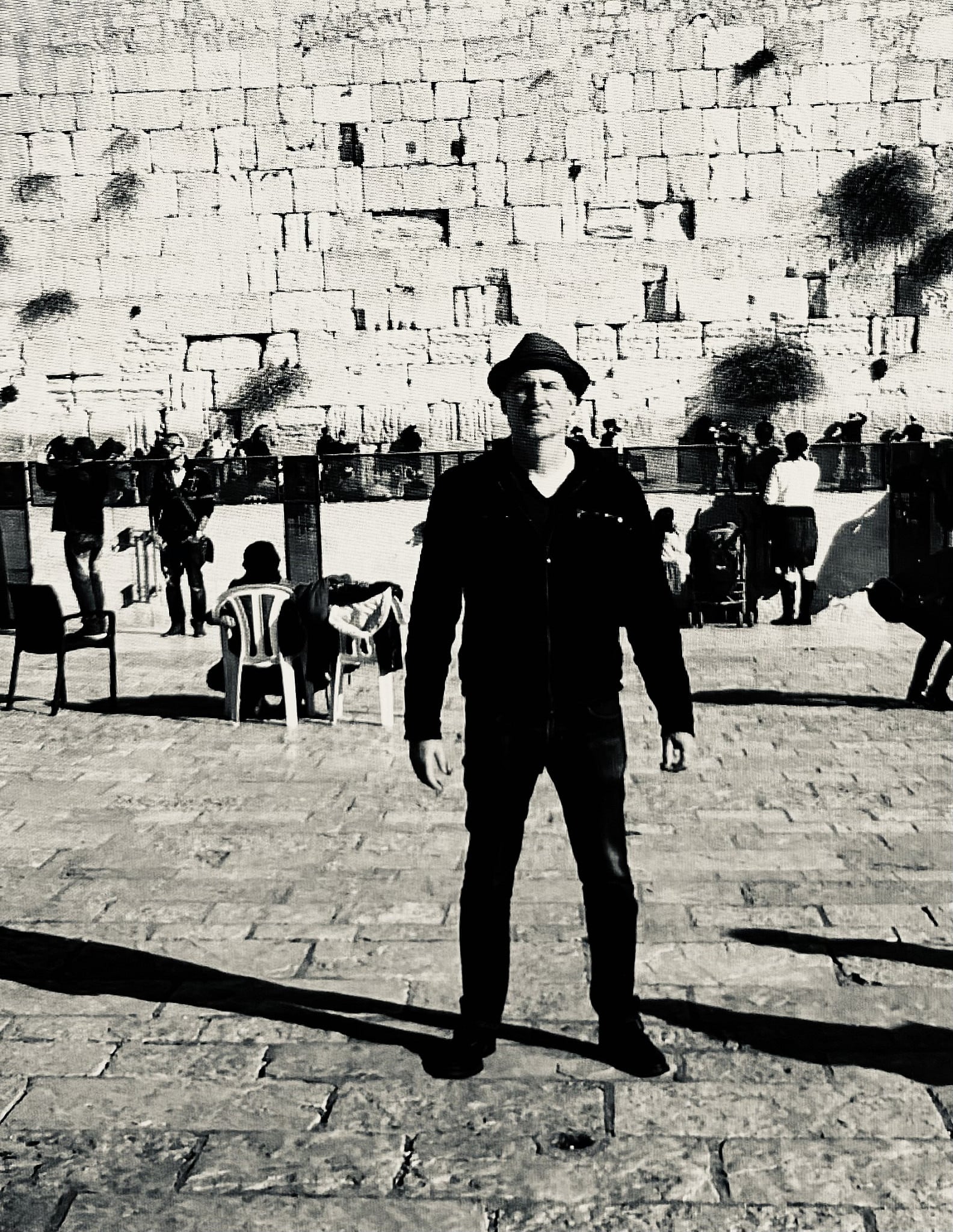
Author at the Kotel
We Jews have a holiday dedicated exclusively to our collective grief: the ninth day of the Hebrew month of Av, Tisha B’Av. But more than a holiday, it is an idea. It is a container for sorrow, a framework that reminds us not only of the tragedies that have befallen the Jewish people, but of the sorrow woven into the human experience itself.
Along with its mournful reflections, there is a 25-hour fast. Not a juice fast—a total abstention from all food and water. You may not suffer, but you might feel something akin to suffering. Call it a homeopathic dose of physical hurt atop some potential emotional pain. While sluggishness, thirst, and hunger come naturally, the emotional aspect does not. It is difficult to mourn an ancient past. But oftentimes, what is difficult is necessary.
What is the purpose of recollecting in this way, of remembering through a fast—a true form of self-affliction? Would it not be better to move on, to blot out such dark and painful events?
Tisha B’Av teaches otherwise.
This is the day on which we recall our historic tragedies: the destruction of the First and Second Temples—those ancient edifices where Jewish sovereignty and history unfolded. It is the day we mourn the Crusades, the Inquisition, and the expulsion from Spain; the expulsion from England; pogroms large and small in Christian Europe and in Arab lands—and the horrors of the Shoah.
But our memories needn’t be tasked. Our imaginations needn’t be fired. The idea of Tisha B’Av takes on new and devastating clarity when held up beside October 7. For the first time since the Shoah, we vividly, effortlessly recall the butchery. It hasn’t even been two years since that pogrom, and yet it will likely be remembered for hundreds. Tisha B’Av gives us the spiritual grammar to understand what it is we are experiencing. It provides the scaffolding for grief—not to diminish it, but to make it bearable, and somehow, purposeful.
Memory is the means by which we learn about the present and what lies ahead. It is an odd thing, this ability to recall, to relive. Perhaps what’s most odd is this tradition, which insists upon memory. From the time we wake in the morning to the time we lie down to sleep, the obligation to remember confronts us.
We are commanded to speak of the Exodus from Egypt at least three times a day. We are enjoined to speak of the return to our ancestral homeland several times a day. Each time we eat, we are commanded to consider the miracle of the food that sustains us.
The list of things to recall is long. But along with these higher-level memories, each one of us recalls the small or large things we need to accomplish: the loose ends to be stitched together, the calls that need returning, the bills to be paid, the lyrics of the songs we might sing.
It’s common to talk about living in the here and now. I’ve written about it, strived for it. But today I see not only how impossible that goal is, but also how foolish. In a hair’s breadth, our present slips away. And then another, and another. We have no present. We have only our memories of the past. Without them, it’s as though we don’t exist. Perhaps this is why our tradition places such emphasis on the cultivation of memory.
But memory left unexplored isn’t much at all. It is mere thought. The purpose of memory is not simply to keep thoughts alive—it is to glean inspiration and knowledge from what we and our ancestors experienced, and to allow that inspiration to change us.
I won’t deign to tell anyone what needs changing in their life. The only change within my control is how I act in the world. One change I aspire to is mentioned in the teachings of Tisha B’Av itself. The Talmud asks: “Why was the Second Temple destroyed?”
And it answers: “Because there was baseless hatred during that time.”
Rabbi Abraham Isaac Kook wrote:
“If we were destroyed, and the world with us, due to unconditional hatred,
then we shall rebuild ourselves, and the world with us, with unconditional love.”
Related Topics
Related Posts