
Leadership With Heart
Tisha B’Av: Will the Darkness Ever End?
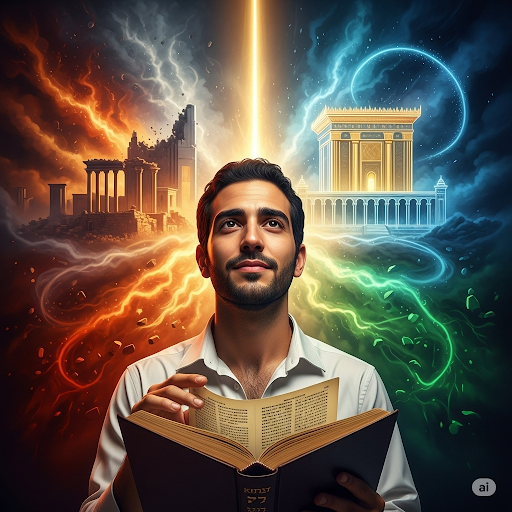
AI generated image via Gemnini
Tisha B’Av, the ninth day of the Hebrew month of Av, is the most solemn day on the Jewish calendar—a time when millennia of tragedy converge into collective mourning and spiritual reflection. On this date, many devastating events befell the Jewish people: the sin of the Israelite spies whose negative report condemned Israel to wander the desert; the destruction of the First Temple by the Babylonians; the burning of the Second Temple by the Romans; the fall of Betar at the end of the Bar Kochba Revolt; the expulsions from England and Spain; and the outbreak of World War I, which set the stage for the Holocaust. Tisha B’Av gathers these sorrows into a profound moment of national and spiritual reckoning.
For three weeks preceding this day, Jewish communities observe a period of restraint, refraining from celebrations, music, and weddings, to prepare for mourning. On Tisha B’Av, we fast, recite the haunting Book of Lamentations, and sit low in grief, embodying the depth of loss. These rituals awaken us not only to historical pain but also to the spiritual rupture caused by the destruction of the Temples—a fracturing of the sacred bond between heaven and earth and between God and His people.
In this darkest day lies a profound paradox of hope. Tradition teaches that the Mashiach—the Messiah—will be born on Tisha B’Av itself. Even amid profound loss, the seeds of redemption are planted.
A stirring legend captures this tension between sorrow and hope. As Napoleon Bonaparte once walked the streets of Paris on Tisha B’Av, he reportedly heard the mournful wailing of Jews in synagogues and homes. When he inquired why they grieved so deeply for a temple destroyed nearly two millennia earlier, he declared, “A people who can mourn so long and so deeply will surely merit to see it rebuilt.”
In recent history, this cycle of loss and renewal has continued. The tragedy of October 7, 2023—when Hamas launched a brutal attack on Israel, killing and abducting innocents—left an indelible wound and triggered a sharp rise in antisemitism worldwide. Jewish communities everywhere continue to face unprecedented threats and hostility, deepening a sense of vulnerability and sorrow as if the grief of Tisha B’Av had stretched beyond one day into an ongoing reality.
Every single day seems to bring yet another story of Jews maligned, harassed, and attacked. Just this last week, we saw the torture video of Israeli hostage Evyatar David, starving and forced to dig his own grave in the dungeon tunnels of Gaza. In such darkness, faith, loving-kindness, and sincere prayer become essential. Our tradition urges us not to despair but to strengthen our bond with God and each other. By doing so, we heal and actively participate in the ongoing redemption, paving the way for brighter tomorrows and the coming of the Mashiach.
Indeed, with infinite mercy, Hashem has restored the Jewish people to sovereignty in the Land of Israel after 2,000 years in exile. We witness daily miracles in the revival of our homeland, the defense of our nation, and the gathering of Jewish people from around the globe. Yet, our ultimate hope remains the rebuilding of the third and eternal Temple in Jerusalem. Just as God has faithfully returned us to our land, so can we trust that He will complete this redemption by restoring His holy sanctuary.
As Israel’s first Prime Minister, David Ben-Gurion, famously declared, “In Israel, in order to be a realist, you must believe in miracles.” Today, those miracles unfold before our eyes.
The coming chapters—the mass aliyah of Jews from America and beyond, the arrival of the Mashiach, and the rebuilding of the Temple on Mount Moriah—may seem distant and daunting. Yet for the Almighty, nothing is impossible. Soon, Tisha B’Av will be transformed from the darkest day on our calendar into a radiant day of joy and celebration—the dawn of a new era for our people and the world.
Related Topics
Related Posts