To be a Jewish mother two years on
October 7 changed me. It changed me forever. At my core. The atrocities committed by Hamas. The war. The antisemitism that has bubbled up to the surface and continues to get stronger. It all made my Jewish identity more prominent. My Zionism more outspoken. But most of all, these things changed me as a mother.
I recently saw a reel that was meant to be kind of cute and funny about Jewish moms before and after October 7. I laughed for a second when I saw it, and then I cried (laughing at tragedy is the most Jewish of all coping mechanisms, but sometimes you just have to cry). The before: Jewish moms were like all the other slightly overwhelmed moms, looking for a few minutes of downtime with a glass of wine, haranguing the kids to do their homework, complaining about all the things we had to do for them. The usual “busy mom” life. The after: if a kid wants a cookie in bed, they get three. If they need a ride somewhere, the only question is “when.” If they want a hug, they end up having to fight their way out of it. Because we, the Jewish mothers, know that it could have been our kids who were raped and murdered at a rave or kidnapped and languishing in captivity without light or food. It doesn’t matter where we live. Not only do we know this, we feel it. In our hearts. In our bones. In that place where communal, generational trauma lives that most Jews understand so well.
I am a Jew who lives in the US. I am an American through and through. However, I am not an American Jew. I am a former Soviet Jew. And as a Soviet Jew, I know that I was one refugee visa away from being an Israeli. I happened to end up in the US; I could have just as easily ended up in Israel. Believe me when I say, virtually all Soviet Jews who live in the US, or anywhere else in the world, understand that without Israel, we might have had nowhere to go when the Soviet government very happily revoked our citizenship. We literally weren’t citizens of any country in the world, and after years of institutional, systemic persecution, we were told to to screw off.
This is why you will be hard-pressed to find a former Soviet Jew who is not a Zionist. We may be heathens — most of us grew up without religion, though some have found it — but we believe in Israel. Israel is a part of who we are, no matter where we are. There is a conversation for another time about the anti-Zionist segment of American Jewry and the incredible, appalling privilege that allows them to write Israel out of their story.
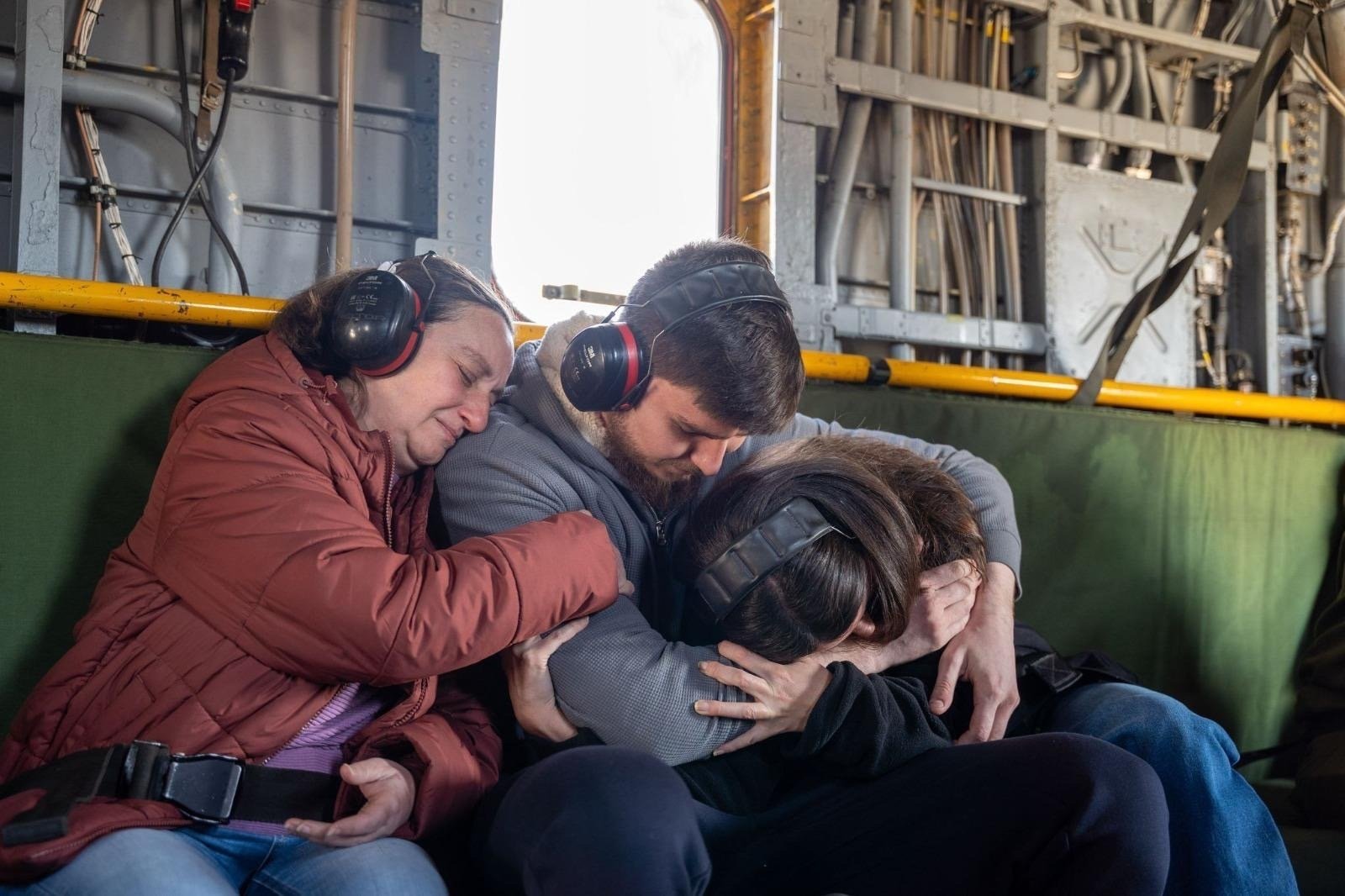
I feel the anguish of the hostages’ mothers. Physically. In my body. Einav, Rachel, Shelly, and all the rest — I can feel their pain. It’s scarily easy to imagine myself in their place. Sasha Troufanov could have been my kid. His mother is the same age as I am; she came to Israel from Russia. When I saw Sasha’s grandmother embrace him upon his return, crying “Sashechka,” I saw my mom. I watched the video of Sasha’s reunion with his grandma dozens of times. I cried for hours. Sasha came home, but so many other beautiful souls are still held captive by monsters.
I was raised an atheist as religion was mostly outlawed in the Soviet Union; I don’t pray. But humans have an innate need to keep hope alive and to feel that maybe, just maybe, we can influence the outcome of a situation where we feel powerless. I am a yogi, and I used to occasionally dedicate my practice to someone who needed a little extra love and support in the hope that the positive energy would somehow make a tiny difference. Since October 7, I’ve dedicated every practice to a hostage. First, it was Hersh Goldberg-Polin. When he was murdered, I prayed for Omer Shem Tov (because of course, what is a dedication if not a prayer, even if it’s not to a god I can name). Since Omer’s release, it’s been many others: both Matans, Elkana, Alon, Bar. I know all their names. I feel all their mothers’ pain. And I need them all to come back now.
Today is day two of the ceasefire*. And I am still holding my breath. I am not ready to let go. I will cry and celebrate and, hopefully, exhale fully for the first time in two years when all our hostages come back on Monday. When I see and feel the mothers’ joy when they can finally hold their sons in their arms, after fighting for them for so long
I know that the recovery for these men is going to be unimaginably difficult. I also know that their mothers, their fierce, loving, Jewish lioness mothers, will do everything in their power to bring their sons’ hearts and souls back. As they fought tirelessly for two years to bring their children back from darkness, so they will continue to fight for their children’s lives; they will never ever stop. Because that is what Jewish mothers do. I send them all the strength and love I can muster.
Tonight, I will hug my son extra tight. He’ll think I am crazy, and I don’t care. And on Monday, I will watch the hostages come back and cry. Cry tears of joy and sorrow. And finally, exhale.
—
*Note: I wrote this two days before the living hostages were returned. And though we can finally rejoice with them and their families while grieving those who will never be able to hug their loved ones again, the feelings I describe here still hold true.