
Jewish, Autistic, Writer, Activist - Thought Provoking Influence
To be a Zionist means acknowledging wrongdoing on all sides.
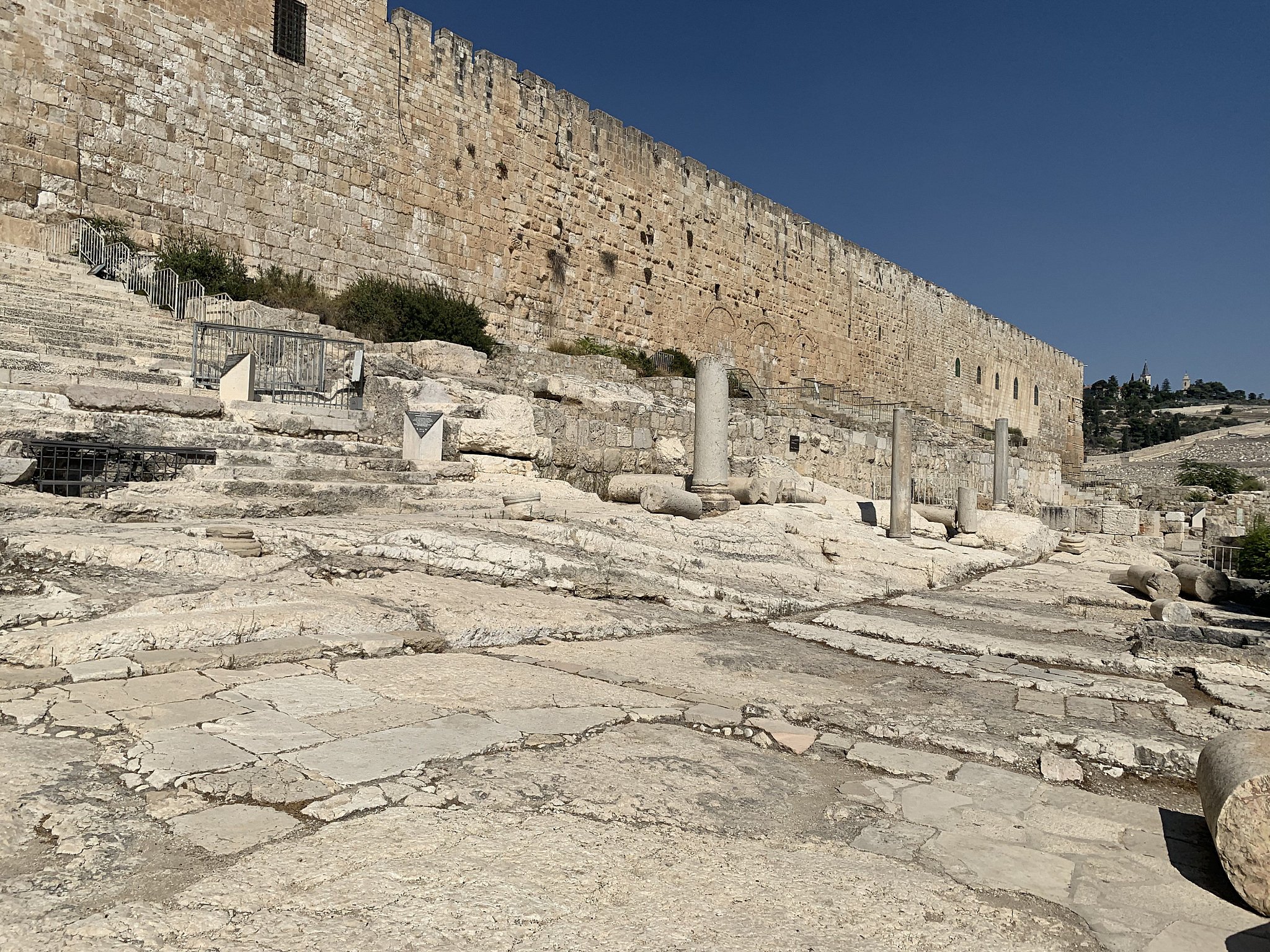
The Davidson Archaeological Park in Jerusalem, October 2021 - Courtesy of the Author
I’m a loud and proud Jewish American Zionist and a centrist—and I condemn settler violence and anti-Arab violence.
Being a Zionist does not mean blind loyalty. It means loving Israel while acknowledging its imperfections. It means confronting the parts of our society and our state that fall short of our highest ideals, because silence in the face of injustice is not patriotism—it is complicity.
Settler violence is one such imperfection. It does not represent who we are as a people, nor does it reflect what the overwhelming majority of Jews and Israelis believe.
Many of the same dynamics that fuel extremist settler attacks against Palestinians also overlap with broader anti-Arab violence inside Israel, including assaults, vandalism, and arson. Recognizing these connections is crucial: they are part of a larger pattern of ethnically and ideologically motivated harm that threatens the safety of all Arabs in Israel. Jewish extremism is real, and these latest incidents echo many of the same sentiments that Meir Kahane stood for. Kahane was condemned by both American Jews and Israelis for his remarks.
Calling out this violence is not anti-Israel; it is pro-Israel, because defending our values means defending them consistently.
As part of my work as a news writer with the Israel Daily News and as a freelance journalist, I cover a wide range of stories—from current events to politics and crime to culture and archaeology. In recent months, I’ve reported on numerous cases of anti-Arab crime. Covering these stories has reinforced a simple but important truth: having an informed opinion requires the willingness to recognize that there is wrongdoing on both sides. Yes, Israel constantly faces civilian terror attacks, but we should never harm anyone for revenge in return.
Jewish law is clear on this point. Harming another human being is forbidden, regardless of whether that person is Jewish.
Statistics on anti-Arab crime
Arabs make up roughly 21% of Israel’s population, and Israel remains the only country in the Middle East where Arab citizens enjoy full legal rights, including voting, representation in parliament, and access to independent courts. Yet safety and security remain major concerns for many Arab Israelis.
The data surrounding public safety in Israel’s Arab communities reflects a complicated reality. Ideologically motivated “nationalist crimes” exist, but they occur alongside a far larger crisis of internal criminal violence. According to monitoring groups such as the Abraham Initiatives and Yesh Din, anti-Arab hate crimes are often difficult to isolate statistically because Israeli authorities typically categorize them under the broader classification of “nationalist crimes.”
Each year, several dozen cases of Jewish extremist violence—including assaults, vandalism, and arson—are investigated by Israeli authorities. At the same time, civil-society monitoring organizations have documented hundreds of racist incidents in public spaces, including in sports arenas.
Despite the attention these nationalist incidents receive, the dominant public-safety challenge for Arab citizens is the staggering level of homicide within their own communities.
The Abraham Initiatives reported that 230 Arab citizens were killed in criminal violence in 2024. The situation worsened in 2025, which became the deadliest year on record with 252 victims. Although Arab citizens comprise about one-fifth of Israel’s population, they accounted for more than 80% of the country’s murder victims that year. Much of this violence is linked to organized crime networks, family feuds, and the widespread circulation of illegal weapons.
Both official statistics and civil-society reporting confirm the seriousness of the crisis, though they often interpret the data differently. Israeli police recorded 154 nationalist incidents in mixed cities in 2025, while organizations like Yesh Din highlight systemic accountability issues. According to their analysis, approximately 93.6% of investigation files involving ideologically motivated offenses by Israelis against Palestinians since 2005 have closed without an indictment.
At the same time, the clearance rate for murders in Arab communities remains extremely low—around 14.8% in 2024—which has deepened feelings of insecurity and eroded trust in law enforcement.
The government’s response has shifted significantly in early 2026, moving away from long-term social investment toward a more aggressive security-focused approach. Under the proposed Combating Organized Crime Groups Bill, Israeli authorities are beginning to treat powerful crime families as quasi-terrorist organizations. This allows law enforcement to deploy tools typically reserved for counterterrorism, including administrative detention and expanded surveillance powers.
This policy shift has been reinforced by changes to the 2026 state budget, which redirected approximately NIS 220 million from the “Resolution 550” economic development plan for Arab society toward the Ministry of National Security. The funds are now being used to expand cooperation with the Shin Bet in criminal investigations and to deploy advanced surveillance technologies—including facial recognition systems and “Hawk Eye” cameras—throughout Arab municipalities.
Supporters of these measures argue that extraordinary steps are necessary to confront a homicide crisis that claimed 252 lives in 2025. Critics, however, warn that prioritizing policing over social investment risks ignoring the root causes of the violence.
Organizations like the Abraham Initiatives argue that long-term solutions must also include improvements in education, housing, employment opportunities, and access to financial services.
These tensions erupted in large joint Jewish-Arab protests in early 2026, where demonstrators demanded greater safety while also expressing concern that treating organized crime as a national-security threat could further strain relations between Arab citizens and the state.
After years of analyzing the data and documenting the realities within these communities, I’ve come to believe that dialogue is not simply a diplomatic ideal—it is a practical necessity.
When we look only at statistics—whether it is 252 homicides in 2025 or a 15% murder clearance rate—it becomes easy to retreat into camps of blame. But data without dialogue is one-dimensional.
The need for dialogue
Real understanding emerges when we listen to the lived experiences behind the numbers: the Arab citizen who feels abandoned by a system that solves fewer than one in six murders, and the government official who believes stronger enforcement tools are necessary to dismantle entrenched criminal networks.
Acknowledging someone’s perspective does not mean agreeing with their conclusions. It means recognizing that we share the same reality.
In the debate over Israel’s current policy shifts, dialogue can help bridge the divide between security and civil rights. A policymaker may see the redirection of NIS 220 million toward policing as an emergency response. A community leader may see it as the dismantling of desperately needed social infrastructure. Without a forum for these perspectives to confront and refine one another, policy risks becoming a blunt instrument—one that deepens the very resentment it aims to resolve.
Ultimately, dialogue is a safeguard against the data gaps that fuel radicalization.
When communication breaks down, local disputes and criminal incidents can quickly transform into nationalist flashpoints. But when people sit down together, the conversation often reveals shared concerns: safer streets, fewer illegal weapons, and a future in which every citizen—Jewish or Arab—can live without fear.
A society cannot thrive if one-fifth of its population feels trapped in a permanent state of insecurity.
Being a Zionist means loving Israel enough to call out its wrongs and working to make it better. Accuracy in journalism—and in civic life—is not just about getting the numbers right. It’s about capturing the human context behind them. And that can only happen through the difficult, ongoing work of listening to one another.
Related Topics
Related Posts