To Heal a Country, We Need More Than Tolerance
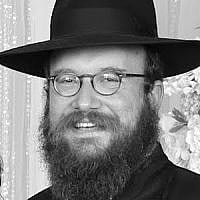
One of the beautiful things about walking around the streets of America with my beard, kippah, and tzitzit visibly showing is that people know who I am – a proud Jew. Sometimes, without any introduction, they come over and begin to speak.
Yesterday, while I was pumping gas at the Shell station on Putnam Ave in Greenwich, a man approached me and started a conversation.
He told me that back in the 1970s, he worked for a printer on Mason Street who was producing material for the UJA, much of it Holocaust-related.
“I remember asking him,” the man told me, “why do we need to keep coming back to this?”
“And my boss told me, ‘Because we need to remember’. I look around today, and I wonder: Have we remembered?”
I said to him, “Don’t worry. We have.”
He looked at me and asked, “Do you really think so? Are there enough of us who will use our minds not to fight with each other, but to find common cause?”
I said, “Absolutely.”
He smiled and walked away.
When this country was founded, one of the great challenges of the time was not only about moving from the intolerance of the English Crown to a more tolerant society on the new continent, but also to a respectful recognition of inherent human rights.
George Washington expressed this brilliantly in his famous letter to the Jewish community of Newport, Rhode Island, at Touro Synagogue:
“It is now no more that toleration is spoken of, as if it was by the indulgence of one class of people, that another enjoyed the exercise of their inherent natural rights, for, happily, the Government of the United States, which gives to bigotry no sanction, to persecution no assistance, requires only that they who live under its protection should demean themselves as good citizens…”
He then concludes with the words of the Prophet Micah.
“May the children of the stock of Abraham who dwell in this land continue to merit and enjoy the good will of the other inhabitants—while everyone shall sit in safety under his own vine and fig tree and there shall be none to make him afraid.”
That was the great spiritual and civic vision of America: that every person, every family, and every community should be able to live freely, serve G-d faithfully, and sit under their own vine and fig tree without fear and without interference.
In the language we might use today, it was a sacred form of “live and let live.”
And that was no small thing.
It is a great blessing that this country has moved, again and again, toward a fuller recognition of the dignity and rights that belong to every human being. We have seen some of America’s most beautiful moments in that journey – in the struggle for civil rights, in the blood and sacrifice of those who crossed oceans to liberate Europe from tyranny, and in the moral courage of confronting the horrors of Auschwitz and insisting that such evil must never define the future of humanity.
But as holy as the principle of “live and let live” is, it is not enough.
In 1951, when the Rebbe assumed the leadership of Chabad, he quoted that verse from Micah about every person sitting under his own vine and fig tree. He acknowledged the beauty of that vision.
But he said that life must be more than each person living safely in his own space. We need to live together, in brotherly love and harmony.
That, I believe, is the challenge of our time.
The Founding Fathers understood that our rights are endowed to us by our Creator. But that idea asks something of us. If every human being possesses G-d-given dignity, then our responsibility is not only to leave each other alone. It is to see each other more deeply.
Today, we are not suffering from the inability to live independently.
We’re suffering from the inability to remember that the person sitting independently under the next vine and fig tree is also created in the same image of G-d as me, and I must therefore recognize that beneath our differences, beneath our disagreements, beneath all the noise and anger of the moment, there is a shared divine source. There is a common purpose. There is a reason we were placed in this world together.
That is how a country heals. Not by pretending that differences do not exist, but by digging deeper and remembering that freedom is the opportunity to use our G-d-given minds, hearts, and souls to build something higher together.
That’s what the man at the gas station was really asking.
Have we remembered?
Yes, we have remembered.
But now we must remember more deeply.
We must remember not only what hatred can destroy, but what faith, dignity, and shared purpose can build.
And when we do, each of us will be able to sit under our own vine and fig tree, with none to make us afraid – and with enough wisdom, humility, and courage to sit together as one nation under G-d, indivisible with liberty and justice for all.