Learn. Grow. Self-Actualize.
Tools for Unity, Connection, and Introspection
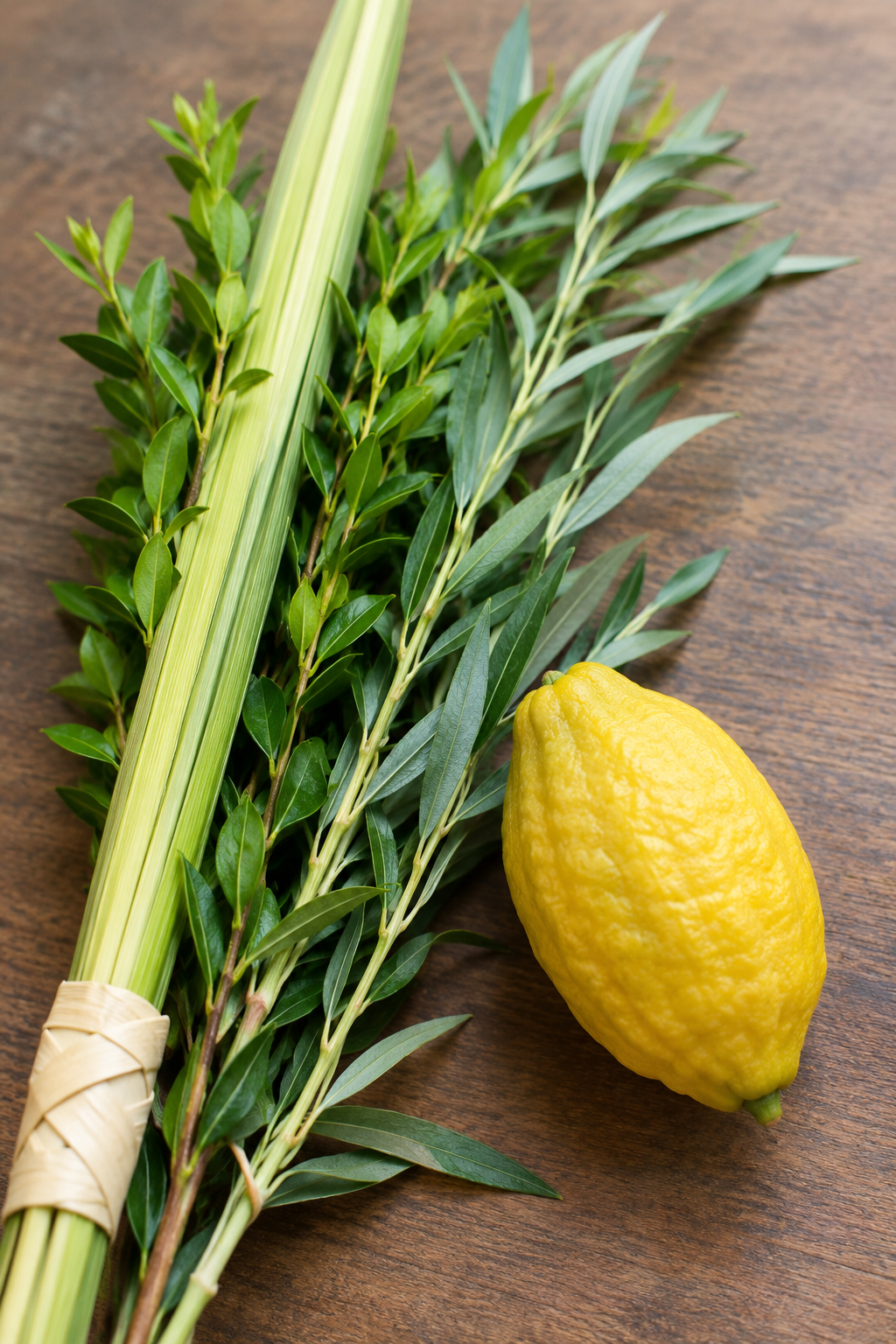
When we take our arba minim on Sukkot, we are doing far more than bringing a few plants and a fruit together to fulfill a mitzvah. In Shaar HaKavanot (Inyan Sukkot, Drush 5), the Arizal takes us on a kabbalistic quest that helps us appreciate the profound significance of the mitzvah.
He explains that each of the arba minim represents one of the four letters in the Shem Havaya (Hashem’s four-letter name). The hadassim symbolize the yud. The leaves of the hadassim even look like small yud-like ink blots, and the letter yud, when spelled out in full, is composed of three letters (yud, vav, and dallet). These three letters directly relate to the triplet of leaves found on the hadassim and explain why we hold three of them.
The two aravot correlate to the second letter in Hashem’s name: hey. When the letter hey is written out, it contains two letters (hey and hey). This is indicative of the two aravot that we hold.
The lulav is related to the third letter in Hashem’s name: vav. A kosher lulav, which must be straight, looks like a large vav. The final letter in Hashem’s name, hey, is associated with malchut (kingship)—and so too is the etrog.
The ideal way to perform the mitzvah of taking our arba minim is by binding all four species together (Shulchan Aruch, Orach Chaim 651:11-12). When we bring these four species together—with each representing one of the four letters in the Shem Havaya—we are bringing Hashem’s name together (Bet Yosef, Orach Chaim 651, citing the Recannati).
Make no mistake: although to us it only looks like we are physically holding our arba minim together, we are spiritually participating in the unification of Hashem’s name.
What does this mean, and how can we relate to such a lofty idea?
For starters, unifying Hashem’s name means bringing the reality of His Oneness and sovereignty into tangible expression within the physical world through our actions.
To better understand how that has anything to do with our arba minim, we must recall the final words we uttered (and possibly shouted) at the end of Neilah on Yom Kippur: “Hashem, Hu HaElokim—Hashem, He is God.”
At this critical moment, as the Gates of Heaven were closing and our judgment was being sealed for the year, we declared seven times that Hashem is our God. Implicit within this articulation is that He, and He alone, is our King. He runs the world, and we want our will to align with His Will—not the reverse.
Only a few days later, we take the very message we so fervently vocalized during Neilah and joyously bring it down into our world by taking our arba minim on Sukkot. It is not a coincidence that we uttered “Hashem, Hu HaElokim” seven times and physically express what that entails by binding together all seven components of our arba minim (three hadassim, two aravot, one lulav, and one etrog), with all four species directly corresponding to Hashem’s name.
In doing so, we are not merely remembering Hashem’s Oneness—we are actively expressing it through the mitzvah we are performing. Ultimately, taking our arba minim on Sukkot becomes the quintessential demonstration of the truth we proclaimed on Yom Kippur—and a powerful idea worth “holding on to” all year round.
This year, as we take our arba minim, we should pause to appreciate the profound depth and meaning hidden within this familiar mitzvah.
–
This article from Rabbi Bob first appeared in the 5787 Sukkot edition of Torah Sweets.
Related Topics