Writer, Host, & Podcast Host to Thousands of Israelis in Japan
Translating a People Is Lion-Sized
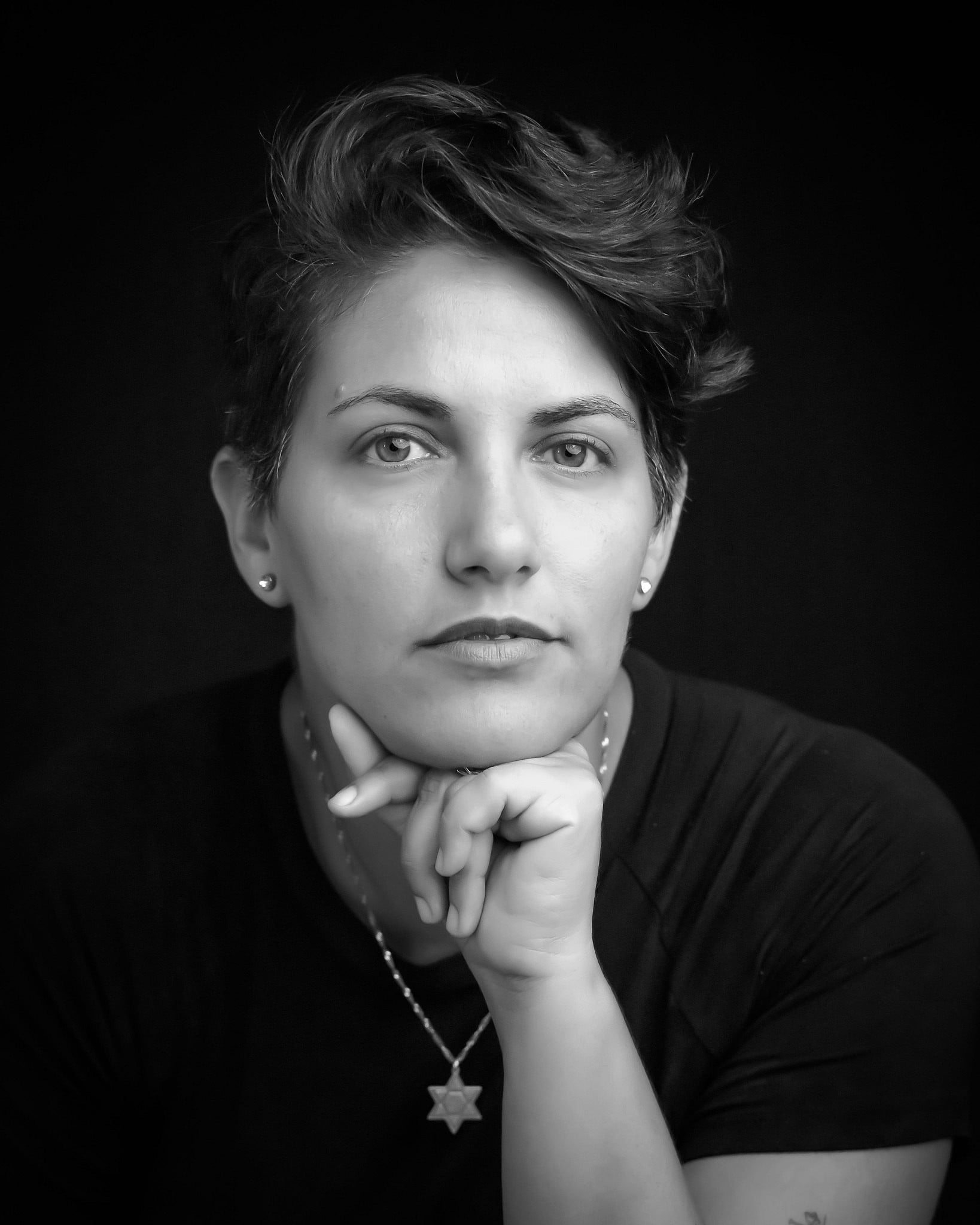
Yardenne Greenspan
What do I have in common with illustrious writer and translator, Yardenne Greenspan? I live in Japan while she’s in NYC. Yardenne holds her corner of the world with translation from Hebrew to English. I speak almost none. She is a transmitter of story that should be, could be, and must be told. This is no small thing. She becomes a translator of a people.
Highly accomplished in her own right, she is also the wife and partner of Shai Davidai. Yardenne wears a T with the words, “Accidental Activist” on the front, which, of course, I ask about.
Yardenne says that she regards her translation work as a form of activism. “I think bringing Israeli voices to the world, especially now, is really important. So many people don’t really know Israel; they don’t know Israelis; they don’t know what we’re about.”
Of course. Yardenne has written about book stores declining to show or stock Jewish or Israeli authors, and journals skittering in how they support long-time Jewish/Israeli/Zionist contributors.
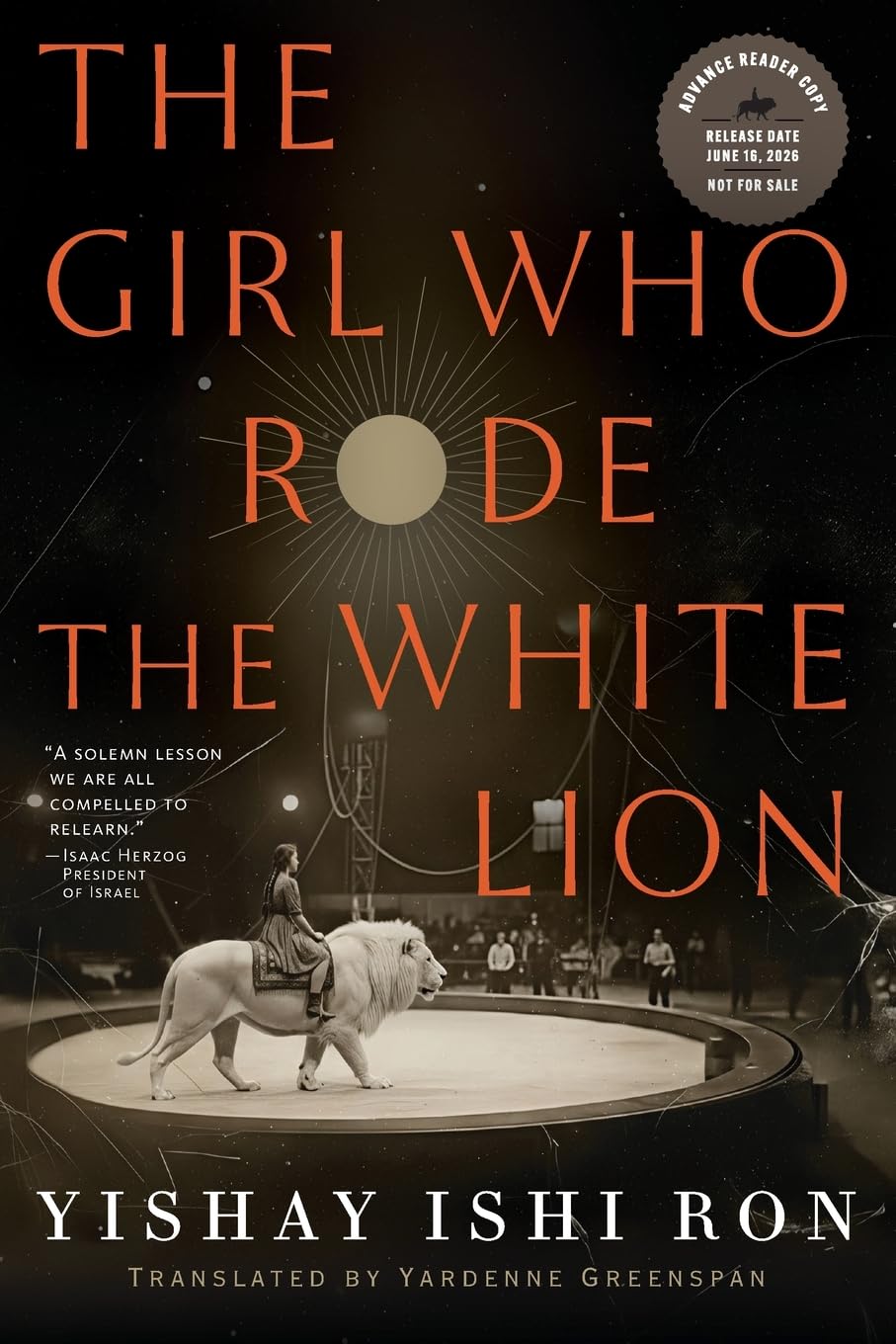
Yardenne is all of this, translating the works of some of the most heralded modern Israeli writers. Take her newest work: her second linguistic collaboration with Yishay Ishi Ron–-Girl Who Rode the White Lion, published just recently, June 2026, is her sixteenth-full-length translation.
 Her first work of translation with Yishay Ishi Ron was Dog, also from Soncata Press, a tender dive into the world of PTSD from the perspective of an elite combat soldier. This is new terrain for many non-Israelis, that, with Yardenne’s expertise in translation, is suddenly open.
Of course, I have my own experience with soldiers who come on their big trip to us here in Tokyo. I’ve had the sweetest young men tell me with embarrassment that they need to change their bunk sheets each day because of their bad dreams and night sweats. Or the too-many-stickers-on-the-wall here of friends they each know and carry across Japan, Vietnam, or Laos. How much more would the world respond with understanding and goodness if they read contemporary and more historical Israeli authors about their realities of peace and war.
Girl Who Rode the White Lion, Yardenne’s masterful translation, shares Ron’s historical fiction of a family that hid Jews from death during the Holocaust—not in their closet, attic, or barn, but in their circus.
With lions.
I eagerly await my copy of Girl Who Rode the White Lion, refreshing the tracking function each day, as it slowly makes it way to Asia. I anticipate grim realities of such hiding and the horrendous realization, still, if they had no hiding place. I also anticipate hope and beauty in the words–both in Ron’s and Greenspan’s. Together, it’s the Hebrew and English I am after, but what about everyone else who would never have such a window and thus stay disconnected?
Not every American Jew has 11-plus beds set up every night to host Israelis. Not everyone gets to sit with officers fresh out from their longest service and relax over Japanese potato chips and Bamba. I know what a gift this is. But also, not every one of my guests has the most sophisticated English lexicon. Even when they do, how much I miss when they speak from their second language, and not the one learned in school, not their mother tongue from speaking with grandparents and hearing searing conversation, carrying deep memory and all they experience.
I rely on those around me to help bridge those gaps. It’s how I can better care and know our guests. It’s also my way into knowing Israel.
In our chat, I ask her about the kind of translation she is drawn to these days, especially after October 7th, 2023.
“At the moment,” Yardenne replies, “I am hungry to translate anything that shows the fullness of being an Israeli.”
“At the moment,” Yardenne replies, “I am hungry to translate anything that shows the fullness of being an Israeli.”
She goes on, “The fact that in a single sentence people will utter a mixture of Hebrew, Yiddish, and Arabic. The fact that they will have relationships with people of different religions, that they will fight side by side with people who not just voted differently from them, (that’s putting it mildly)–people who think the other person’s politics are abhorrent, but they will fight together, anyway. The millions of little contradictions, like how, you know, we’re strong and resilient, but we’re also so… I mean, I can’t speak; I’m not living in Israel right now, but I’m talking to my family and friends, and it’s so vulnerable right now, even while at the same time, they’re exhibiting this amazing resilience.”
Yardenne tells me about a translator who was frustrated seeing Israeli authors write about their mundane, everyday lives when “war and conflict were the reality and should have been reflected”. She tells me about a growing wave of people writing what you could call bourgeois novels set in Israel, books with characters dealing with careers, marital strife, and middle-age crises. This other translator was upset, saying, “I don’t understand how Israelis can’t see that while we’re in this emergency, how can they be writing about anything but the conflict?”
Yardenne told her, “You know, on the one hand, I completely understand what you’re saying.” Of course.
“I truly understood her point”, Yardenne says to me, “but at the same time, I couldn’t help but also argue that there’s something dehumanizing about limiting our experience just to war and conflict.”
She goes on, “If we want people to understand Israelis, that means also understanding all the ways in which we’re kind of like everyone else–how you sit in traffic on your way to work and get frustrated, and then you have conflict with your boss, so you go home, and you are short with your children, and then regret it. So life. I’m hungry for all of it”.
Agreed.
After October 7, she translated everything she could– a Nova survivor’s memoir, biographies for a memorial website at Kibbutz Be’eri, and work to help coin language for describing the atrocities of that day. Grief and expression. Translation became her activism and something she could do.
“There was so much helplessness”, Yardenne says, “especially in the first few months after the 7th. So to, to be able to actually do something, to give someone a voice, to help, like, create a little bit of memory to validate what happened, I was honored to do it”.
For me, too. In hosting Israelis, I know to listen, as well as write their stories of survival, their stories of loss and heartbreak, and simply, life. I’m hungry for all of it, too.
Me, too.
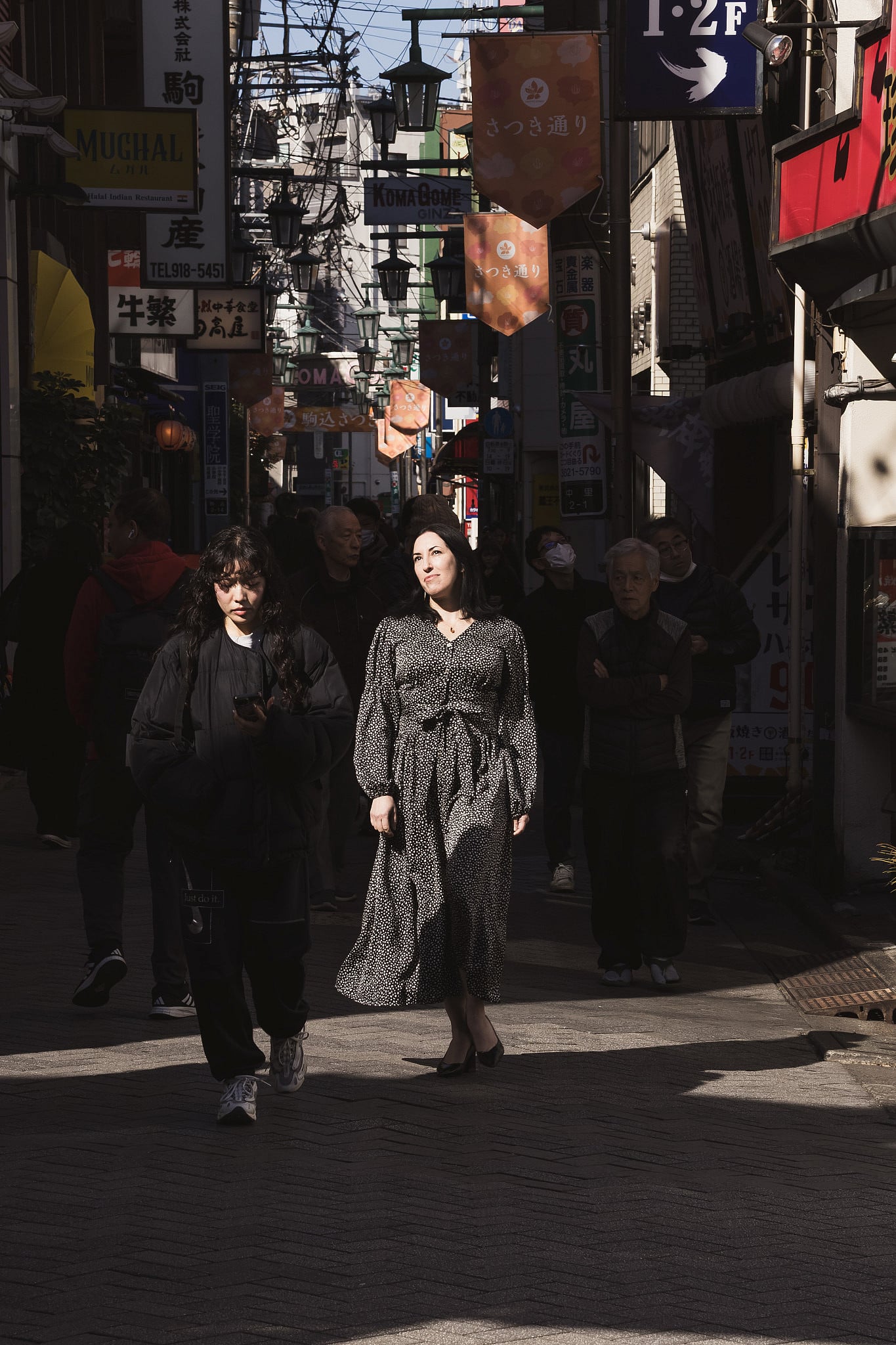
In hosting Israelis, I know to listen, as well as write their stories of survival, their stories of loss and heartbreak, and simply, life. I’m hungry for all of it, too.
What if I was so fixated on only hearing stories of my guests’ and friends’ heartache? I’d miss the joy! I’d have no part of it with them, and I’d certainly be inaccurate in any way of portraying them. I’d miss the humor. I’d miss it all.
And if I gloss over tragedy? Impossible. In my first podcast episode of what became Tokyo Shishi, I make matbucha with my guest. He tells me his best friend’s funeral is happening today–on the same day we are in my home cooking. There in our time of tomatoes, paprika, and spice, he tells me, and we becmme far closer because of it.
And this is what I’m also after as a reader. I’m here to listen and see complex people. Protagonists with nuance. Language so beautiful that you want to underline each word and cry. To all of this, I owe a great thanks, a “toda” and “arigato gozaimasu” to Yishay Ishi Ron and to Yardenne Greenspan.
So sure, maybe more and more, some of the lit coming out of Israel may seem like the mundane–and for me, too, as I clean our guest space upstairs. Sinks get clogged. So much laundering. We have seemingly ordinary moments of transition within living in nearness with our guests, day-to-day—in grocery shopping, running into my Israeli guests on their way to the gym in my modest Japanese neighborhood, where they are the only ones working out in Teva or in a sports bra and Lululemon bike shorts. We run into each other in favorite cafés or speak passionately about travel, their Psikhometri test that awaits, and all kind of life when they’re waiting for the shower or telling me we need more toilet paper.
I see them vulnerable when they are not feeling well and missing their mothers. I see concern in them, grief, and also pride and hope. I am with them cooking and hearing them on the phone with their mothers. Recognizing their voices outside on the stairs and getting to share them with a wider world is everything.
It’s also my accidental, and quite intentional, activism.
I reflect on our chat and Yardenne’s shirt. There is something similar in translating events, people, and encounters–moments that change us. I reflect on the cover of this newest book, and how lucky I am to read and receive such stories from Israel into the port of this whole world. It is no small thing; it is lion-sized.
Related Topics
Related Posts