Writer, Host, & Podcast Host to Thousands of Israelis in Japan
Transparent Grief Now Seen
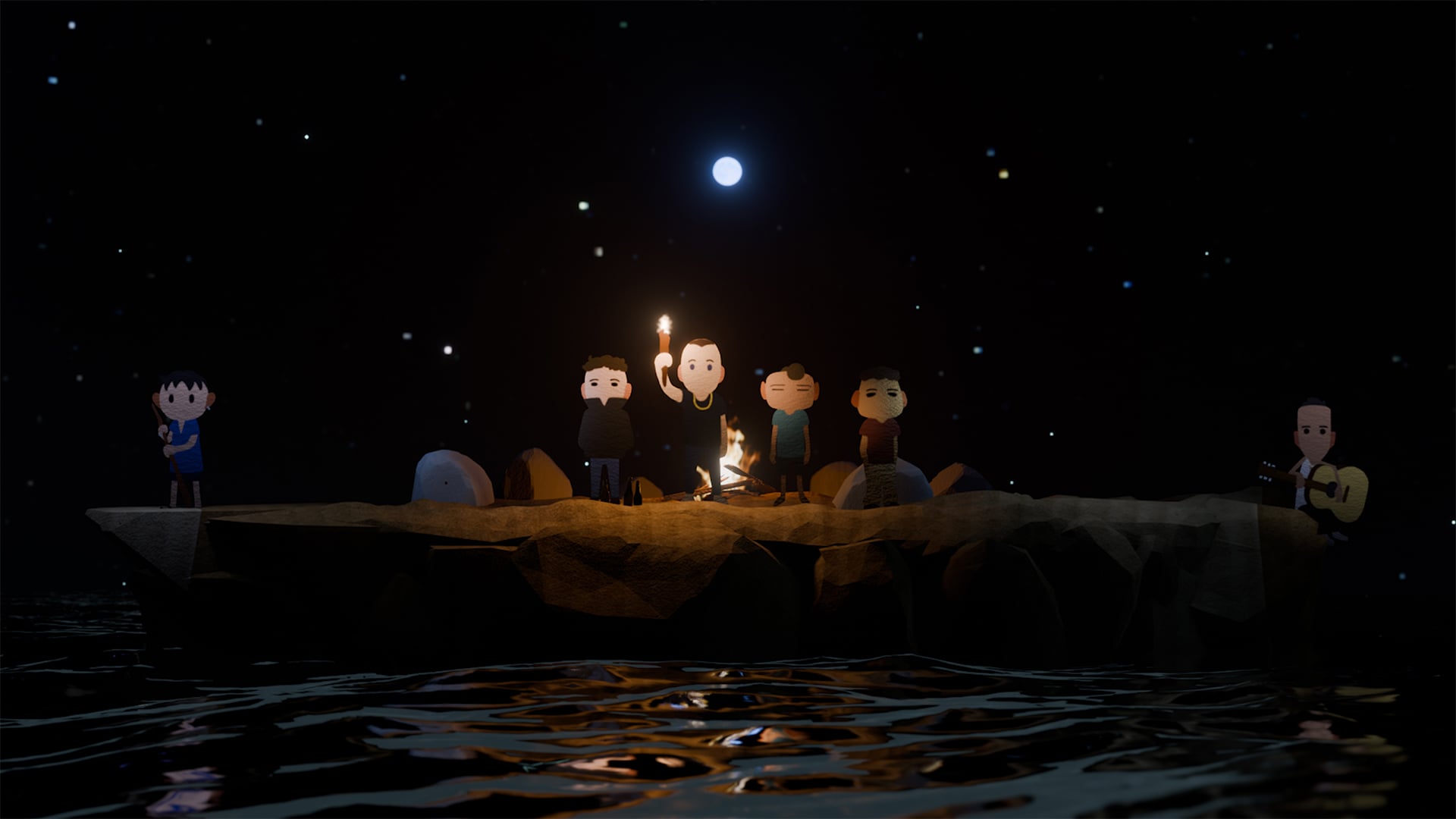
Hamedura Hashishit (The 6th Campfire) is also what Nuema is about: gathering friends. Still shot provided by the filmmakers, Wigderson and Hadad
I live in Tokyo, deeply entwined with Israel. My husband and I host Israelis around the clock in our home—hosting milestones and celebrations, accompanying guests through anxiety attacks and ambulance rides, making bunk beds upstairs, and sharing our table in ways that now feel extraordinary.
Over the past three and a half years, we’ve come close to their joy and their loss, which also led me to found the Tokyo Jewish Film Fest and host my podcast. Their stories must be known. There is one short film I wish the world could see. There’s also an initiative I want the world to know about. Both were born from grief and love, and it feels like a race to share. I say “race” as another young Israeli just took his life following a devastating Oct 7th loss.
Hamedura Hashishit (The 6th Campfire in English) is part of this ever-relevant spark and wound. I spoke with the two creators, Tomer Hadad and Lior Wigderson, about their friendship and their graduation film within the prestigious Bezalel Academy.
Hamedura Hashishit, an animated documentary, or “anidoc”, is a masterful work of love for Tomer’s fellow soldier and friend, Ronen Lubarsky, who died in a 2018 catastrophic terror attack while serving with his elite Duvdevan unit. It was an isolated attack outside of wartime loss; support simply did not exist.
“There was a lot less awareness about it, so we had to create our own help; this is why we did it,” Tomer says. “When I come back to the first campfire, it wasn’t on the memorial day-it was just something about a week after he died, on an evening that we didn’t want to sit alone in our own rooms and dwell on it and think about it. And so, okay, we said. Let’s go, let’s do a campfire. We gathered somewhere, made a campfire, and suddenly it became a thing.”
If bereaved friends struggled then to find support when Ronen died in 2018, and these same young people now also deal with the depth of newer loss, what must the need look and feel like in the wake of October 7th with newer loss added on? For as many gifted therapists as there are, the need for support remains massive.
“At first”, Tomer says, “we didn’t know what to do with it or how to cope with this day, so we started this tradition of making a campfire, which is “medura” in Hebrew. We do this “medura” each year, and we gather around as friends. It starts as a social gathering, and we speak, have fun, and laugh. But it’s also a place where we speak of that friend, remember him, tell stories about him, and share our feelings about what happened. Over the years, it became like a ceremony. Since it’s every year, we grow up, and we change, and so the things that we feel about it and the things that we say around the campfire are always different; it’s always something new,” Tomer says.
“The main thing that I wanted to capture is the special atmosphere around the campfire when you’re a part of it, almost a supernatural or primitive thing that is unexplainable in words, especially with something this heavy as a group of young friends who are basically 18. Naturally, when the war began, it was the perfect eclipse for the movie to be created”.
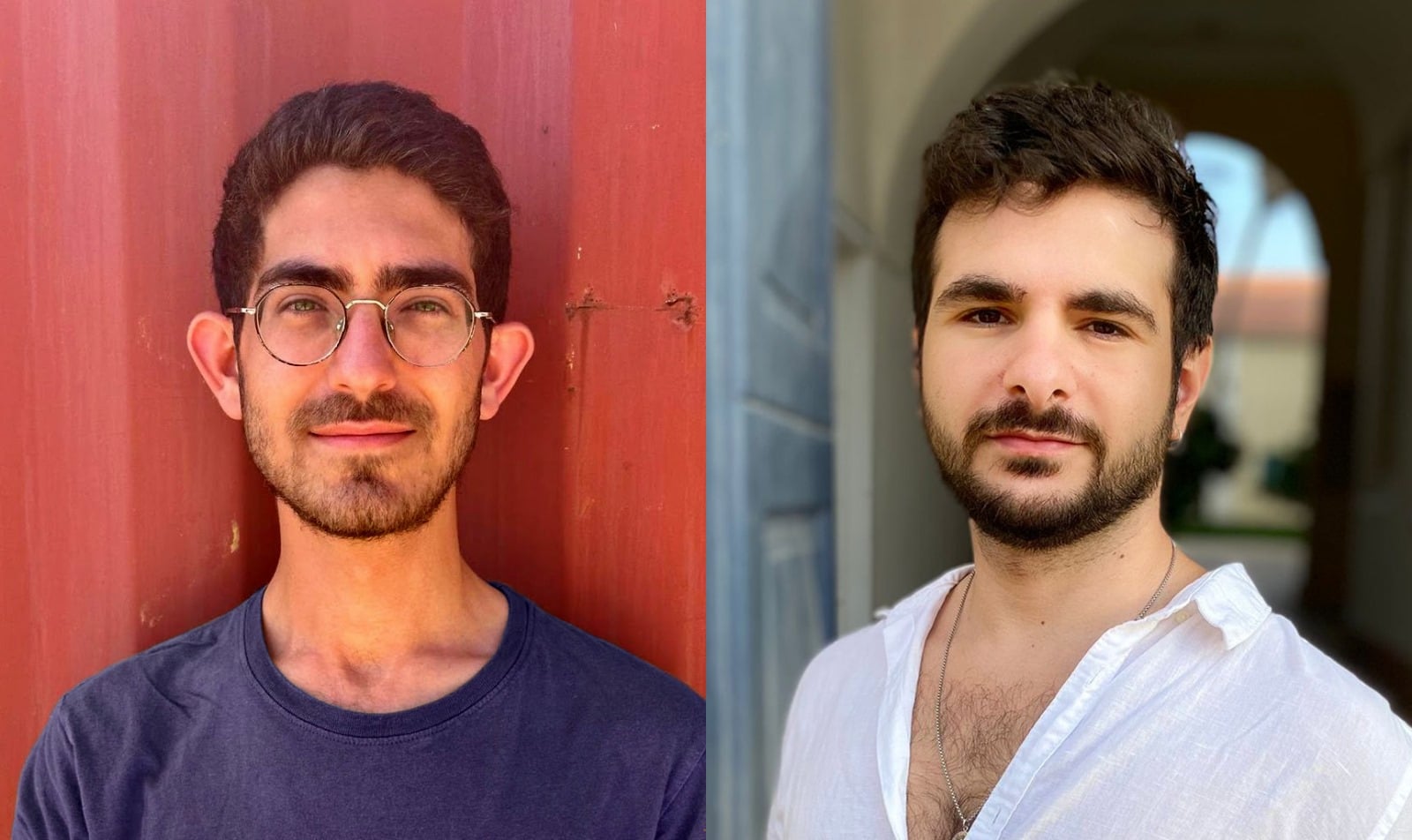
At some point in the film’s creation, they hit a wall. The turning point was when they recorded each friend’s unscripted, off-the-cuff remarks. These voices changed the course of the film and became a new architecture for a film carrying significant weight in under seven minutes.
The Bigger Question
What about the rest of the year and the other days when a friend has to remember and cope? When it is their partner and the love of their life? Their only best friend taken on Oct 7th? They are not the only ones with such memorials or such togetherness to mourn friends and loved ones.
Lior says, “As the years go by, they found they’re not the only ones doing this kind of ceremony.” The moment of this realization is magical in terms of cinematography and tremendous in scope of grief. Most everyone young knows the loss of one or more friends.
Tomer adds, “We had to create our own space to deal with it in a smaller group of friends space–something tighter and around him. He is part of a bigger thing, but you also want to make it personal for your friend and remember it as a friend in a more intimate way”. When he and Lior later returned to the site while making the film, they found another group of friends gathered around another campfire, commemorating and grieving someone they had lost.
I ask Lior and Tomer about the potential role of their film for healing, to which Lior responds, “It’s not about healing. No one’s gonna heal from losing a relative, a friend. No way. It’s not about healing. It’s about the sense of community that everyone has been suffering together. It’s bonding. Everyone must see this movie, not even because everyone should know Ronen’s name, and they should. It’s not just about Ronen, necessarily. We’re out there. We know you suffer, as well. You’re not alone…They know they’re not alone, but it’s another way of showing it, emphasizing it, and connecting.”
Another Family Grapples With the Same Question:
I tell the two about our friend, Gal, who came here from Israel and immediately shared the book about his beautiful sister, Noam. I sat on a video call with Tomer and Hadas Shallom, bereaved parents of Noam Shallom who was killed at Nova. We spoke via Zoom, but I already felt deeply bonded through their son, Gal, whom we hosted during his long and special time with us in Tokyo–a close friend.
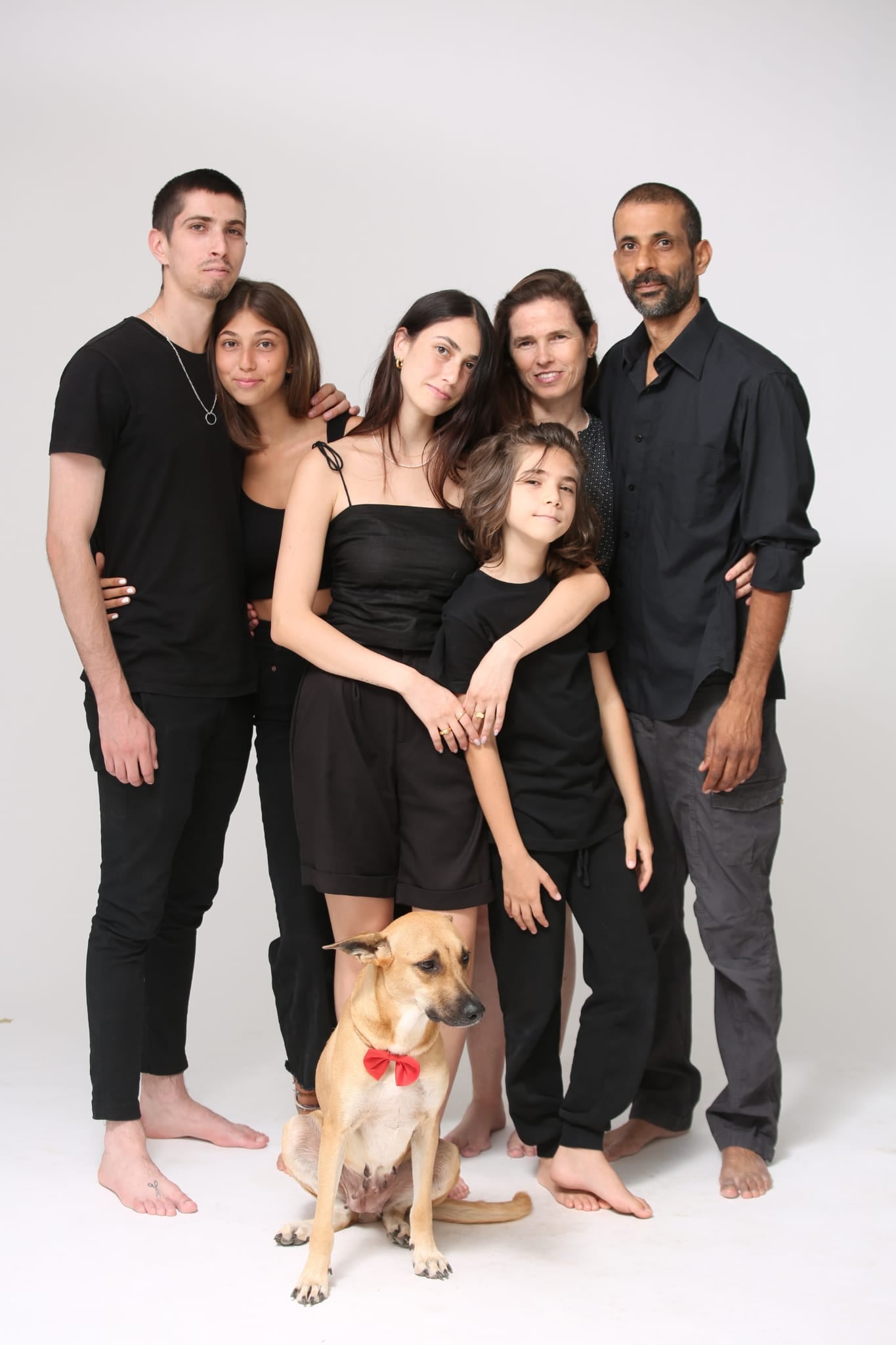
I tell Lior and Tomer more about the Shallom Family and how incredible the friends of Noam are. How they held up the family, and how, even in their deep, deep grief as friends, they took care of Tomer’s phone, held it through their week of hell when Hamas was even contacting the phone and taunting.
They realized in those weeks just how extraordinary these people are who filled their daughter’s life. One particular friend later went to them, expressing her need for support. She felt that such grief–the grief of a friend– was an invisible kind.
In their grief and love, the Shallom Family responded, founding Nuema for bereaved friends—a group that otherwise continues to be unseen.
Inside Nuema
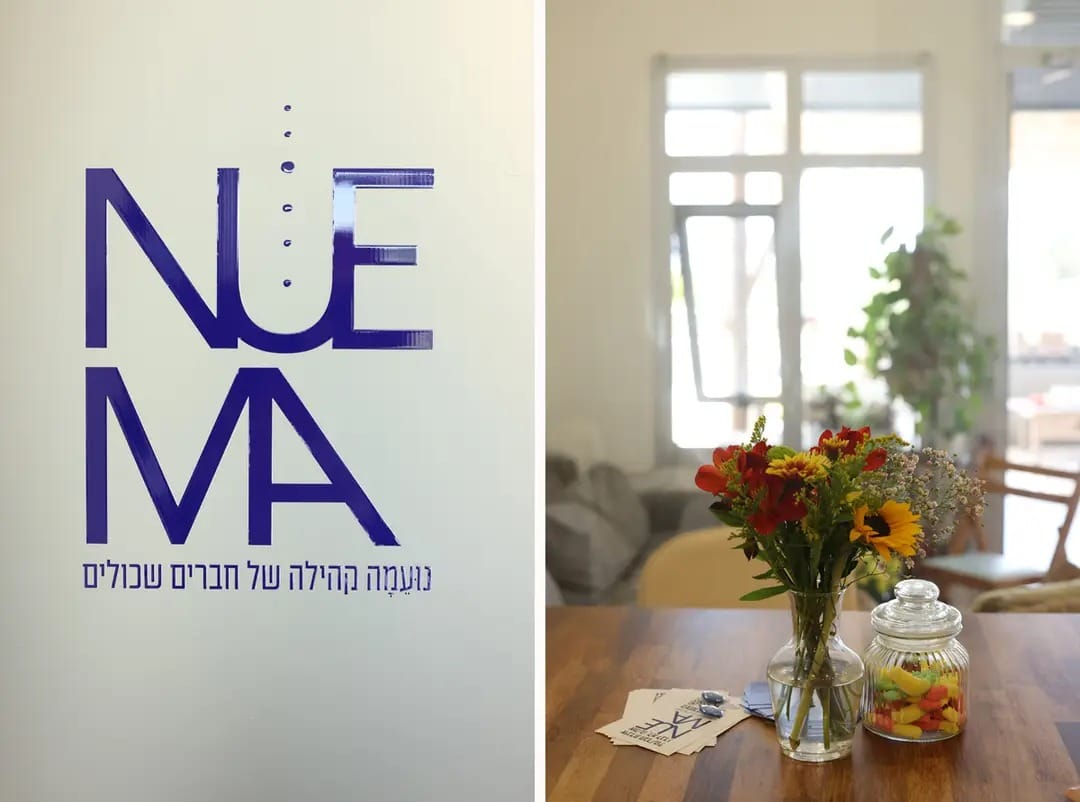
While Tomer and Hadas were offered support—and with every reason—the bereaved friends were still expected to go to work, still had to show up on base, still had to cope, and they didn’t have the support or therapies provided. I tell Lior and Tomer about Nuema, the physical place they created in their daughter’s name. Now this specific grief is being studied and documented.
This is something that the filmmakers appreciate. “In such loss”, Lior says, “the friends aspect of it is often overlooked in many ways. I don’t know why, but it just does. And so when we did it (made the film), we thought, at least we also get to express something that has significance and is not maybe talked about enough”.
Especially after Oct. 7th. “It’s a good thing that it’s being recognized a lot more, because everybody has a friend and everybody has a family member…” Tomer says.
Nuema is not just an idea or online forum; it is a place with walls, art, people, and every detail designed to bring comfort and connection. It’s also just a two-minute walk from the train in Binyamina, a place that holds much meaning for parents and Nuema founders, Tomer and Hadas Shallom. It’s the place where their dear Noam was learning in high school and where she later worked.
Since their small opening in June, more than a couple hundred people are in the Nuema community–227 bereaved friends, to be exact. People fill out a form, join the Nuema WhatsApp group, and come to the Nuema house to be with those who get them and know what they go through,” says Tomer Shallom.
“We start at 5 in the afternoon. They are just coming from work and haven’t eaten yet, so they’re hungry. They take a plate, and they sit outside. We have a wonderful balcony with a view of the sunset. It’s really the atmosphere, the thinking, and the purpose of the place. The interior design supports the purpose, which is this: You can sit and feel that you like the air you breathe, you know? To cherish life, be happy about it, and feel good with yourself and with this moment.”
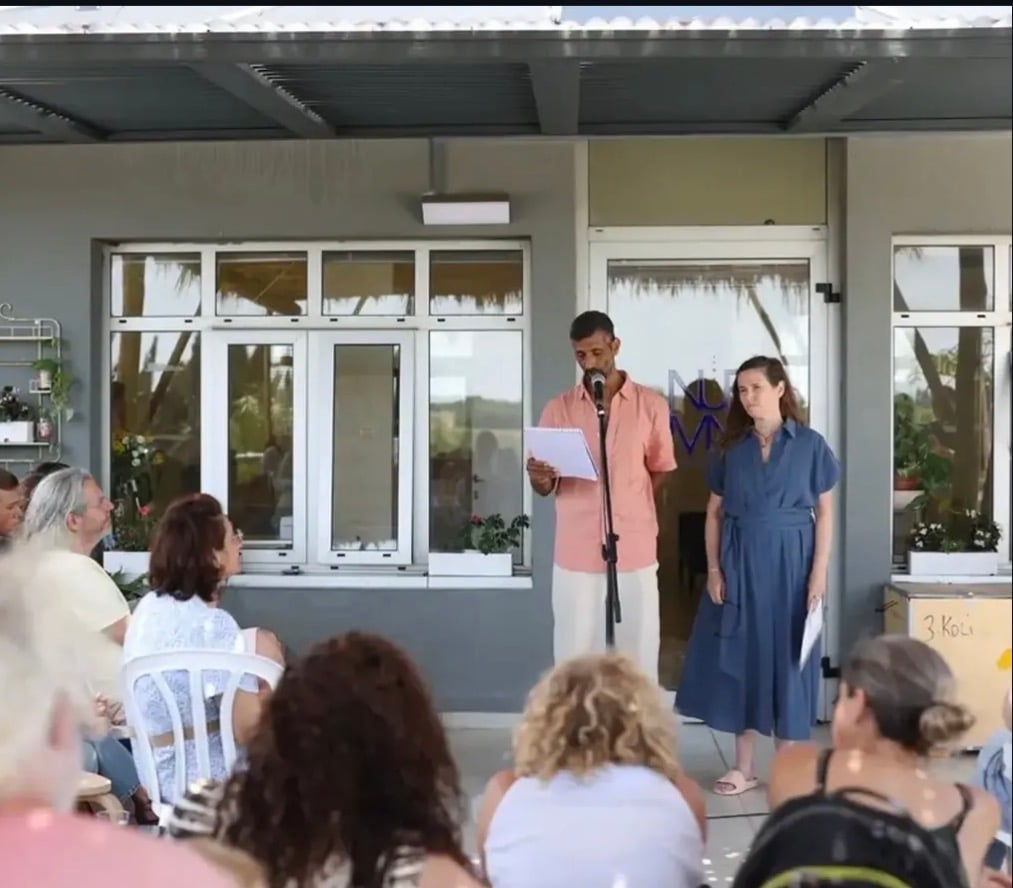
“We’re good at loving those people. We really do love them. The reason we opened this is very sad, but it is something we are learning day to day, and we put a lot of energy into learning.”
“We opened it for them. It’s now their turn to take a step and come. It takes time to say, “Yes, I need help,” or, “Yes, I need to be with the people that are dealing with the same trauma, with the same pain, with the same issues and sadness. Just to be around together and know that everybody around you feels the same.”
Why it Works
They did not immediately seek help or the solace of others also grieving, though there were many invitations. It took time. “We went for more than one year once a week, some weeks twice a week, for a place for bereaved parents,” says Hadas. “It gave us a place that is like home, a place where you are waiting for this day to come to go be with parents who also lost their dearest child, and we saw the process that we went through this place over one and a half years. It took us time to even go. I got the invitation maybe for one year, every week, every week, every week. And we didn’t go. We were in our place, in our home, in our pain. But immediately when we started to go, we really wanted to.”
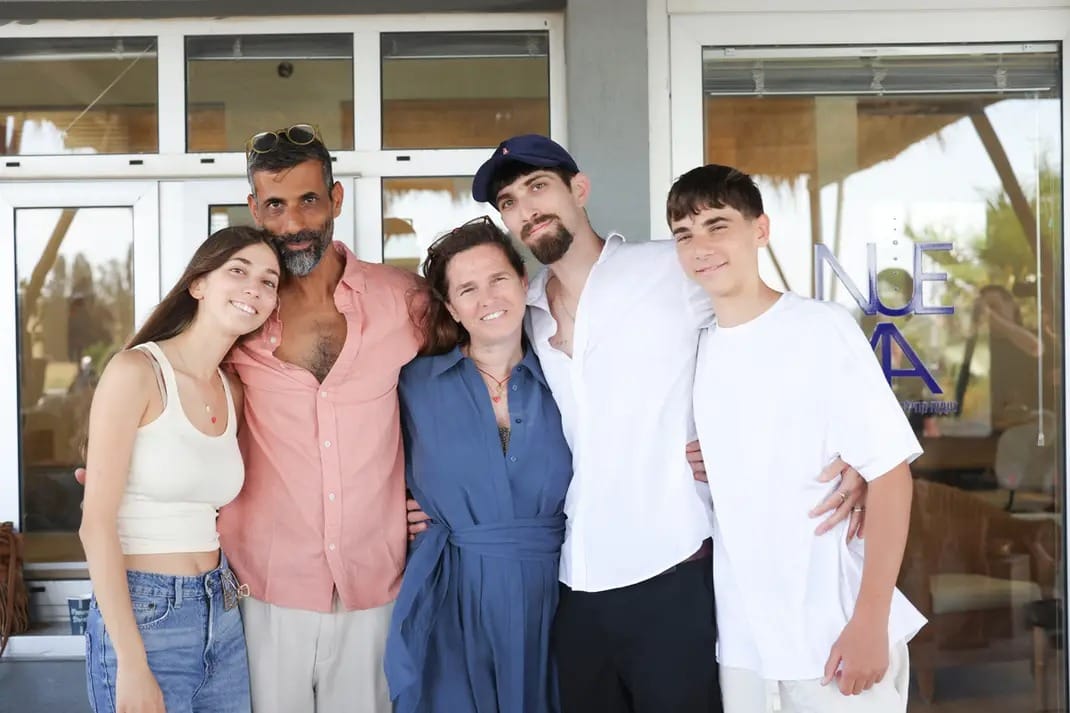
Tomer adds, “This is our new society- this is the beginning, the only place we feel normal because we’re like everybody here—we can be us without having to explain.”
It sounds like the campfire, but Nuema burns daily, throughout the year. Both medurot and Nuema are needed—togetherness with food, yoga, massage, sound healing, music–all of it. This is how to support a nation of bereaved friends.
“We understand, from our experience, what good can come when we collect the community that now shares the same issue. I think it’s easier for us to offer it because we can see one and a half years ahead. I really hope that in maybe two years or three years, they will say to themselves, “Wow, thanks. I’m part of it. Thank God I’m part of it. I’m doing it. I choose it–that it is a breakthrough or turning point in my life for better living. It will happen,” says Hadas.
The Scale/Why this Matters
While 227 bereaved friends have joined the Nuema community since their start in June, the Shalloms believe this is just the start and the seed. Using the most conservative estimate—alloting roughly ten close friends for each of the approximately 2,100 people murdered or killed since October 7—the Shalloms calculate at least 20,000 bereaved friends.
As someone who has hosted thousands of Israelis in our home, I’ve been with them as a childhood or army friend suddenly walks in the door or when they realize the many shared friendships they have. Israelis collect friendships across childhood, scouts, school, military service, through their trips, and in their work. Ten close friends is low.
And yet, they could find almost no information measuring or studying such an affected group. Tomer and Hadas have a name for it: transparent loss. Because friends were neither parents nor spouses, their grief often went formally unrecognized.
It was Noam’s close friend, Amit, who came to them with her specific heartbreak and became the catalyst. “I feel that I need to collect the bereaved friends, that we will be one for each other because nobody sees us, nobody gives recognition for our pain, our loss, our grief, or our mental situation. We cannot go back to work immediately. We cannot go on with our studies at the university. Our hearts are breaking. We cannot go on with our life simply like, “Okay, that happened. Let’s go on.” NO. We need a place to cry, to be together, to talk about Noam, and to talk about all the other grief and loss. There are so many.”
Hadas says, “After she went home, I told Tomer, “How can it be after one year, and still no recognition?” I was shocked. What was unseen became colored in, suddenly.” They could not ignore it. “Some friends are really like family,” they say. “It is a relationship you choose that is sometimes even more than family. We are kind of the first association dealing with that.”
Nuema has partnered with academic researchers to document who these bereaved friends are, what they need, and how this community is changing the present and the future. They are creating evidence where almost none previously existed.
“We haven’t discovered yet the great power or benefit that we can achieve. We’ve just started. We want to hear them and learn their specific need. From the beginning, the reaction has been, ‘Wow, somebody thinks of us. Somebody did all of this for us.’ Now, after two and a half years, somebody sees us, and they are very thankful”.
“An Israeli can have 20 close friends”, they tell me. “In the army sometimes it’s really 50 or 100 people that are together all of the time. Maybe he is not in your team, but you see him every day. You fight with him. You sleep with him. You wake with him. You know a person so deeply”.
“Israelis collect friends,” they say. Noam certainly did. She stayed in touch with them all, tending every friendship with intention. No friendship or interaction was shallow but authentically deep.
Tomer and Hadas are gathering the friends Noam cherished, rings of friends who can begin to breathe and cherish their lives again, known and gathered in.
–
Related Topics
Related Posts