
Owner of the world's largest Herzl collection
Treasure Trove: On the Upcoming Elections- The Hora, The Hora
From the Herzl and Zionism Collection of David Matlow, Toronto (www.herzlcollection.com). Photograph by David Matlow.
In the 2002 comedy film My Big Fat Greek Wedding, the character Gus Portokalos says “Give me a word, any word, and I’ll show you that the root of that word is Greek.”
Let’s try it with the dance that is a feature of every Bar and Bat Mitzvah and Jewish wedding, was experienced around the campfire in the pioneering days of Israel, and was the staple of Israeli folk dance programs at camp: the hora.
The word “hora” comes from the ancient Greek khoros which meant a group of performers who danced, sang or spoke their lines in unison. Many cultures have a circle dance with a name that is derived from khoros including Turkish and Romanian (hora), Bulgarian (horo), Yugoslavian (kolo), Montenegrin and Macedonian (ora) and Russian (khorovod).
The hora came to the Land of Israel in the early 1900s with immigrants from Romania. The dance was first formally introduced into Palestine in 1924 by the Romanian and Jewish choreographer (which is another word derived from khoros), Baruch Agadati, who with a composer and lyricist created a Jewish and Hebrew version of the dance for a show performed by the Ohel Theatre Company. The dance was named after the choreographer: the “Hora Agadati” although initially Agadati tried to call the dance an ora (awaken) but that term didn’t stick.
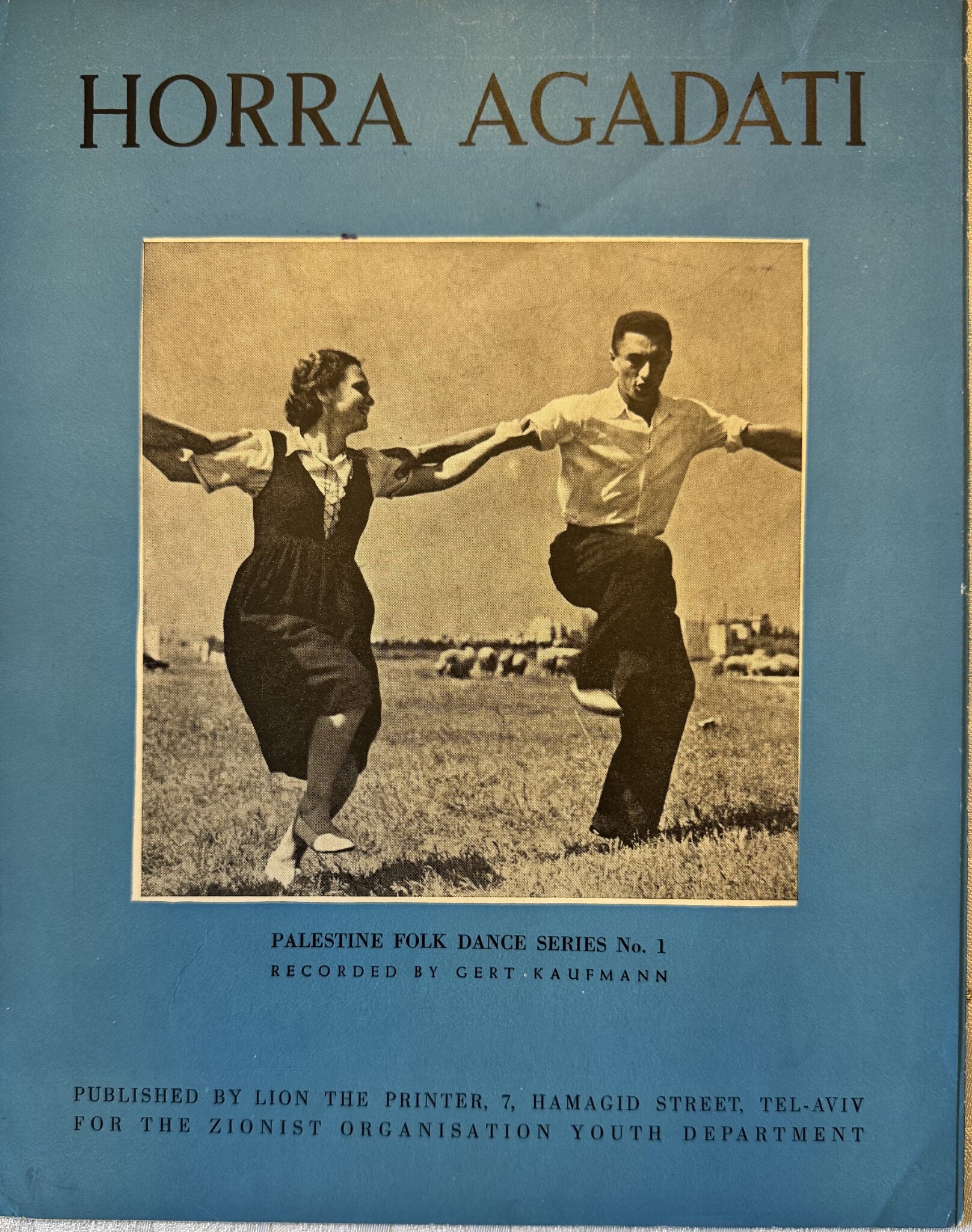
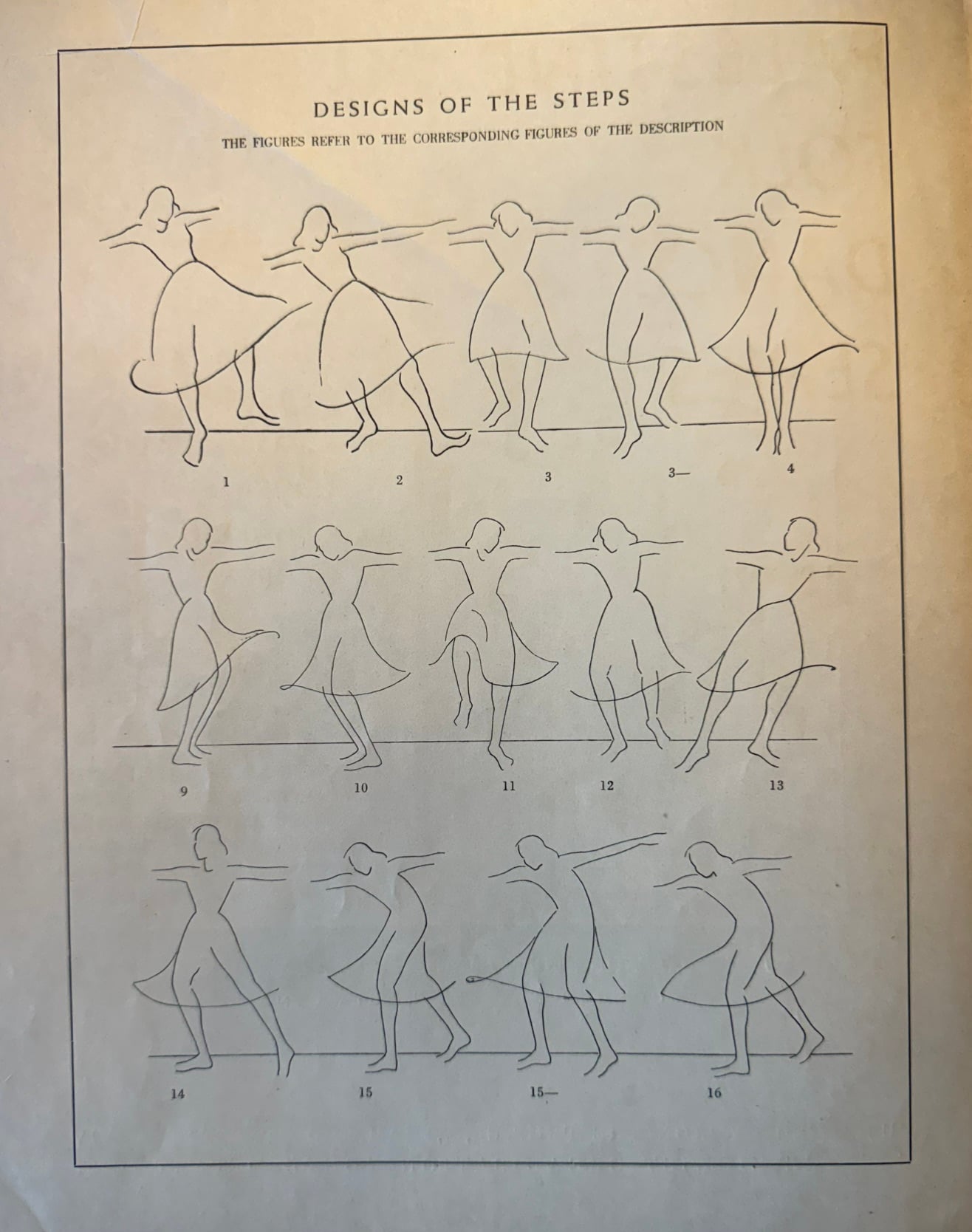
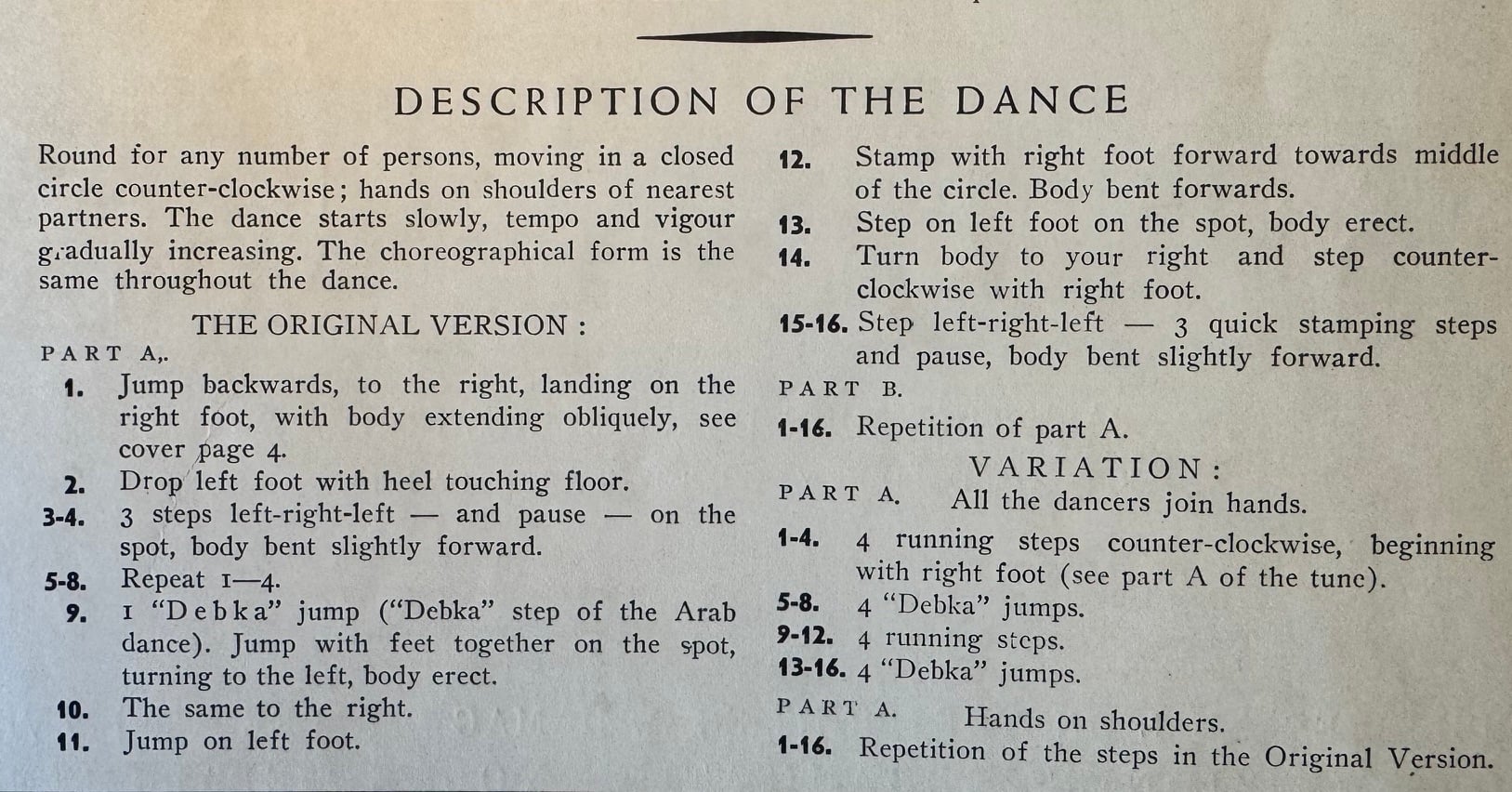
Various iterations of the original hora were created and danced by Israel’s pioneers. To perform this dance the participants interlocked arms behind their backs or on their shoulders, then take two running steps to the right, jump on the left foot, at first slowly and then accelerating. Over time the energy-expending movements – strong stamps and kicks – disappeared so that a hora now has arms held downward with simple hand-holding.
The dance became a symbol of the capacity to have joy while working hard building the land at great risk.
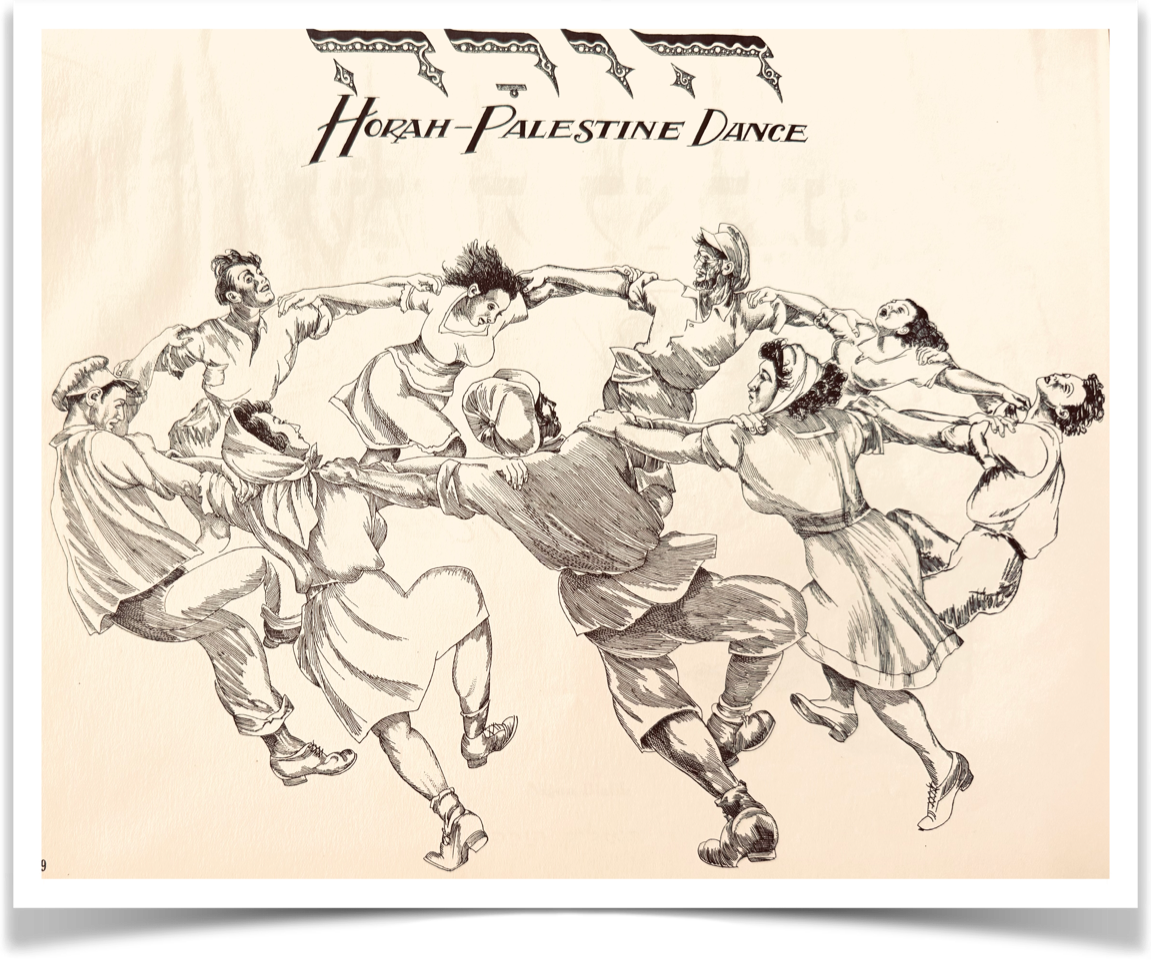
This drawing of the “Horah-Palestine Dance” is by the artist Saul Raskin (1878-1966) and was included in his 1947 book Arzeinu v’Ameinu (literally our land and our people, but called Land of Palestine in English). The book is 360 pages of drawings from his five visits to Palestine and Israel between 1924 and 1956. The book’s last section is called “Joy to our Land” and is comprised of twelve drawings of pioneers dancing the hora which Raskin describes as “that dynamic dance expressing the superabundance of joy of a young people in process of creations- an old people young again.”
Raskin describes how sometimes when he was drawing he stopped to join the dancing, with his pencil still in his hand. He said, like his people, he then was “an old man-young again.”
Israel’s pioneers were able to link arms, find joy and dance in a circle when times were tough. We can do the same. So….let’s dance (regardless of the results of the upcoming important elections in Israel, the United States and Toronto).
For more treasures from the Herzl and Zionism Collection of David Matlow, which have appeared weekly in the Treasure Trove column in the Canadian Jewish News (www.thecjn.ca) since February 2021, see https://herzlcollection.com/treasure-trove
Treasure Trove is a program of the Herzl Project. Another program is the #Herzl100 where 100 Herzl videos were posted in 100 days between June 6 and September 9, 2026. You can watch all of the videos here: https://herzlcollection.com/%23herzl100 They are available for viewing individually by searching #Herzl100 on Facebook, Instagram and TikTok. Also check out #Herzlbreak on these platforms.
Related Topics
Related Posts