
Treating a war as if it were a PR problem
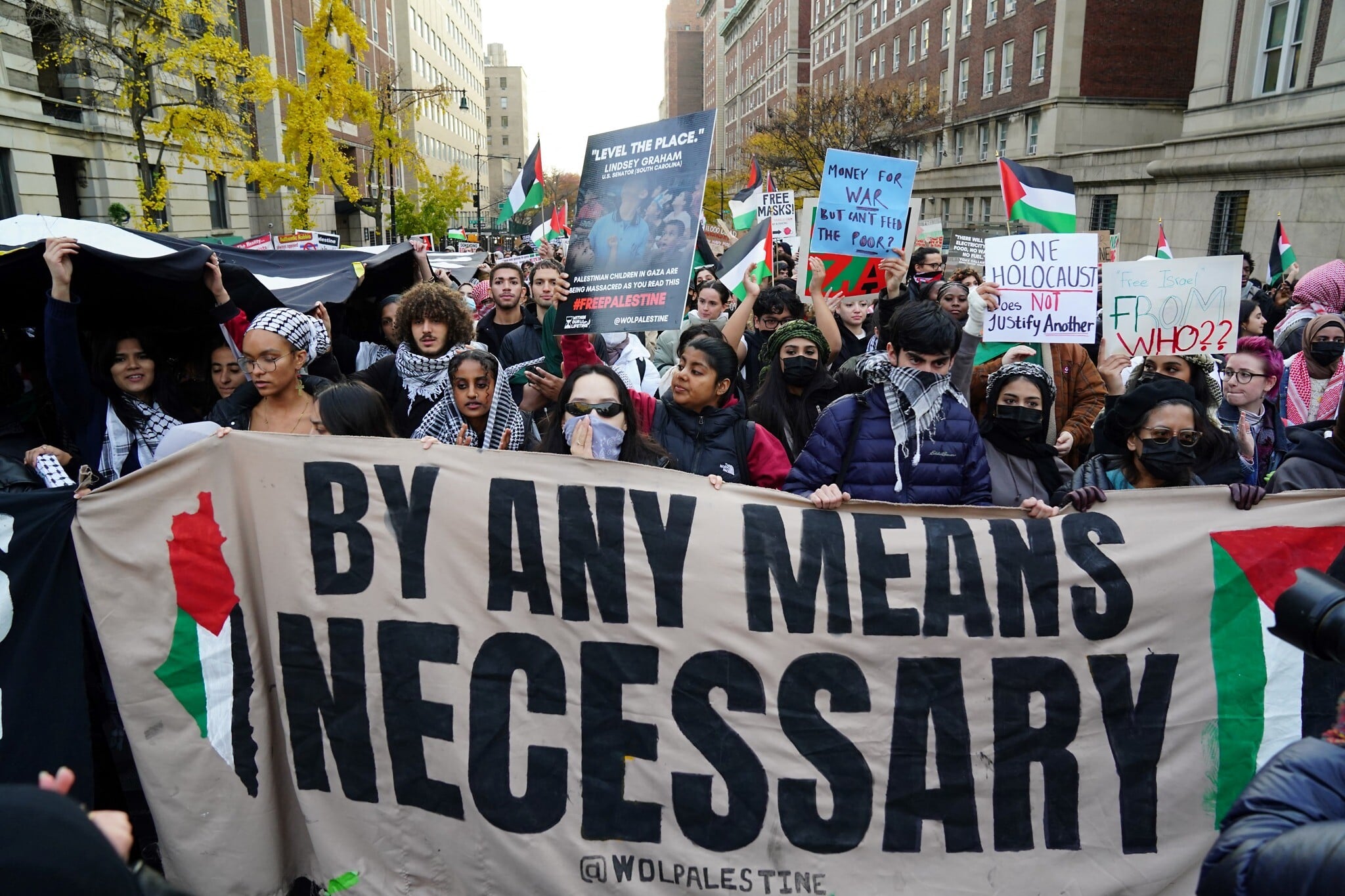
Only 24 hours after the brutal Hamas attacks, dozens of student organizations at Harvard University published a letter accusing Israel of responsibility for an attack in which more than 1,200 civilians and soldiers were massacred. Four days later, Columbia University saw the first major anti-Israel demonstration on campus — an event that marked the beginning of a wave of propaganda that has since swept hundreds of campuses and student associations across the United States and Europe.
As someone who spent years assessing threats and building operational capabilities, I immediately recognized this moment as the first clear sign that Israel’s enemies had moved from preparation to the activation of the cognitive front. In Israel, however, these protests were dismissed as marginal incidents rather than as the opening of a coordinated campaign. This misconception became what I call the “October 8 Paradigm.”
For decades, Israel’s security establishment focused primarily on kinetic threats—the Iranian nuclear program, Hamas tunnels in Gaza, and Hezbollah’s missile arsenal. Meanwhile, in Doha, Gaza, Ramallah, Tehran, and even Moscow, an entirely different type of war plan was quietly being crafted. Its objective was not to strike Israel physically, but to gradually erode Israel, the Jewish diaspora, the United States, and the foundations of Western civilization from within.
Billions of dollars from Qatar, Iran, and other actors flowed into the West’s public-influence arenas, taking advantage of the mechanisms of open and democratic societies – from education systems and schools to universities, and from legal and research institutions to culture, religion, media, and social networks. This influence was executed through a coordinated interplay between state actors, terrorist organizations, and left-woke radical movements that adopted, sometimes due to a lack of awareness, sometimes out of ideological alignment, anti-Western and anti-Israel narratives. It was a long-term, multi-layered, and well-orchestrated effort, the consequences of which we now experience with full force.
Israel’s gap between its impressive operational capabilities and its failure in the cognitive arena is not the result of insufficient effort; it stems from a lack of definition. In the security world, a threat that is not defined is not addressed. Definition is the starting point of any strategy – it shapes intelligence gathering, capability building, organizational structure, and the professional execution of long-term plans. This is exactly how Israel has managed the Iranian and Hezbollah fronts: clear frameworks, dedicated command structures, interagency cooperation, ongoing staff work, and a combination of overt and covert operations lasting years. None of these principles was applied to the cognitive arena.
While Israel’s adversaries invested decades in building a multi-dimensional influence campaign, Israel continued treating this field as an extension of public diplomacy rather than as a true strategic front. The result was fragmented efforts – local initiatives, isolated responses, and important but insufficient activities that could not counter campaigns driven by states, terrorist organizations, and Western activist networks. This explains why Israel can disrupt a nuclear program, intercept thousands of rockets, or neutralize senior Hezbollah operatives, yet finds itself struggling against surging anti-Israel, anti-Zionist and antisemitic sentiments on campuses and in the public sphere. The challenge is not technological complexity; it is the absence of an established security framework.
To change this reality, Israel does not need another public-relations initiative. It needs a new strategic doctrine, one that recognizes the influence arena as a genuine threat to the security of Israel, the Jewish diaspora, and the future of the West as a whole. Such an approach requires defined state responsibility, dedicated intelligence gathering, professional capability development, cooperation with diaspora Jews, pro-Israel, and pro-Western partners worldwide, and a clear focus on the most critical arena: The United States.
This struggle will not be won in weeks or months, nor through a viral video or a clever social-media response. Like other national-security challenges, it requires a structured, multi-year effort with clear objectives and an organizational framework that enables coherent decision-making and effective execution.
October 7 exposed the cost of a false assumption in one arena. The campuses exposed the cost of a false assumption in another. The sooner we recognize that the cognitive front is a real front of war, the greater our chances will be of reversing the current trend.