
Director of Hebrew Programs - Tikvah
Featured Post
True colors
The Torah would not present the high priest's garments in all their colorful detail if those shades were not meaningful. But what do they signify? (Tetzaveh)
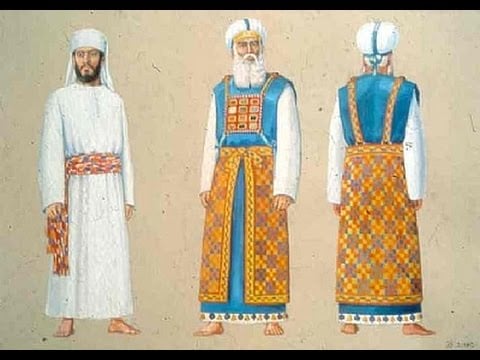
Parshat Tetzaveh: The relationship between the garments of the high priest and those of the other priests, with R. Shmuel Peretz. (screenshot, YouTube, Kiryat Gat hesder yeshivah)
We live in a world of colors, even though we know that colors are in fact an illusion. Interestingly, in Hebrew, the word for color is “tzeva,” which comes from the same root that means “hypocrite,” or “false.” In Parshat Tetzaveh, we read about the clothes of the high priest in the Tabernacle, or Miskhan, in detail, including their colors and the materials they were made from. All of that detail suggests that these colors have a deeper significance beyond making the high priest’s clothes look special and royal. How, then, are we to understand the role and of colors in the high priest’s clothes? What is their significance?
They shall make the ephod of gold, of blue, purple, and crimson yarns, and of fine twisted linen, worked into designs. (Exodus 27,6)
The most dramatic garment, the ephod, is made of three materials (gold, yarn, and linen) and four colors (blue, purple, crimson — and gold). These materials and colors appear many times as the building of the Mishkan is described, as well as in other places in the Bible.
Let’s start with the colors:
The techelet, or blue, is famous as the color of the tzitzit strings. According to Rabbi Meir in the Talmud (Menachot 43, 2), techelet is the color of the sea, reflected in the sky, and it is similar to God’s throne, as described in both Exodus and Ezekiel as the color of sapphires. Because blue is connected to the Divine and also to the basics of the world experience (sea and sky), it can be said to represent God’s presence in our world.
The argaman, purple is used in royal clothing, as mentioned in multiple sources (Jeremiah 10:9, Esther 8:15, Proverbs 31:22). The fact that it is designated as special in this way suggests that it represents the ability of people to go beyond the physical, and combine their cognitive and spiritual abilities in order to come as close to God as possible.
Shani, or bright red, is the color of blood. In other words, adom (red) comes from the same root as the Hebrew for man, or humanity: Adam. This affiliation indicates the strong life force and desires that all living creatures share, as represented in the Mishkan’s red.
Now to the materials:
The garments are made from materials that represent our world, with the sheep’s wool of the yarn signifying animals, and the linen made from the flax plant representing plants. Gold is a pure metal that is mentioned many times in the building of the Tabernacle. The menorah, ark, and altar all are gold. As a stable metal with a high value, gold speaks to truth and morality. It is the light of the Divine, as it shines and guides our world with purity and ideal moral values.
The colors have a deep meaning but they are also an illusion — mere refractions of light. And just as the clothes simply cover the body, the physical world is no more than a reflection of the real world of that is God’s. The high priest carries with him this symbolism as he approaches the Divine. The colors and materials in the high priest’s clothes represent true values, as they are mixed with the physical confinements of our world. Thus, the high priest strives to connect God’s unreachable world to ours.
Like the high priest, we need to understand the difference between the illusions in our lives and the real goals and values. We need to take in account our limitations, and at the same time do our best to make the connection between heaven and earth, between the outer layers of our existence and internal “real” workings of our souls.
Related Topics
Related Posts