
Trump Opened Pandora’s Box in Iran. Who Can Close It Now?
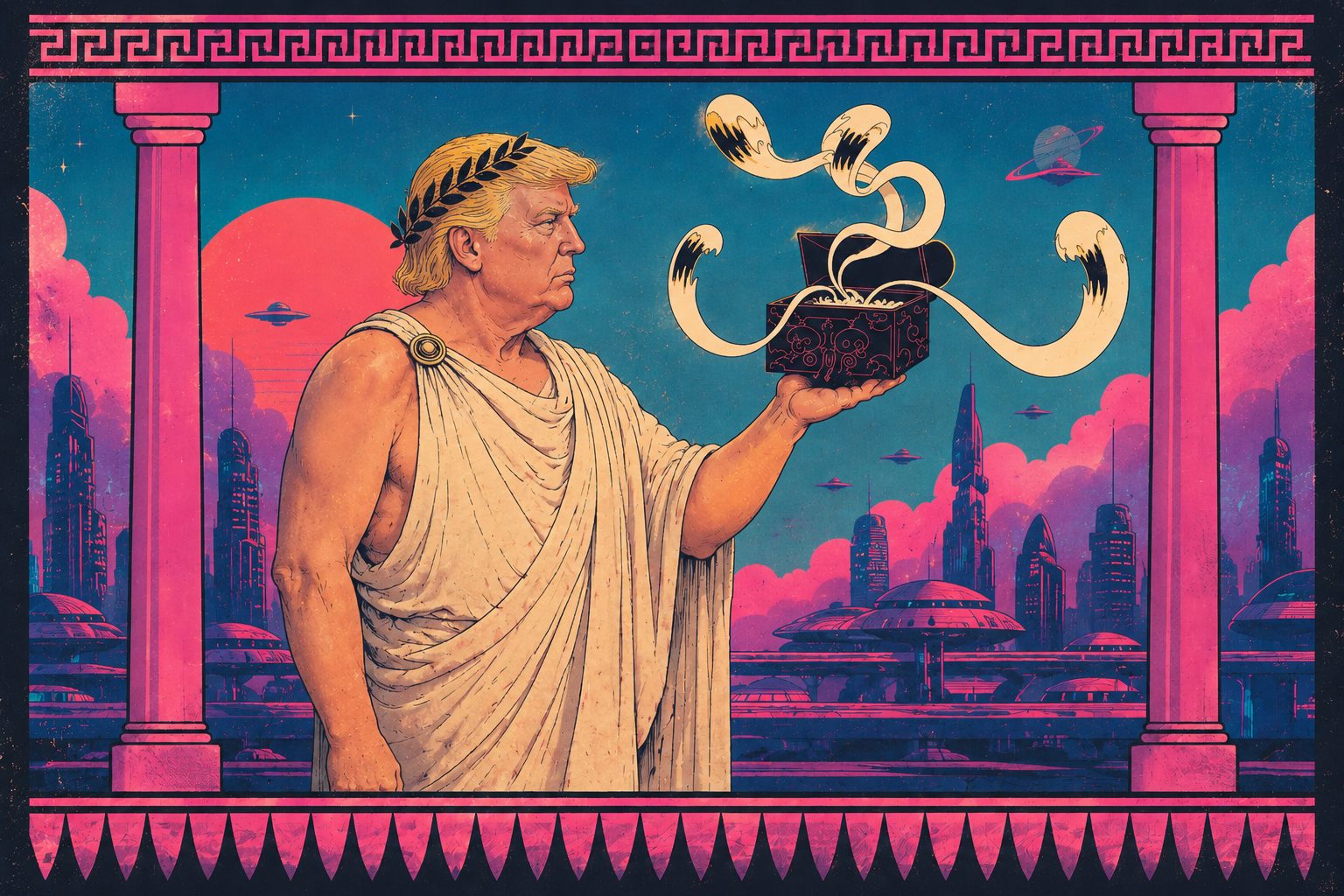
On February 28, 2026, the United States and Israel opened Operation Epic Fury against Iran. Weeks earlier, the chairman of the Joint Chiefs of Staff, General Dan Caine, had warned President Trump in several briefings that Tehran could answer an attack by closing the Strait of Hormuz with mines, drones, and missiles.
Trump acknowledged the risk and moved forward, telling his advisers that Iran would capitulate before it came to that, and that the Navy could reopen the waterway if needed. Iran closed the strait within hours. The reopening is still being negotiated four months later.
The 2002 war game
The vulnerability was not new, and the military had seen it. In 2002, the United States ran Millennium Challenge, the most expensive war game in its history, at a cost of 250 million dollars. A Red force standing in for a Persian Gulf adversary, led by retired Marine general Paul Van Riper, used swarms of small boats and a surprise salvo of cruise missiles to sink sixteen warships, among them an aircraft carrier.
In a real engagement, the dead would have numbered around twenty thousand. The umpires then halted the exercise, refloated the fleet, restricted the Red commander, and scripted the rest to deliver an American victory. Van Riper resigned and called the result rigged.
The lesson was plain and it was set aside. A weaker Gulf power could cripple a superior navy with small boats and mines. Twenty-four years later, General Caine carried the same warning into the Oval Office, and it was set aside again. Iran did not sink the fleet. It closed the strait, which cost it far less and reached far wider. The next several US presidents will inherit this problem.
A cheap weapon
About 20 million barrels of oil cross Hormuz each day, close to a fifth of world consumption. The channel is narrow, and the weapons that threaten it cost little and are quickly replaced. Mines, fast boats, and anti-ship missiles do not require a modern navy. What makes them effective is the narrowness of the strait, which will never change. Iran does not need to fire them.
A credible threat against the strait is a form of coercion, psychological warfare against global shipping and financial markets, and a direct strike on the world’s energy supply, delivered without a single bullet, drone, or missile.
For decades Iran threatened to close the strait and never did, so the world treated the threat as a bluff. In 2026 the bluff ended. Fatih Birol, who directs the International Energy Agency, described the strait afterward as a broken vase, its damage done and hard to reverse. Iran had found the one weapon that costs it almost nothing and costs the world a great deal.
The price reaches Washington
Oil is priced globally. American independence from Gulf crude offers no protection, since any disruption at Hormuz raises the world price, and Americans pay it too. Gasoline climbed toward $4.50 during the blockade.
Trump made the most of the moment. With Iranian crude off the market, American oil and fuel exports climbed to a record near 13 million barrels a day, and he boasted of the sales. Washington also drew down strategic reserves it later said were weeks from empty. The moves added tens of billions to American revenue, but they did not lower the price at home, because the shortfall at Hormuz set the global price.
The price fell only when the strait reopened. Crude has since dropped back to about where it stood before the war, and Trump has claimed the credit. Yet he only undid the damage he set in motion, while Iran collects what the war had frozen. Tehran is unlocking billions in blocked assets, winning sanctions relief, and has sold more than 40 million barrels since the blockade lifted, now at prices higher than it managed before the war. Iran leaves with more than it had. Trump leaves with the price he started with. None of this shows Washington leading the negotiation.
The relief will not last. The lower price depends on an open strait, and Iran can close it again whenever it chooses, as it did on June 20. A price shock is an electoral problem for any president, counted in months and in polls, and this is the mechanism that hands Tehran its leverage over Washington.
The wedge through Washington
Iran’s objective is simple. It wants to make American support for Israel expensive enough that Washington restrains Jerusalem. Hezbollah keeps the pressure on Israel’s northern border, Iran’s own front against the Jewish state. Hormuz keeps the pressure on the United States. The two serve one end, to reach Jerusalem through Washington and split the allies at the moment they act together. Iran does this because it can, and because it knows the strait is Trump’s weakest point.
The mechanism showed in the open. When Israel struck Hezbollah in Beirut, Trump reproached Netanyahu in a heated call and warned him publicly against hitting the city. His concern was not Hezbollah. Each Israeli strike threatened to pull Iran from the table and return the strait to closure, and Washington ended up restraining Jerusalem on Tehran’s behalf.
The double squeeze, and the loop
While the American fleet sat off Iran’s coast, Washington answered the closure by blockading Iran’s ports, cutting off both its oil exports and its imports of food and goods, a move Netanyahu praised as effective. The mutual squeeze pushed Iran toward a ceasefire.
On June 17, Trump and President Pezeshkian signed a memorandum to end the war and reopen the strait. Three days later Iran declared it closed again over Israeli strikes in Lebanon. The paper bought a pause and left the box open.
The counter-squeeze exists only while the fleet is present. In a future round, should Israel strike Iran alone and the fleet has drawn down, Iran can close the strait again, and Washington would have to move naval power across the world to reopen it.
A signed agreement does not close the matter. Once the war winds down, Iran can trigger the same crisis whenever it chooses, at the next Israeli strike or the next dispute, forcing the entire sequence to repeat under any president.
The wedge through the world
The loop does not need Washington. Even if the United States distanced itself from Israel, or Israel acted without American cover, Iran could close the strait and spread the cost to every economy that buys oil. Europe, Asia, and the Gulf states would pay, and Tehran would name Israel as the reason. Iran can punish Israel without striking Israel, by making the whole world pay and blaming Jerusalem for the cost. The lever survives even a rupture between the two allies.
The problem outlives the president
Iran’s definition of its enemy is ideological, and it predates every recent administration. To Tehran, Israel and the United States are one bloc, and an election in Washington does not change that reading. A Democrat who returns to diplomacy and a Republican who tightens sanctions both arm and shield Israel, and a cautious administration may yield to a price shock faster than a combative one.
There is a harder point. Iran left this war having used the weapon for the first time, having measured its effect on prices and on politics, and having learned to apply it selectively. The knowledge does not expire. Each president will inherit an Iran more practiced than the one before.
The closure has also proven profitable. Before the war, passage was free. Iran shut a waterway that had always been open, and it is winning back what the war had taken, arguing over tolls while Washington unfreezes its assets and lifts the blockade. Iran is being rewarded for undoing what it should never have been able to do.
Unequal pain
The double blockade hurt Iran as well, and its American half cut Tehran off from China and India, its largest buyers, which take nearly half the crude leaving Hormuz. But the pain does not threaten the two governments equally. Trump answers to voters in November, and a high price at the pump can cost him the Congress and weaken the rest of his term.
The Iranian regime answers to no one. Its rulers keep power whatever the economy does, and if the population rises as it did in January, the state will do again what it did then, when it killed thousands of protesters, by some counts far more, and reasserted control by force. Iran can absorb an economic blow that Trump cannot absorb politically. The same closure that costs the regime money could cost Trump the election.
Pandora’s box
Trump opened a Pandora’s box when he went to war with Iran and dismissed how easily Tehran could shut the strait once the fighting began. Now he cannot close it, and diplomacy never will, since Iran can shut it again whenever it chooses. His dilemma comes down to two paths.
He can submit to Tehran, yielding a little more with each threat, or he can risk destroying the regime, this time prepared for the aftermath he ignored the first time, even if that opens another Pandora’s box, or maybe not. Meanwhile, if Trump cannot close this one, who can?