
Could Saudi Arabia Collapse and Would Islamists Fill the Vacuum?
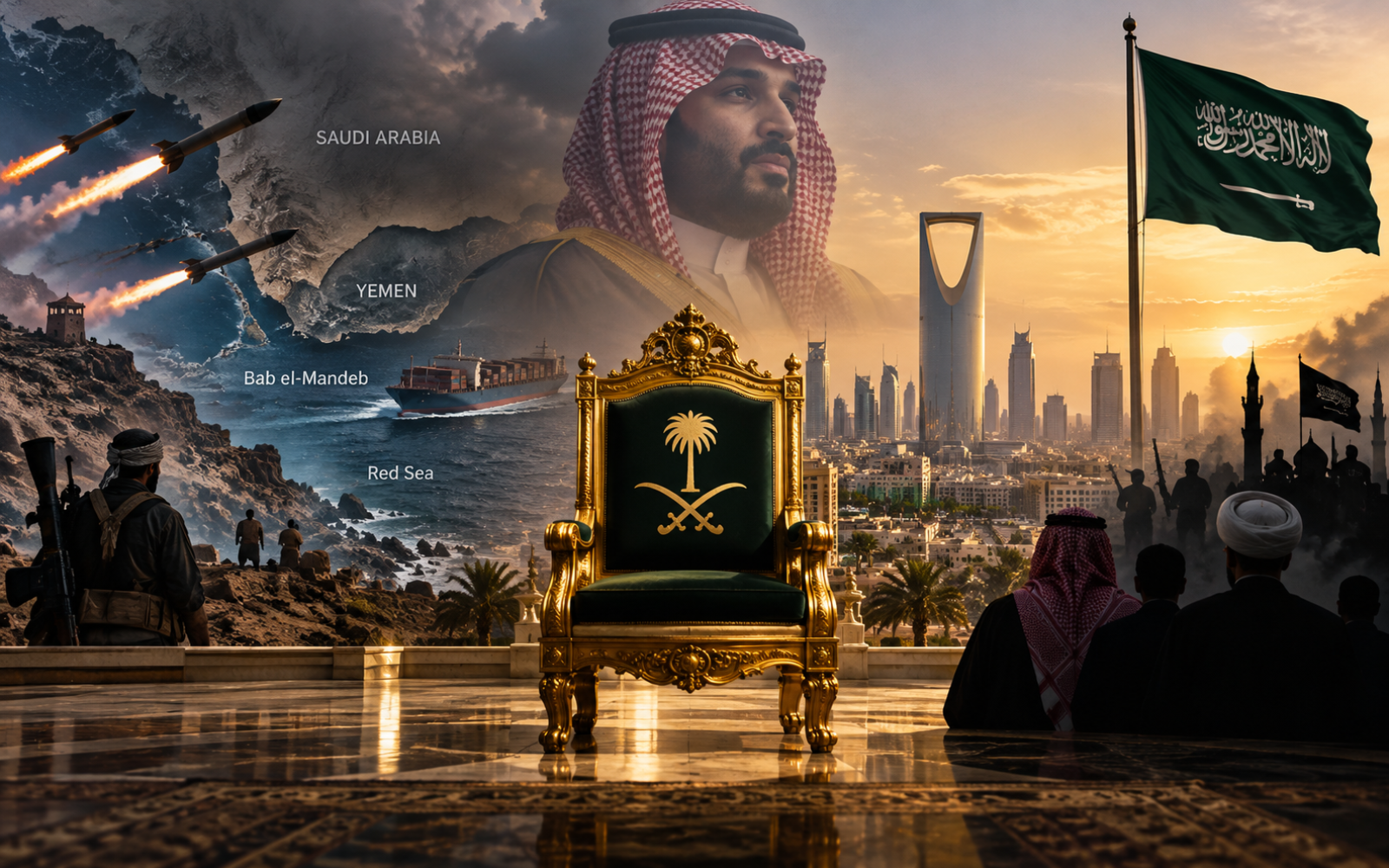
Could Saudi Arabia collapse? At the moment, the answer appears to be no. The kingdom still has enormous financial resources, powerful security institutions, substantial oil wealth and a ruling family that retains firm control of the state.
But history suggests that “not today” is not the same as “never.” Mohammad Reza Shah Pahlavi once ruled one of the Middle East’s most powerful monarchies before leaving Iran for Egypt in 1979. Zine El Abidine Ben Ali fled Tunisia for Saudi Arabia in 2011, Ashraf Ghani left Afghanistan for the United Arab Emirates in 2021, Sheikh Hasina fled Bangladesh for India in 2024, and Bashar al-Assad ended up in Russia when his government collapsed later that year.
Saudi Arabia is not any of those countries, and their governments fell for very different reasons. Yet together they offer one warning: governments that appear extremely strong can weaken surprisingly quickly when military pressure, economic trouble and internal political fractures begin reinforcing one another.
That possibility deserves attention because Saudi Arabia is now facing pressure from several directions. Iran-aligned Houthis have made major gains along Yemen’s Red Sea coast and around the Bab el-Mandeb Strait, while Saudi energy infrastructure and regional shipping routes remain vulnerable to attack and disruption.
The latest Houthi gains are not directly on Saudi territory. Some of the newly captured positions are hundreds of kilometres from the Saudi mainland, but their importance is less about physical distance than control of the Red Sea approaches and pressure on one of the world’s most important shipping routes.
Houthi missiles alone are unlikely to bring down the Saudi monarchy. Saudi Arabia possesses far greater financial and military resources than Yemen, and its security establishment remains intact. The more dangerous scenario would emerge if several crises arrived at the same time.
Imagine continued Houthi advances, repeated attacks on Saudi oil infrastructure, prolonged disruption of Red Sea and Gulf shipping, rising military costs and declining economic confidence. Then add something Saudi Arabia does not currently appear to face: a serious split inside the royal family or security establishment.
That combination would change the calculation dramatically. Mohammed bin Salman has concentrated enormous political authority around himself, which can make the state decisive while the leadership remains strong. But highly centralised systems can also become vulnerable if the centre itself suddenly faces a succession crisis, elite rebellion or divided military loyalty.
There is currently no convincing public evidence of a royal revolt capable of removing him, nor is there evidence that Saudi security forces are preparing to abandon the monarchy. Saudi Arabia also retains major financial buffers, so an imminent collapse should not be presented as fact.
The more interesting question is what would happen if the Saudi political system nevertheless fractured. Who would be organised enough to fill the vacuum, and could Islamist or extremist movements exploit the instability?
I explored this broader pattern in my previous Times of Israel article, “Why Do Islamists Rise After Governments Fall in Muslim-Majority Countries?”, where I argued that the decisive question after a government falls is often which political or ideological force remains organised enough to fill the vacuum.
Saudi Arabia has a history of Islamist opposition. Al-Qaeda once mounted a serious campaign inside the kingdom, while the Sahwa, or Islamic Awakening movement, developed considerable religious and social influence before the state heavily suppressed it.
Yet there is currently no publicly visible Islamist organisation inside Saudi Arabia comparable to the Taliban before Kabul fell or Hayat Tahrir al-Sham before Damascus fell. That makes an immediate extremist takeover unlikely under present conditions.
Political collapse, however, can change the balance of power very quickly. Religious networks, tribal connections, clerical influence and underground ideological movements that appear politically weak while the state is powerful can become much more important once central authority begins to break down.
Iran provides the most important warning. The revolution that removed the Shah was not exclusively Islamist; liberals, nationalists, Marxists, students and religious activists all participated. But Ayatollah Khomeini’s movement eventually proved better organised than many of its rivals and became dominant after the monarchy disappeared.
Afghanistan offers another lesson. The Taliban did not create its military and political structure after Ghani left Kabul; its fighters, commanders and shadow administration already existed. Syria demonstrated a different version of the same problem, as an Islamist-led force became central to the new order after Assad’s government collapsed.
Saudi Arabia could follow a completely different path. If the monarchy faced a succession or leadership crisis, another coalition of princes or the security establishment would probably have far greater immediate capacity than underground extremists. But Israel cannot simply assume that this would always be the outcome.
Saudi Arabia matters enormously to Israeli security. It is an important counterweight to Iran, a major Sunni power, a global energy centre and a potential future partner in a wider regional arrangement with Israel.
Saudi Arabia may become either one of Israel’s most important future regional partners or one of the Middle East’s most dangerous future vacuums. That is why the question of Saudi stability matters to Israel even if the kingdom is not close to collapse today.
A Saudi collapse could create opportunities for Iran, jihadist organisations and other armed groups while destabilising the Gulf, global energy markets and two of the world’s most important maritime routes. Israel therefore has a clear interest in preventing Saudi Arabia from descending into chaos.
But supporting Saudi stability creates another strategic question. Saudi Arabia is increasingly connected to Turkey and Pakistan through the Makkah Joint Defence Agreement, making Saudi security part of a wider military relationship rather than a completely separate issue.
Pakistan does not recognise Israel, while Israel’s relations with Turkey have become increasingly difficult. Israel therefore has to distinguish between helping Saudi Arabia remain stable and unintentionally strengthening a wider Saudi-Turkish-Pakistani military bloc whose long-term interests may not always align with Israel’s.
Israel may need a stable Saudi Arabia, but it does not necessarily need a stronger Saudi-Turkey-Pakistan bloc. That distinction should matter when considering what kinds of intelligence, technology or military assistance are provided to Riyadh and how easily those capabilities might later be shared with partners.
The United States faces a similar dilemma from another direction. Washington continues to support Saudi security, but an American partnership does not necessarily mean the United States will automatically fight every Saudi war.
That could become increasingly important if pressure from the Houthis and the wider regional conflict intensifies. Riyadh may eventually discover that neither an American security relationship nor a new defence alliance guarantees that outside powers will always intervene directly on its behalf.
Saudi Arabia today remains a powerful state. Its monarchy is not on the verge of disappearing, its security forces have not fractured and no extremist organisation appears ready to march into Riyadh.
But that is exactly why difficult questions should be asked before a crisis, not after one. The lesson from Iran, Afghanistan and Syria is not that Saudi Arabia will inevitably follow them, but that once external military pressure combines with internal political fragmentation, events can move faster than even powerful governments expect.
For Israel, the goal should therefore be neither Saudi collapse nor unconditional strengthening of every alliance Riyadh builds. Israel’s interest is a Saudi Arabia stable enough to resist Iran and extremist movements, but not a regional military bloc that eventually creates a new strategic challenge of its own.
The question is not whether Saudi Arabia will collapse tomorrow. It is whether, if the pressures surrounding the kingdom continue to grow and the monarchy ever begins to crack, Saudi Arabia will still have enough institutional strength to prevent extremists from exploiting the vacuum.
September 12, 2026
Tokyo, Japan