
‘Trump-Xi: The diplomacy of the pause’
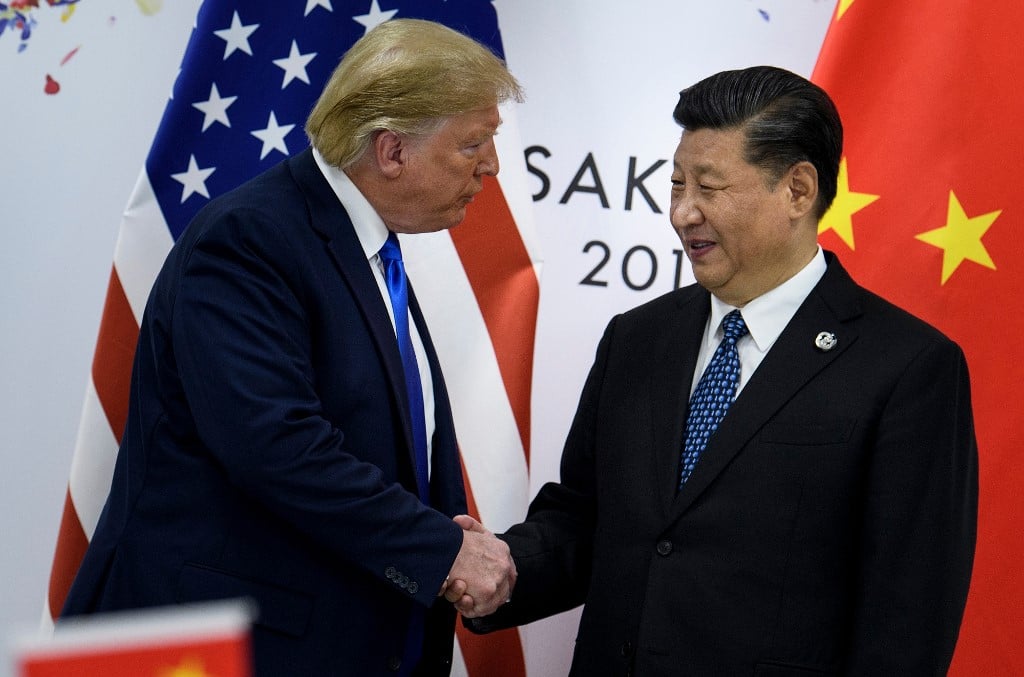
The summit between Donald Trump and Xi Jinping, scheduled on October 30, 2025, during the APEC forum, will be remembered as the turning point in the ongoing Sino-American rivalry. The President of the United States characterized the meeting as «12 out of 10,» an expression of enthusiasm that has been met with a degree of caution by even his most steadfast advisors. What lies beneath the veneer of smiles and handshakes is not so much a reconciliation as it is a temporary cessation of hostilities that has come to the front. A tariff and political ceasefire, where everyone got just enough to proclaim a victory without giving up on the essential.
A tactical appeasement.
The verbal agreement reached in Busan puts a partial end to the protectionist spiral restarted since 2023. Washington commits to reducing tariffs on Chinese imports—reduced from 57% to about 47%—while Beijing resumes its massive purchases of US soybeans and postpones its export restrictions on rare earths for one year. This is a highly symbolic gesture, given that these strategic metals have become a deterrent in the Sino-American economic war. Additionally, the two leaders discussed the need to strengthen their collaboration in the fight against fentanyl precursor substances, a contentious issue in the United States. Compromise appears to be a return to pragmatism on paper.
But this appeasement remains above all tactical. Trump, in a permanent campaign, needed visible success on the trade front. Xi, weakened by an internal economic slowdown and latent contestation, wanted to show that he could stabilize the relationship with Washington without appearing weak. Everyone, therefore, had their own image: Trump as the triumphant dealmaker and Xi as the strategist who temporizes without bowing. The essential, however, remains unchanged: the structural distrust between the two powers.
The return of a cautious dialogue.
This summit indicates a renewal of political engagement at the highest level. The happening of a bilateral meeting, following years of escalating tensions, suggests an important breakthrough in diplomatic relations. Beijing and Washington have reached an agreement to reactivate dialogue channels that have been inactive since 2021, and they have indicated the potential for a bilateral visit in 2026. The respective diplomacies, drained by the prolonged period of sanctions and hostile statements, appear to seek a reestablishment of a structure for confrontation.
President Trump also played on the contrast effect: after his sorties against the European Union or Mexico, his measured tone towards Xi surprised. The president of the United States hailed an “intelligent leader” while making no mention of human rights, Taiwan, or the South China Sea. This moderation, unusual for him, demonstrates his intention to focus the conversation on trade and competitiveness, areas where he believes he can win immediate political traction.
Xi Jinping, for his part, agreed to “freeze” certain disputes but without conceding anything on strategic issues. Beijing has offered no opening on the issue of semiconductors, nor has it offered reciprocity in market access. China maintains its goal: to reduce its technological dependence on the West while avoiding an open war with Washington. The art of Confucian patience, facing the art of the Trumpian deal.
A truce more than a turning point.
Busan is not a new “Nixon moment.” This is neither a reconciliation nor a strategic shift, but a calculated pause. The most explosive issues—Taiwan, artificial intelligence, and supply chains in Asia—have been carefully sidelined from discussions. In other words, the root causes of rivalry remain intact.
This truce, however, has real political value and sends the signal that neither China nor the United States currently wants an uncontrolled escalation. After the verbal outbreaks of 2024, the two capitals are trying to avoid the scenario of an all-out economic war. It is a victory of reason over the ideological reflex: in an uncertain global context, the great powers rediscover the virtue of long time. But the balance is fragile. The promises of Busan are not based on any formal treaty or any binding follow-up mechanism. The experience of recent years shows how Donald Trump’s ‘oral’ agreements can turn into spectacular volte-faces. As for Xi, he will have to arbitrate between the need to appease external relations and the internal pressures of a state apparatus that sees in confrontation with the United States a source of national legitimacy.
A test for global stability
This summit demonstrates how the global game has changed, going beyond bilateral rivalry. Europe, a worried observer, perceives the emerging connection between Washington and Beijing as a possible threat to its strategic relevance. India, Japan, and Australia, as foundational elements of the Indo-Pacific, must navigate this period of détente, which has the potential to reshape regional dynamics. Because the “Quad” may become less cohesive if the United States relaxes its pressure on China, and Beijing may regain a diplomatic space that it had previously lost.
Therefore, the Busan truce is neither an end nor a beginning: it is a turning point in a competition that will last for a long time. Donald Trump got his image of a “Boss who can negotiate,” and Xi Jinping bought time to turn around his economy. But history will remember that on October 30, 2025, the two greatest powers of the world recognized their limits: neither war nor peace, but prudent coexistence. And in a fractured world, it’s already a lot…