
Where Objectivity Meets Reality
Trump’s fragile Gaza deal: hope or mirage?
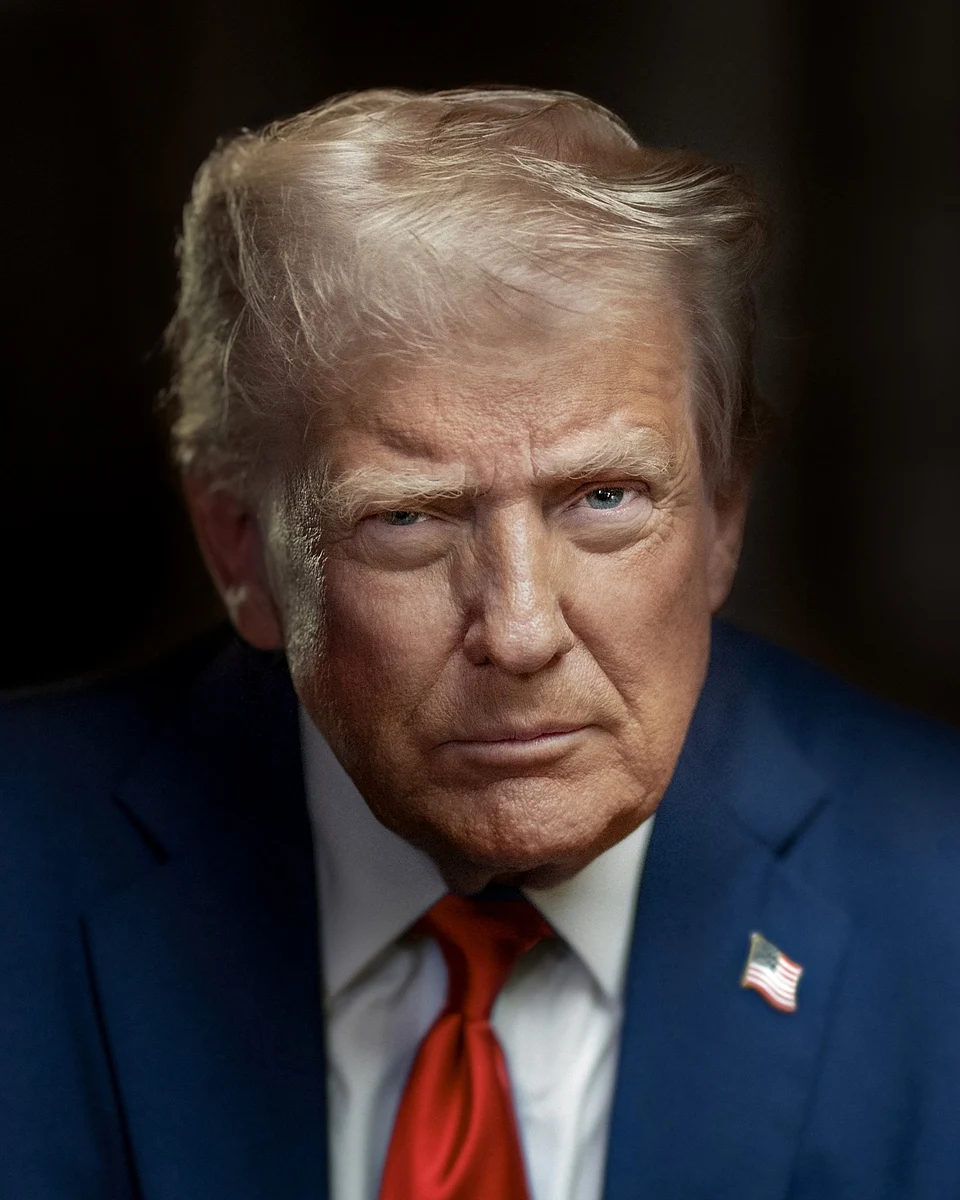
Official Presidential Portrait of President Donald J. Trump, 2025 (Public Domain)
Late last night, an unexpected announcement shook the Middle East: Israel and Hamas have agreed on the first phase of a ceasefire deal.
Under the terms of the agreement, Israel will withdraw from parts of the Gaza Strip, while Hamas will release all remaining hostages in exchange for roughly two thousand Palestinian prisoners.
A breakthrough, certainly — but a fragile one. Behind the promising headlines lies a deal that raises as many questions as it answers.
A ceasefire, not peace
Let’s be clear: this is not a peace agreement. It’s a conditional truce, a pause in a long and bitter war. None of the core issues has been resolved.
There is no mention of a Palestinian state, no agreement on Gaza’s future status, no concrete plan for Israel’s security, and certainly no roadmap for Hamas’s disarmament.
It is, in essence, an arrangement born out of exhaustion rather than conviction — a temporary measure designed to stop the bleeding, not to heal the wound.
Still, it is historically significant: for the first time in years, Hamas has agreed to release all hostages, while Israel is prepared to pull back from territory it has tightly controlled for over a decade. Symbolically, it’s a major gesture. Strategically, it’s a gamble.
The fragility in the details
There are at least three reasons to be cautious — if not outright skeptical — about this new “first phase.”
First: Hamas and its track record of violations.
Hamas has repeatedly shattered ceasefires in the past, firing Qassam rockets into Israel whenever it suited its political or military purposes. The current deal includes no real mechanism for disarmament — only vague promises of “future discussions.” As long as Hamas retains its weapons, every pause in violence is just that: a pause.
Second: Israel’s internal divisions.
Prime Minister Netanyahu must still bring this agreement before his cabinet, and that will not be easy. His coalition is fragile, held together by a mix of centrists and hardliners who see any withdrawal as capitulation. Within Israel’s right-wing circles, the word “betrayal” is already being whispered. Netanyahu knows he’s walking a tightrope — international pressure on one side, domestic fury on the other.
Third: the vacuum of international leadership.
The United Nations and the European Union, long self-declared champions of “peace and dialogue,” have once again played only a symbolic role. Their endless resolutions and moral statements have produced precisely zero progress.
UN Secretary-General António Guterres issued his predictable call for calm and compliance — the sort of language that sounds noble but means nothing.
And in Europe, the countries that rushed to “recognize” Palestine now find themselves sidelined and bitter. Their gestures were meant to apply pressure, but in practice they achieved nothing. When diplomacy actually succeeded — without them — they were left looking like frustrated spectators.
Trump and Qatar: unlikely architects
That it was Donald Trump who brokered this breakthrough will cause visible discomfort in many European capitals. The man dismissed as a threat to world order has once again proven that results sometimes require breaking diplomatic conventions.
Trump’s style is not elegant, but it works. He doesn’t moralize; he negotiates. And this time, with Qatar’s crucial help, he managed to get both sides to move.
Qatar, hosting Hamas leaders while maintaining warm relations with Washington, played its cards perfectly. It reportedly “massaged” Hamas into accepting the deal — a delicate mix of pressure, persuasion, and promises.
The United States, in turn, quietly pushed Netanyahu toward compromise. The result: an agreement that no one thought possible — imperfect, but real.
The unresolved dangers
Even if this first phase holds, enormous questions remain.
Who will govern Gaza after Israel’s partial withdrawal? Will the Palestinian Authority return? What about security control, border management, reconstruction, and the flow of weapons? None of it has been clarified.
And Hamas’s disarmament — the single most crucial issue for Israel’s long-term security — is nowhere in sight. Without it, peace will remain a fantasy.
There are no enforcement mechanisms either. No credible international observers, no sanctions for noncompliance. A single rocket, a stray bullet, or an image of an “Israeli soldier too deep in Gaza” could collapse the entire process overnight.
Between hope and realism
And yet — despite all that — the deal matters. It shows that diplomacy can still work, even in one of the most hopeless corners of the world.
It’s not the peace anyone dreams of, but it’s something tangible: lives may be saved. For the families of hostages and prisoners, this is not politics — it’s a moment of raw humanity after two years of fear and despair.
If the agreement holds, it could open the door — just slightly — to further talks about reconstruction, security, and, perhaps one day, recognition. But that will take courage, restraint, and an extraordinary amount of luck.
A fragile beginning
What happened last night is not peace — it’s silence. Fragile, temporary, but silence nonetheless.
This is not the end of conflict; it’s the beginning of a test. A test of willpower, of restraint, and of whether both sides truly prefer diplomacy over destruction.
Donald Trump may have delivered a breakthrough that others could not. But history in this region teaches us one simple truth: in the Middle East, nothing lasts — except uncertainty.
Related Topics
Related Posts