
Middle East Analyst
Trump’s Gaza Plan: Netanyahu’s Dilemma
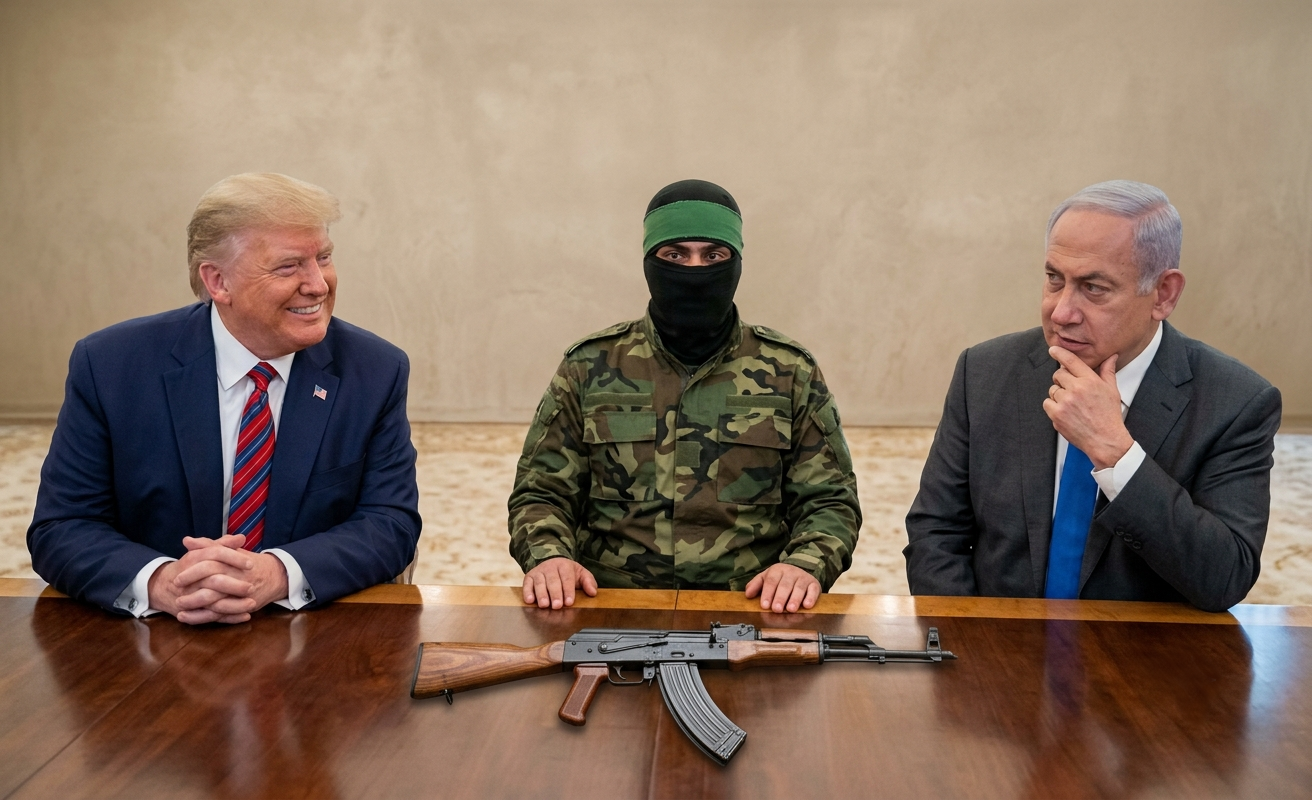
by author (AI)
Nearly a year after the Gaza ceasefire took hold, the fight over what Israel actually agreed to has resurfaced — and this time the argument is sharper, the stakes are higher, and the clock is louder. On July 31, a senior US official told reporters that President Trump would be “very, very disappointed” if Israel obstructs the next phase of his Gaza plan, after Hamas approved a Board of Peace disarmament roadmap that Prime Minister Benjamin Netanyahu’s office says falls short of Israel’s demands. The specifics of that dispute matter, but the deeper story is the one Trump’s team has been telling for eight months: Israel signed onto this plan in its entirety, and Washington intends to hold it to that.
The Text Trump Keeps Pointing To
UN Security Council Resolution 2803, adopted on November 17, 2025, endorsed Trump’s Comprehensive Plan to End the Gaza Conflict and — critically — stated that it “acknowledges the parties have accepted it” and calls on all parties “to implement it in its entirety.” Netanyahu welcomed the resolution the next day, praising Trump’s leadership and the plan’s emphasis on demilitarization, disarmament, and deradicalization. He did not, however, publicly affirm the resolution’s clause on a “credible pathway” to Palestinian self-determination and statehood — and notably, he issued his welcome only in English, avoiding a Hebrew statement that might have drawn immediate fire from his coalition.
This is the same pattern that played out two months earlier. At the White House on September 29, 2025, Netanyahu stood beside Trump and backed the 20-point plan outright. Within 48 hours he was telling Israelis, in a video statement, that the IDF would “remain in most of” Gaza and that Israel had “absolutely not” agreed to a Palestinian state — directly at odds with the plan’s own language in Point 19. The gap between international public acceptance and domestic rejection has now repeated on Gaza withdrawal terms: Israel is expected to comply with what it agreed to, while Netanyahu manages a coalition that treats parts of that signature as unenforceable.
This is precisely Trump’s argument, restated almost verbatim by his officials each time friction resurfaces: Israel agreed to the plan — not a curated subset of it. That framing gives Washington a simple, repeatable lever, and it explains why “very disappointed” language keeps reappearing whenever Netanyahu’s office pushes back, whether the friction is over a disarmament sequence, an Israeli withdrawal line, or the plan’s still-vague statehood language.
Why Gaza Is the Keystone, Not a Side Project
For Trump, Gaza was never a self-contained diplomatic exercise. It is the opening move in a broader architecture his administration has been building since returning to office, and each subsequent piece depends on the one before it holding.
Saudi Arabia has been explicit for years that normalization with Israel requires a credible, internationally guaranteed political horizon for the Palestinians — not necessarily immediate statehood, but an irreversible structured process the Saudis can point to. Resolution 2803’s statehood language, however vague and conditional, was built to give Riyadh exactly that opening. Without it, Saudi normalization stalls, and everything built on top of it — an Abraham Accords expansion drawing in Saudi Arabia, Turkey, Lebanon, and eventually Syria — stalls with it.
There is also a quieter, longer-term logic at work. For decades, Iran’s regional legitimacy has rested substantially on its claim to be Palestine’s authentic defender, a narrative Hezbollah, the IRGC-Quds Force, and Iran’s regional militia network all draw on. A credible Palestinian political horizon — backed by Saudi Arabia, the US, and the wider Arab world — erodes that claim’s structural force, even if Iran keeps making it rhetorically. If regional legitimacy migrates from resistance to reconstruction and prosperity, then Iran’s posture becomes harder to sustain. Whether that migration actually produces Iranian de-escalation is far from guaranteed — and it is happening against the backdrop of an active, ongoing US-Iran confrontation this week that has nothing directly to do with Gaza — but the logic only has a chance to operate at all if Gaza’s political track survives.
That is the throughline: Gaza stabilization is not one deliverable among many for Trump. It is the precondition the rest of the architecture is built on, which is exactly why his team keeps treating Israeli foot-dragging as something worth public pressure rather than quiet diplomacy.
Netanyahu’s Bind
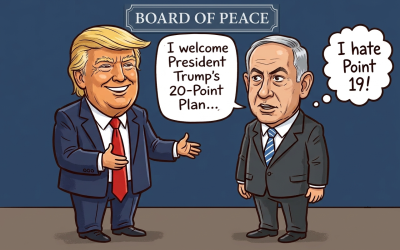
This leaves Netanyahu caught between two commitments he cannot fully honor at once.
His coalition’s ultra-nationalist wing — Smotrich, Ben-Gvir, and the base they represent — treats any language implying Palestinian statehood as disqualifying, a position roughly 70 percent of Israelis reportedly share in some form. Netanyahu has managed this so far not by renegotiating the plan’s text, but by declining to affirm the parts he cannot sell at home while accepting the parts he can. That is a sustainable posture only as long as no one forces the issue — and Trump’s team, by repeatedly invoking “the plan they agreed to in its entirety,” is doing exactly that.
Reject the parts that trouble his coalition too openly, and Netanyahu risks the things Israel has spent the past year rebuilding: US diplomatic cover, momentum toward Saudi normalization, and Trump’s public goodwill, which Netanyahu has visibly worked to cultivate all year. Accept them too openly, and he hands his coalition partners — and his electoral rivals — a case that he traded core positions for American approval.
The timing sharpens all of this considerably. Israel’s coalition confirmed on July 12 that national elections will be held October 27, 2026 — the last legally permissible date, and notably the first time since 1988 that a Knesset will complete a full term. Every signal Netanyahu sends between now and then will be read as electoral positioning, from his rivals Gadi Eisenkot and Naftali Bennett as much as from Washington. A visible concession on Gaza in the campaign’s final months is exactly the kind of move his opponents — who have themselves been careful to also reject Palestinian statehood — would use against him, while a visible refusal is exactly what Trump has signaled he won’t tolerate quietly.
The Test Ahead
None of this resolves cleanly before October. What it does mean is that every subsequent flashpoint on Gaza — the next disarmament dispute, the next withdrawal argument, the next ambiguous statement about the plan’s statehood language — will be read through the same lens: does Netanyahu honor what Israel accepted, or does he manage his coalition instead? Trump has made clear which answer he expects. Netanyahu has spent eight months trying to give both answers at once. That approach becomes harder to sustain the closer Israel gets to the ballot box.
Part Two will examine the disarmament roadmap itself — the phased sequencing, the verification mechanism, and where the real leverage sits between now and the election.
Related Topics
Related Posts