
Trump’s Hormuz Toll Is a Strategy, Not a Policy
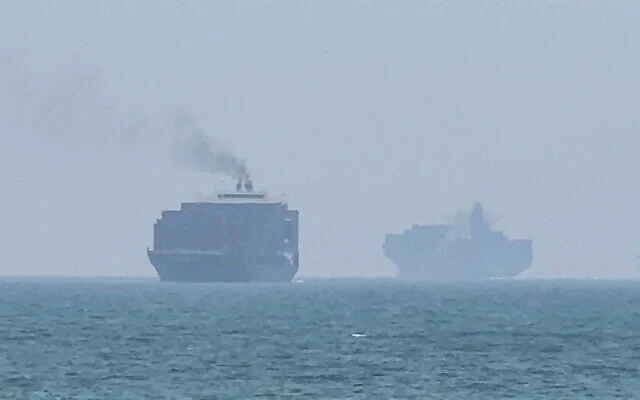
Donald Trump did not reopen the Strait of Hormuz on Monday. He rebranded a war.
The announcement itself was almost incidental to its packaging. The United States Navy will enforce what Trump has named “THE IRANIAN BLOCKADE,” effective July 14, targeting Iranian shipping while leaving transit open to everyone else. Alongside it came a second, stranger claim: the United States would now be known as the “GUARDIAN OF THE HORMUZ STRAIT,” and would collect a 20 percent toll on all cargo passing through it. Iran’s foreign minister, Abbas Araghchi, did not reject the logic. He haggled with it. Twenty percent, he wrote, was too much; Iran had always been the guardian and would remain one; a fairer rate could be discussed.
Two states now competing to monetize the same chokepoint have, without quite meaning to, agreed on the premise that guardianship of Hormuz is a service one bills for rather than a commons one protects.
This is worth pausing on, because it inverts 60 years of American doctrine on freedom of navigation. The Pentagon has never charged for the principle that international straits remain open regardless of who patrols them; charging for it concedes that the openness was never a right but a service the strongest actor happens to be selling this week. Secretary of State Marco Rubio understood this in June, when he toured three Gulf states and rebuffed the toll idea as unworkable. Trump overruled him from Air Force One five weeks later, in an interview in which he also dismissed the memorandum of understanding he had signed with Tehran as meaningless, the sort of document exchanged between “sleazebags” who do not honor their word. The administration is now improvising two incompatible foreign policies in public, and the improvisation is the policy.
None of this happened in isolation. A ceasefire reached in June collapsed over three consecutive weekends of exchanged fire, and by Sunday the exchange had widened well past the strait itself: Iranian strikes on Jordan, Qatar, Kuwait, and reported missile fire against the United Arab Emirates, followed by an American retaliation CENTCOM described as hitting dozens of targets across multiple sites. Every one of those four states is either an Abraham Accords partner or moving toward normalization with Jerusalem. The war Trump is narrating as a bilateral contest over a shipping lane is, for the Gulf capitals absorbing missile fire, a test of whether Washington’s security umbrella still covers them at a moment American attention has visibly narrowed to spectacle.
The neoclassical realist reading is not complicated. Systemic incentives push toward American primacy in a chokepoint through which a fifth of global oil transits; domestic incentives push Trump toward a framing that reads as leverage extracted rather than war sustained. A toll is legible to a domestic audience in a way that an open-ended military campaign is not. It converts a war of attrition into a transaction with a headline number attached, and the fact that the number is analytically incoherent, a state cannot toll a strait it does not exclusively control, matters less than the fact that it is countable.
Israel’s stake in this is not abstract.
A region in which Gulf partners absorb Iranian fire while Washington negotiates freight percentages on Truth Social is a region in which the credibility of American guarantees, the same guarantees underwriting Israeli calculations about Iran’s nuclear infrastructure, is being tested in the open. Guterres has already warned that a return to full-scale hostilities would be catastrophic. The toll announcement suggests the administration has not yet decided whether it is trying to end the war or price it.