
Trump’s ‘pardon push’ for Bibi Netanyahu
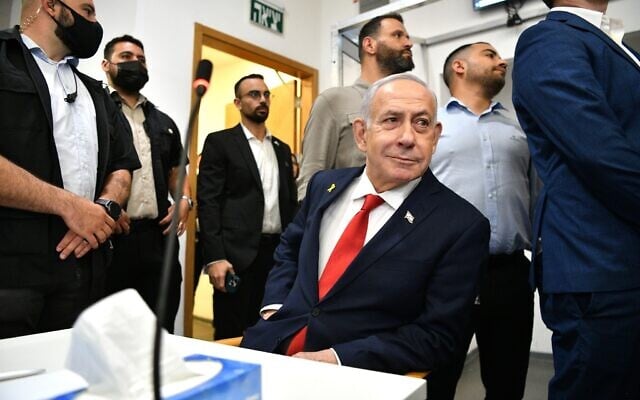
Donald Trump’s request that President Isaac Herzog pardon Benjamin Netanyahu is the sort of political thunderclap that forces the nation to pause mid-stride. Perhaps, though, that is the point.
Trump has never hidden his admiration for Netanyahu, nor his disdain for the corruption case. Their relationship is anchored in a series of political gestures entirely unprecedented in the modern United States-Israel relationship: Trump moved the US embassy to Jerusalem, recognized Israeli sovereignty over the Golan Heights, and presided over the period in which the Abraham Accords were negotiated and signed. These steps served to form the foundation of a political partnership unusually warm, even by the standards of the two countries’ traditionally close ties.
He has, too, frequently praised Netanyahu as a most historic statesman, and even once described him as a ‘great leader for Israel,’ particularly during their years of close strategic alignment. This letter, however, sits in a different category: a foreign political figure, however friendly, calling for the same political processes and institutions Israelis rely on to keep power in check to terminate their case is not a neutral gesture.
Their relationship, though, has not been without friction. Trump has repeatedly complained that Netanyahu congratulated Joe Biden too quickly for his own liking on his 2020 election victory. Trump’s public comments about the Prime Minister remain rather colored even now as a result of this.
Trump’s framing, that Israel should focus on its own security rather than the ‘lawfare’ it currently finds itself embroiled in, is constitutionally improper and unfitting of a United States president. The fact remains that Netanyahu faces charges of bribery, fraud, and breach of trust, which he denies. It is worth recalling that these charges do stem from long-running investigations, including Case 1000, Case 2000 and Case 4000.
Any pre-emptive pardon risks giving the impression that political convenience and foreign influence have been prioritised over the full completion of the judicial process. No democracy, whether still at war or not, can afford to give its people the impression that legal matters involving a sitting or former member of government can be resolved simply on the basis of external pressure. This becomes even more sensitive in a state in which the judiciary has already been the subject of public debate following the now-stalled judicial overhaul.
President Herzog’s office has made clear that under Israeli law, a pardon must be requested formally, either by the individual in question or by their family. Trump’s letter, therefore, does little to alter that requirement other than placing additional political weight on a process that has been designed to operate independently of political demands. Herzog himself, though, has previously been cautious around high-profile interventions of this kind, stressing on multiple occasions that his role must remain above that of partisan dispute, and his response to Trump’s request, however well-meaning, is likely to follow that same restrained pattern.
Netanyahu’s position is, in this respect, relatively straightforward. He has repeatedly stated that he will neither seek nor accept a pardon if, in doing so, he must offer any admission of guilt. This is, remember, a man who termed the charges against him ‘absurd.’ What is also notable is that Netanyahu, despite his political alignment with Trump, has avoided publicly calling for any such gesture and has instead insisted that the legal process, however flawed he may himself consider it to be, must run its own course.
Trump’s intervention, therefore, creates an expectation of Herzog that Netanyahu himself has no intention of meeting. Strong leadership is important, particularly in periods of national insecurity, but it cannot come at the expense of the rule of law. Trump’s letter will not decide the case, nor will it alter the legal framework through which the charges are being addressed. The central question is, ultimately, whether the recognition of Netanyahu’s leadership should take the form of bypassing a judicial process still very much underway.
Israel has always claimed to uphold a strict balance of strong leadership with strong institutions. This episode makes clear that such a balance is never automatic; it must be actively defended, even in times when allies make it rather tempting to cut corners.