
Trump’s Warning Shot: Venezuela, the Red Sea, and the Reordering of Power
After nearly two decades of stagnation on the global geopolitical stage, the United States has reasserted itself as the global hegemon. Whether one judges this return as imperfect or overdue, geopolitics had effectively been frozen since the catastrophically conceived and executed Arab Spring, a legacy of the Obama era whose steep costs the world continues to absorb.
When the Assad regime collapsed and Bashar al-Assad and his family fled Syria, it triggered an unmistakable déjà vu: Obama’s infamous “red line in the sand”, endlessly redrawn until it lost all meaning. That moment Obama left the so-called free world leaderless, ceded initiative to dictators, militias, and transactional power brokers, and ultimately paved the way for the chain of events culminating in the horrific October 7 attack on Israel.
In 2023, I wrote about Xi Jinping’s emerging aXis of evil, highlighting Venezuela as a pivotal node with direct implications for Western democracies. A Chinese ally, Venezuela became a critical enabler of drug trafficking and mass illegal migration into the United States. Under Chávez and later Maduro, the country also offered sanctuary to Islamist extremist networks, laundering money and providing Iran with strategic depth in the Western Hemisphere. Hezbollah found itself more at home in Caracas than in Beirut, while Maduro, Assad, and Nasrallah presided over one of the most profitable drug-arms ecosystems of the past decade, sustained by Iranian backing and shielded by Chinese and Russian political cover. Believe it on not, while an important part of the US calculus on the removal of Maduro was to protect its borders and itself from drugs, arms and immigrants-a large part of the Venezuela equation has to to with the Red Sea and the Middle East. The Indo-Mediterranean is crucial to Trump’s supply chain resilience and energy calculations, Venezuela is an important piece in that puzzle.
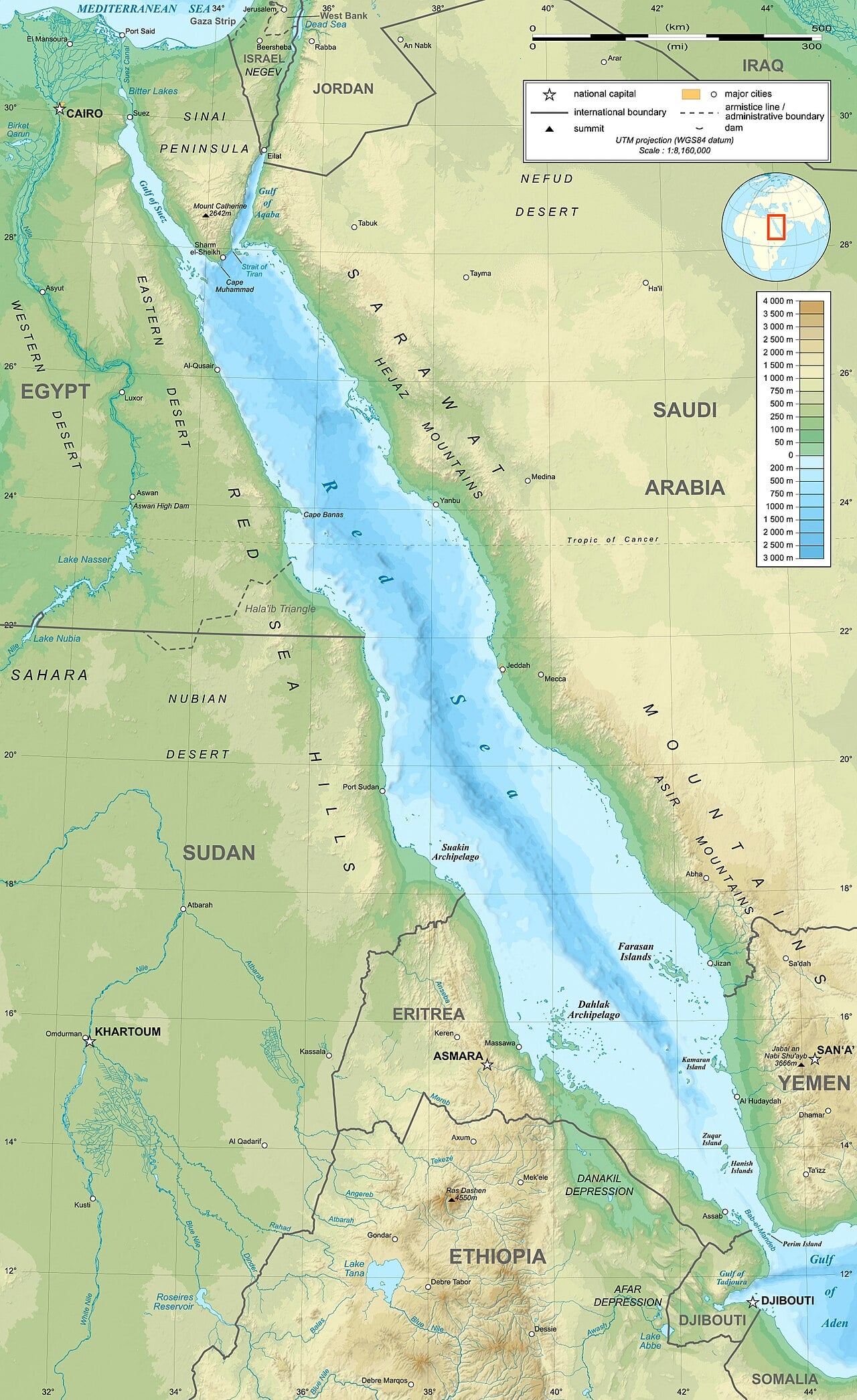
President Trump closed 2025 by attempting to secure the Bab al-Mandab Strait, a move that indirectly served notice to Saudi Crown Prince Mohammed bin Salman. Despite being Saudi Arabia’s de facto ruler, MbS has yet to be crowned king, and his failures have accumulated in a country that does not easily forgive mistakes. From the Jamal Khashoggi assassination to the unresolved Yemen war, the Crown Prince has been unable to translate Saudi Arabia’s overwhelming advantages—capital, intelligence, weaponry, Western backing, and even allied Arab and Pakistani forces—into decisive outcomes against the Houthis.
The Red Sea has descended into complete chaos. Turkey’s influence now stretches to the Gulf of Aden, Qatar and Turkey exert control over Somalia, and Houthi forces routinely target maritime traffic through the Bab al-Mandab as Sudan has also spiralled into civil war. Saudi Arabia, theoretically the most stable Red Sea power, has failed to contain political fragmentation, civil wars, and terrorist activity in Sudan, Yemen, and Somalia. This failure reflects poorly on MbS, whose rise itself was the result of a brutal internal power purge. His predecessor, the widely respected Mohammed bin Nayef, remains sidelined—effectively under house arrest—while MbS now finds himself in open friction with his former mentor, Mohammed bin Zayed Al Nahyan of the UAE. Despite a wonderful PR machine which markets him as a progressive reformer, MbS has still to deliver on what counts, security and moral leadership.
Most critically, MbS has failed to deliver on Trump’s signature Middle East legacy: the Abraham Accords. Saudi Arabia has repeatedly delayed normalisation with Israel citing the Palestinian cause, undermining what the current US administration views as the deal of the millennium and Trump’s legacy.
By contrast, Mohammed bin Zayed is a seasoned Gulf war veteran, a decorated military leader, and a hands-on administrator who has consolidated both internal authority and external influence. The UAE’s assertive posture in conflict zones reflects MbZ’s emphasis on results rather than rhetoric. While Abu Dhabi has not formally recognised Somaliland, Israel’s move toward recognition has almost certainly been shaped by MbZ’s strategic calculus.
For years, Somalia’s partners urged Mogadishu to empower Somaliland, establish a functional coast guard and navy, and secure shipping lanes and fishing rights. Instead, successive Somali Presidents have defaulted to symbolism, tribal politics, and corruption, allowing Turkey to run the Somali state and the Al Shabab to flourish. The Saudi attack on UAE-linked assets in Yemen reflects MbS’s frustration with the emerging alignment between the UAE, Israel, Ethiopia, and tacit US support for Somaliland-an open challenge to the Kingdom’s domination of the Red Sea. This alignment constrains Turkey’s reach in the Red Sea and forces Mogadishu to confront uncomfortable realities.
If the Federal Republic of Somalia intends to remain relevant, its leadership must engage pragmatically—starting with consultations with Ethiopia and Israel and a reassessment of its adversarial stance toward the UAE. Aligning rhetorically with Egypt, Eritrea, Turkey, and issuing empty declarations via the African Union will not secure the Bab al-Mandab nor defeat al-Shabaab nor feed a population which will die of hunger if not of terrorism.
The US president’s priorities are explicit: secure shipping lanes, stabilize energy markets, reinforce supply chains, and reshore manufacturing. Somalia must offer Washington a more compelling “deal” than Somaliland—and that conversation begins with normalization, maritime security and should have the words “Abraham accords” somewhere.
Maduro’s criminal enterprise has effectively collapsed, but the deeper message is aimed squarely at Prince Mohammed bin Salman. With Venezuela poised to re-enter global energy markets under US oversight, Washington is no longer structurally dependent on Saudi Arabia to manage oil prices. India, already navigating a delicate balance between Russian crude and price stability, could decouple from Russian oil entirely if prices fall below $60 per barrel.
If MbS continues to underperform, he risks being sidelined by internal Saudi dynamics-despite his friendship with Jared Kushner. Trump’s strategy is unmistakable: hit China where it hurts.
Securing the Bab al-Mandab, a choke point through which much of China’s Gulf oil flows, is step one. Beijing has relied on the Houthis as a proxy guarantor of its shipping; a US-backed Somaliland would severely limit that leverage.
Removing Venezuela—a key Chinese political, energy and geopolitical partner—from Beijing’s orbit is step two. Step 3 will be Iran where street protests have started again and the US President has announced support to the protesters. With his new found camaraderie with the Pakistani Field Marshal Asim Munir, this time around the United States will come to complete the job, if it enters the fray given Pakistan is eager to please its newest patron.
Step 4 a US-India trade and security deal after Iran has been dealt with, reinforcement of the Quad, which will put pressure on China again through the Strait of Malacca.
Like it or not, Washington is prepared to disrupt global alignments. In this environment, neutrality will not be a safe or sustainable position.