Turn to Jewish Black Zionists to fight antisemitism strategically
After October 7, the Jewish community has endured an alarming amount of antisemitism. Though this trend has been growing for quite some time, increasing rapidly through many presidential administrations, incidents spiked dramatically after Hamas’ brutal attack on October 7.
In the diaspora, we’ve seen everything from public pro-Hamas, anti-Israel protests targeting Jews in predominantly Jewish communities to physical attacks on Jewish students and community members. At the same time, Israelis abroad and in the homeland encounter intense hostilities, evident in incidents like the 2024 pogrom against Israeli soccer fans in Amsterdam, outrage at Israelis’ participation in Eurovision with 2024’s Eden Golan facing boos and death threats, and this year’s contestant, Nova Music festival survivor Yuval Raphael encountering threatening gestures from Eurovision protesters.
Antisemitism continues for Israeli nationals not in the spotlight, such as the Israeli music producer who was lured, kidnapped, and tortured outside of London by Islamists, or the murder of two Israeli nationals in Los Angeles. It feels never-ending. Most recently, the slippery slope of antizionism merged with its host, antisemitism, during the painful and tragic murder of a young couple, Sarah Milgrim, a Jewish-American peace activist, and Yaron Lischinsky, a Christian, Jewish-adjacent Israeli diplomat.
Despite this ongoing crisis, the Jewish community continues to be outnumbered and outmatched in media, marketing, and public relations. Social media has become one of the most treacherous battlegrounds, where antisemitic narratives spread rapidly. Yet, we are not always platforming the voices who could fight back strategically: Black Jewish Zionists.
Black Jewish Zionists bring a unique perspective. We are part of both Black and Jewish communities with a deep understanding of each community’s intersectional challenges. We are the crucial element to help naturally on the antisemitic battleground and extend an olive branch to other marginalized communities. Still, there is a persistent myth that because many of us do not resemble our conditionally white presenting Jewish brothers and sisters in the West, we are prone to experiencing antisemitism, but quite the contrary.
Elisheva Rishon, founder of the BJZ Squad, coined the acronym “I AM” in an Instagram reel to describe the complex bigotry we encounter:
- I- Infantilization
- A- Antisemitism
- M- Misogynoir
Infantilization strips Black people and other people of color of agency, assuming we are incapable of independent thought. Additionally, antisemitism and misogynoir combine to generate a particularly cruel form of hate aimed at Black Jewish women. Elisheva describes her experience with this particular form of hatred through social media comments– “N*g*er k*ke” or “Zionist devils,” “monkey,” “slave,” and “bed wench.” Elisheva even experienced this cruel form of hatred in person when she attempted to print some postcards at Staples related to Jewish joy and Zionism.
As the war drags on and the horrors of October 7 continue to surface, Jewish influencers and activists’ voices have amplified in response. Yet, a ton of expected allyship between the Jewish community and other marginalized groups has diminished. One contributing factor is that the non-Black Jewish community is not always platforming the best bridge-builders. Black Jewish Zionists are uniquely positioned to engage with both Black and Jewish communities in a way that establishes genuine solidarity.
Sometimes, we receive validation from the “righteous amongst the nations.” Ritchie Torres, Van Jones, Biggah (@wyzewurds74), and Malynda Hale are exceptionally outspoken Black non-Jewish allies for the Jewish community. Still, the Jewish community has uplifted inauthentic opportunists, or people who use Jewish causes and Israel for personal gain, who were never genuine allies. Candace Owens and Briahna Joy Gray are two sides of the same antisemitic coin, yet they have both been elevated and platformed by our own. Candace Owens was popularized by pro-Israel far-right commentator Ben Shapiro, and Brihana Joy Gray was hired by far-left pro-Israel’s-existence Bernie Sanders. By the time both women departed from their positions, the egregious damage had already been done, and to this day, several of their audiences persist.
Meanwhile, Black Jewish Zionists struggle to be represented in Jewish spaces, and our voices are overlooked or overshadowed. Instead of relying on the opportunists and even heavily relying on our Black non-Jewish allies, we must amplify the Black Jewish Zionists who are doing the work, building bridges, and standing proudly for their identity.
Leaders like Elisheva Rishon, April Powers, Eliana Ross, Bourn Rich, and Yirmiyahu Danzig are changemakers in activism, art, education, music, and culture. They consistently uplift Jewish joy, combat antisemitism, and courageously challenge others with their knowledge on Zionism and Jewish indigeneity.
To truly practice solidarity, Jewish institutions must involve Black Jewish Zionists in meaningful ways, not just during Black History Month or when it’s convenient for optics. We are qualified professionals who can serve on your nonprofit boards, host discussions on DEI, commission for art, music, dance, and film, teach history or current events, and represent Jewish values in diverse spaces. We don’t need to beg inauthentic voices to defend us when we have leaders within our own community ready and capable of doing so.
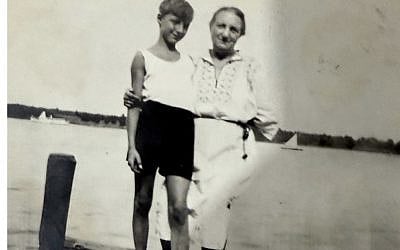
Imagine if my family’s story of my Saba’s survival from the Holocaust as a child, later combating Nazis to avenge the murder of his father in Buchenwald, his journey to return to his homeland, and my family’s role in rebuilding Israel was amplified with the same reach as disconnected Jewish pop culture celebrities. Imagine if Elisheva’s work received the amount of funding poured into ineffective antisemitism campaigns. By investing in Black Jewish Zionists, we not only combat antisemitism more effectively but also rebuild the vital alliances we once had during the United States’ civil rights movement.
It’s time to rethink who we elevate. The next Martin Luther King Jr., Rabbi Abraham Joshua Heschel, or Theodore Herzl of our time might already be here, but we’re not giving them the mic.
So what can you do? Reach out. Fund our work. Amplify our voices. Reshare our content, and include us. Do it proactively, not reactively. Not tomorrow. Now.
Black Jewish Zionists are not just another voice in the fight against antisemitism. We are the bridge, the missing ingredient for real lasting solidarity.