
Two Speeches, No Closer to Peace
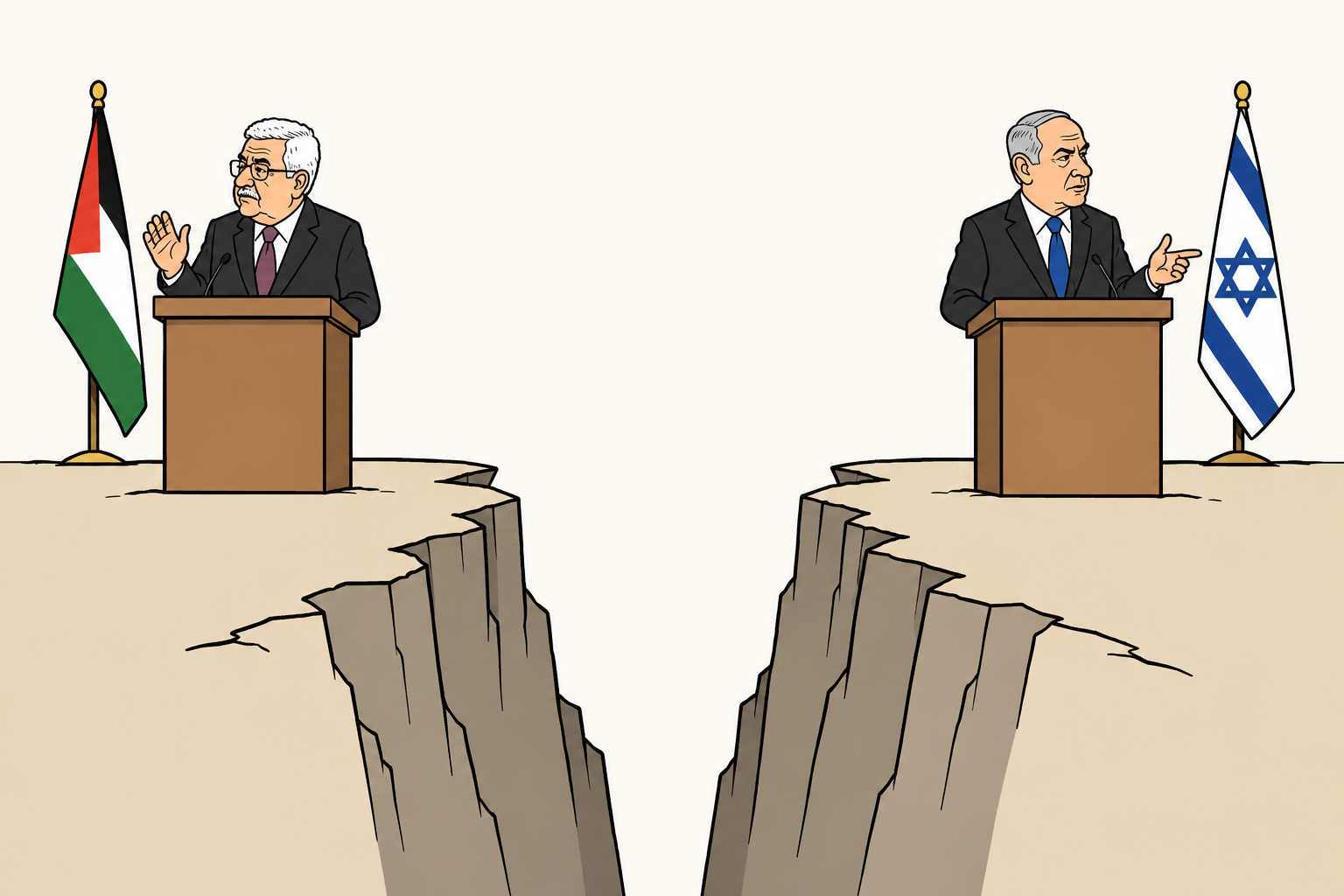
I welcomed Benjamin Netanyahu’s strong defense of Israel in his UN speech this past week. His insistence on Jewish belonging and Israel’s right to defend itself deserved to be heard, especially in an international atmosphere so hostile to Israel. I nevertheless objected to his understatement of deaths caused by settler violence and wanted him to show greater compassion for Palestinians’ suffering and acknowledge their attachment to the land.
Mahmoud Abbas’s speech troubled me more fundamentally: his rhetoric undermined Jewish belonging and gave Israelis little reason to trust his assurances of peace. Clearly, Abbas had the wind of international opinion behind him, while Netanyahu was speaking against it.
The atmosphere surrounding these speeches matters to me because understanding so often seems to be demanded in only one direction. Jewish fears are dismissed even as Jews are asked to acknowledge Palestinian suffering. Two recent examples involving Javier Bardem and Susan Sarandon brought that imbalance into focus.
Bardem urged his Instagram followers to sign a petition demanding Pink’s removal as a UNICEF ambassador after she criticized remarks Macklemore made as Ed Sheeran’s opening act. Although Macklemore distinguished criticism of Israel from criticism of Jews, Pink objected to anti-Israel rhetoric that she believed targeted Jewish concertgoers. She also spoke out for the protection of Palestinian children, affirmed Palestinian aspirations, and made clear that she did not represent Israel’s government. Those statements did not deter Bardem from urging her removal. Disagreeing with Pink’s response does not justify demanding that she lose her humanitarian role.
Sarandon was also in the news, arrested during a demonstration against Netanyahu’s UN appearance. What concerns me is her rhetoric. She previously suggested that frightened Jews were “getting a taste” of what Muslims experience—an antisemitic remark for which she apologized. More recently, she has linked professional setbacks to agencies discouraging her employment and to hostility from “Zionists” in her industry. The reports I read did not identify the lost roles or provide corroboration for those recent claims. Coming from someone with her public platform, such broad accusations risk reinforcing suspicion of Jews rather than fostering concern for Palestinians.
Sarandon’s rhetoric about Jews and Bardem’s campaign against Pink make me wonder whether their dismissiveness toward Jewish concerns also shapes their certainty about the genocide accusation. Do they seriously consider Israel’s security concerns, Hamas’s tactics, and the difficulty of urban warfare? Those factors do not excuse every Israeli action, but the scale of destruction does not, by itself, prove an intent to destroy Palestinians as a people.
That was the background against which I heard Abbas’s speech. I found his portrayal of the conflict deeply one-sided: he described Palestinian suffering while largely omitting threats to Israeli lives and the actions of Palestinian armed groups. Three aspects especially troubled me: his warning about Jerusalem’s “Judaization,” his colonial framing of Israeli policies, and his failure to mention Hamas or October 7. He did affirm a two-state solution and reject terrorism, attacks on civilians and antisemitism.
Jewish presence in Jerusalem dates back roughly three thousand years. The city is the ancient capital of Jewish national life and the enduring spiritual center of Judaism. Its place in Jewish prayer and memory survived centuries of exile and persecution, while conquest, expulsions and restrictions repeatedly disrupted its Jewish community. Enforced absence cannot reasonably diminish belonging. Describing Jerusalem’s “Judaization” as a threat makes Jewish life sound like a foreign intrusion into the city at the heart of Jewish identity.
Abbas’s colonial language reinforced that impression. Criticizing settlements does not necessarily deny Jewish history. But paired with warnings about “Judaization,” it echoes a broader narrative of Israel as a settler-colonial enterprise populated by outsiders. Jewish attachment does not erase Palestinian attachment; Palestinian claims should not require treating Jewish belonging as illegitimate.
Although Abbas condemned Hamas’s October 7 attack in his UN address last year, he did not repeat that acknowledgment this year. His general rejection of terrorism could not substitute for directly recognizing what Israelis had endured. Acknowledging those atrocities would not diminish Palestinian suffering. It would give Israelis some reason to believe that a prospective partner understood their trauma. Without it, his appeal for peace gave them little reassurance that he understood their fears.
Those assurances are also difficult to separate from Abbas’s record of Holocaust denial and distortion. His earlier writings questioned the number of Jewish victims, and in 2023 he claimed that Hitler persecuted European Jews for their economic roles rather than because of antisemitism. Although Abbas has also condemned the Holocaust, that troubling record makes his assurances against antisemitism harder to trust.
Turning to Netanyahu’s speech, I thought he made a strong case for Israel, but he could have done more to reach Palestinians and those who hope for peace between the two peoples. He could have defended Israel’s security and Jewish belonging while showing greater understanding of Palestinian lives.
What resonated with me was his insistence that this is about survival. Israel is the Jewish people’s home, rooted in thousands of years of history. The Holocaust made devastatingly clear why they needed sovereignty there—a place where survival would no longer depend on others’ willingness to protect them. Netanyahu recalled that Israel faced threats of destruction before capturing the West Bank and Gaza in 1967. October 7 made that fear painfully real again. The message I heard was: we belong here, we have nowhere else to go as a people, and we will defend ourselves.
His treatment of settler violence, however, particularly bothered me. Although he condemned it, he minimized its seriousness and understated the deaths. His reference to perhaps two or three deaths stood against OCHA’s documentation of twelve Palestinians killed by settlers in settler attacks by May 11, 2026, excluding two cases in which responsibility between settlers and soldiers remained unclear. He should have acknowledged that Israel must do better in preventing these attacks and holding perpetrators accountable.
I understand his frustration with international attention that gives insufficient weight to threats from the West Bank. Shin Bet reported thwarting more than a thousand major attacks in 2025 and uncovering substantial Hamas networks. Prevented attacks also help explain Israelis’ fear for their safety. But selective scrutiny does not excuse minimizing violence against Palestinians.
I also wanted a more heartfelt expression of sorrow for innocent Palestinians killed and for families’ suffering. I understand how difficult that can feel to Israelis living with the trauma of October 7, especially when its atrocities are minimized or denied. But Netanyahu could have acknowledged Palestinian grief while insisting that Israeli grief be taken seriously, defending the IDF’s civilian-protection efforts, and explaining how Hamas endangered civilians. Compassion would not have weakened Israel’s case for fighting Hamas.
He could also have acknowledged Palestinians’ deep attachments to their homes and land. Affirming Jewish belonging does not require silence about Palestinian belonging. The recognition I want others to extend to Jews is something Israel’s leaders can extend to Palestinians without compromising their responsibility to protect Israeli lives.
Netanyahu could have acknowledged, too, that his government’s settlement policies have made a two-state solution more difficult. When approving twenty-two settlements in May 2025, including recognition of previously unauthorized outposts, his government explicitly identified preventing Palestinian statehood as an objective. He could have addressed that policy while explaining how October 7 and failed peace efforts have deepened Israeli fears of statehood. Any serious discussion must address those fears.
None of this would have required promising statehood under present conditions. It would have shown that Israel’s determination to defend itself can coexist with concern for Palestinian safety, dignity, and belonging.
Given these two leaders, neither speech surprised me. But perhaps future leaders can defend their own people while acknowledging the other people’s history, fears, and belonging—and make peace more believable in the process.