
U.S. Pushes Ahead with ISF for Gaza, with Muslim Nations in Focus
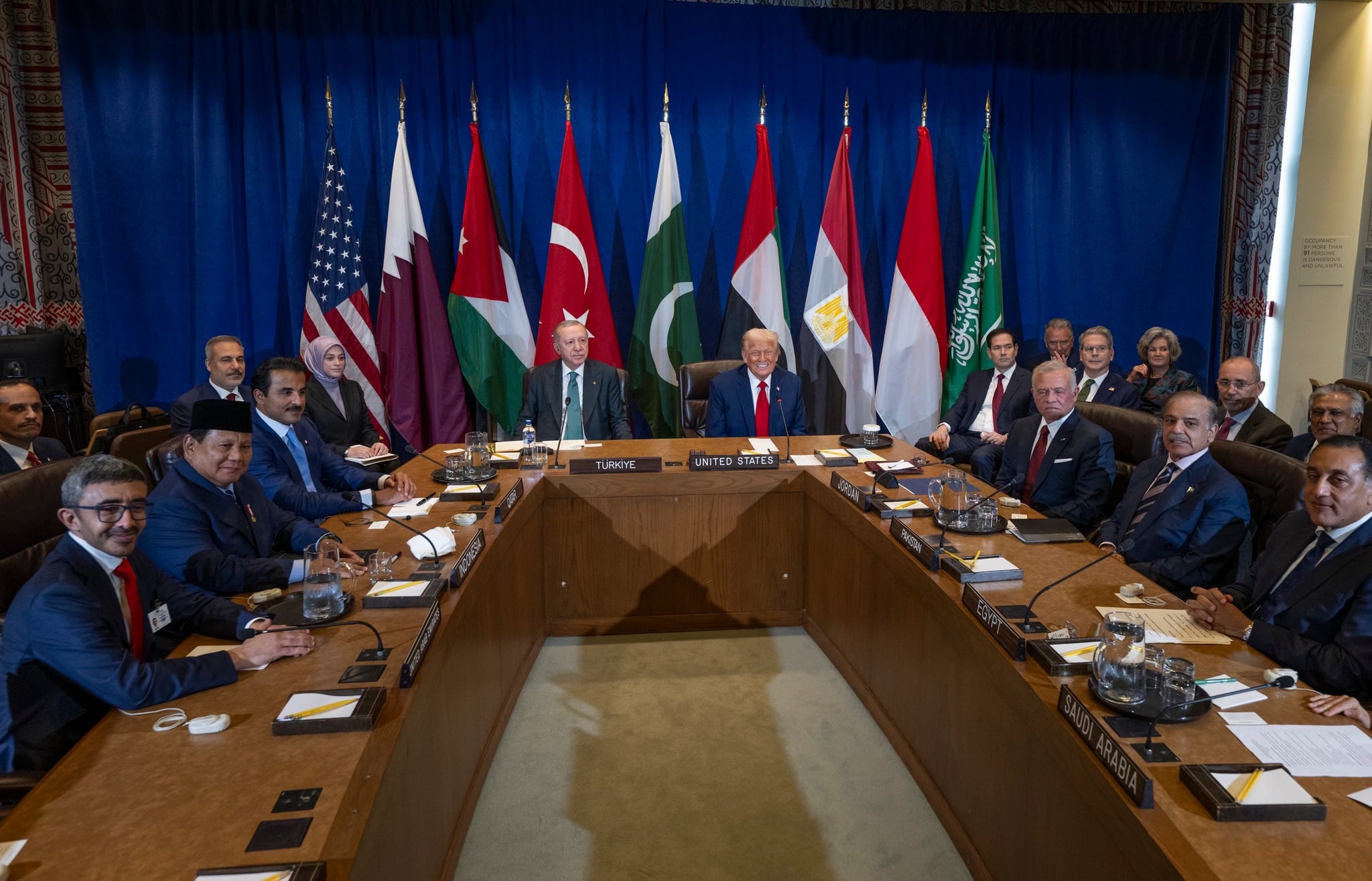
The U.S. is swiftly working to set up the new International Stabilization Force (ISF) for Gaza, jumping into action right after the UN Security Council gave its green light. On November 17, the Security Council passed resolution 2803, which supports the United States-backed ‘Comprehensive Plan to End the Gaza Conflict’—commonly referred to as President Donald Trump’s 20-point peace plan for Gaza.
This resolution not only endorses the creation of the Board of Peace proposed by the Trump plan but also empowers the Board and UN member states to form a temporary International Stabilization Force in Gaza.
An American official told i24NEWS that the first ISF troops could be deployed to Gaza as soon as 2026. If that happens, it would be the largest international security presence Gaza has ever had. This initiative is part of a broader U.S.-led plan to stabilize the area after the war, fight terrorism, and rebuild Gaza alongside a new civil administration.
So far, five countries have indicated they are willing to join, but no names have been released. Still, another U.S. official close to the discussions said Azerbaijan and Indonesia are strong possibilities. They would likely contribute troops, engineers, intelligence units, and police—people trained for exactly the kinds of challenges Gaza faces.
However, there is still a long way to go. Training hasn’t begun, the funding isn’t secured, and the force will need an extensive logistical network, a central command, and close coordination with organizations already involved in relief and reconstruction.
Washington has already reached out to several Arab countries and European partners, asking for financial support and practical assistance. U.S. officials believe that the more diverse the force, the more legitimacy it will have—which is crucial for lasting stability when the troops arrive.
Danon: ISF Supports Israel’s Goal to Disarm Hamas
Danny Danon, Israel’s UN Ambassador, told The Jerusalem Post he doesn’t view the ISF as a force under UN command or as something that conflicts with Israel’s security interests. In fact, he says it closely aligns with one of Israel’s main goals: removing all weapons from Gaza and preventing Hamas from rearming.
Danon called the mission an essential part of the postwar strategy to dismantle Hamas’s military capabilities. He spoke after the Security Council passed the U.S.-drafted resolution on Monday night—13 countries voted in favor, with Russia and China abstaining.
At the time, the Security Council included the five permanent members (the U.S., UK, Russia, China, France) and ten non-permanent members: Algeria, Denmark, Greece, Guyana, Pakistan, Panama, South Korea, Sierra Leone, Slovenia, and Somalia.
The U.S.-led ISF is meant to prevent militant groups from returning, help restore civil governance, and protect key areas needed for Gaza’s reconstruction.
If everything goes as planned, the multinational force will enter Gaza in early 2026. This would be a first for the territory—an international security mission on this scale, aiming to keep the peace and help Gaza recover.
Although it is not known which countries will take part in the ISF, Western diplomats are already rejecting the idea of ‘boots on the ground’. According to the i24 report, “only Muslims can disarm Hamas,” while Western countries can take part in training the police forces and provide humanitarian aid.
According to former Pakistani ambassador Husain Haqqani, it’s no surprise that many Muslim-majority countries are considering this mission, as he shared with DW.
The European Union, along with the United States, Germany, and several other Western nations, has labeled Hamas—a group whose attack on Israel in October 2023 sparked the ongoing conflict in Gaza—as a terrorist organization. On the flip side, support for Hamas remains strong throughout the Arab world. Haqqani explains that this is why “the Pakistani people, Israel, and the Pakistani government believe that the stabilization of the Gaza Strip cannot be left solely in the hands of Western armed forces.”
Currently a senior fellow at the Hudson Institute in Washington DC, Haqqani pointed out that US President Trump likely understands this dynamic as well. Trump has been reaching out to Muslim-majority nations for troop contributions because, as Haqqani noted, “it would be more reassuring for the Palestinians and the people in the Gaza Strip if the stabilization forces stationed there were not seen as supporters of Israel.”
Recent polling by the JCFA highlights the dramatic shift in Israeli public opinion. Currently, seven in ten Israelis oppose the establishment of a Palestinian state along the 1967 borders. This marks the highest opposition since last October. Among Jewish Israelis, the numbers are even more pronounced—almost 80% are against it, while just 8% would back statehood without conditions.
This isn’t just a temporary fluctuation. The data reflects a genuine transformation in attitudes, particularly in the wake of the Hamas attacks. Even Israelis who were previously open to compromise now view a Palestinian state as a significant danger. While Western leaders continue to advocate for traditional two-state solutions, most Israelis no longer support this approach. For them, these concepts seem outdated and disconnected from current realities.