UN Chief: Voice of Morality or Complicity?
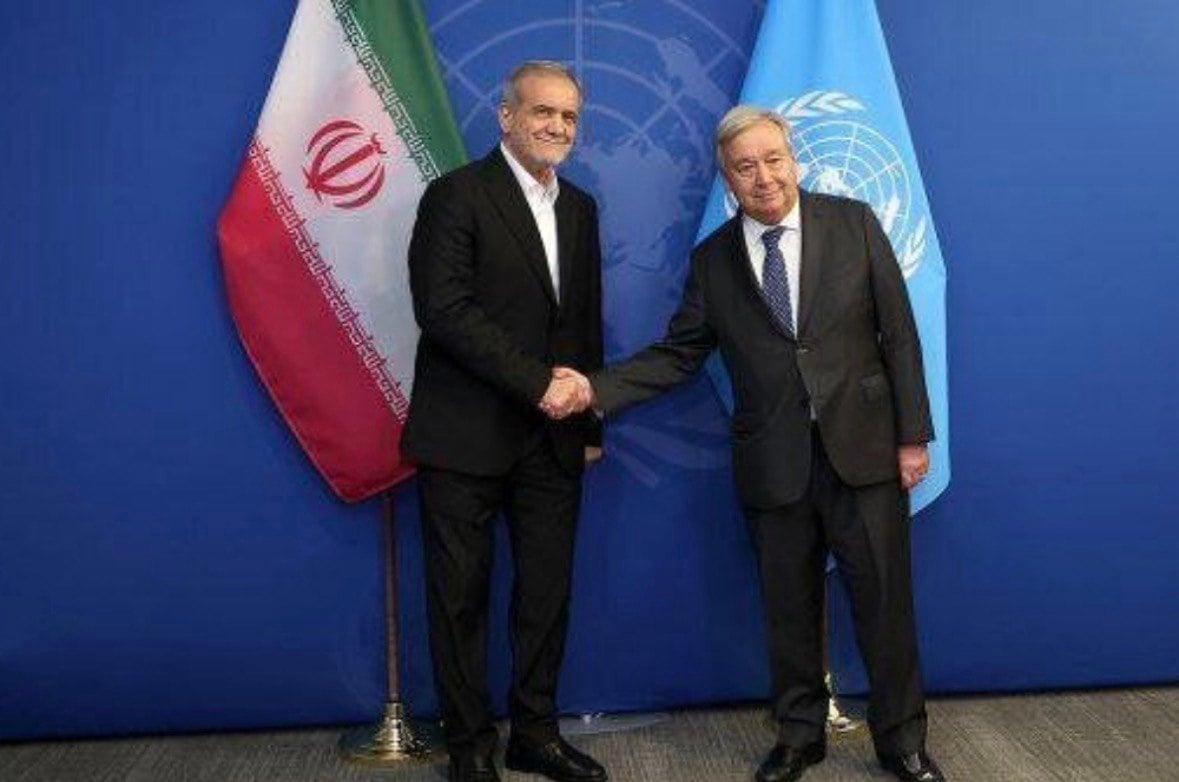
The United Nations, as an international institution, is tasked with guaranteeing human rights, fundamental freedoms, and global peace. The Secretary-General, as the highest executive authority of the organization, is obligated under Article 100 of the UN Charter to maintain complete neutrality and to refrain from any action that could lend legitimacy to the conduct of governments.
However, the recent congratulatory message sent by the Secretary-General to the terrorist regime of the Islamic Republic at a time when the regime stands accused of widespread and violent repression of its own people raises serious moral and legal questions. According to numerous reports by human rights organizations and independent physicians in Iran, the regime has engaged in actions including firing live ammunition at protesters, carrying out mass arrests and large-scale imprisonments, cutting off internet and telephone access, the possible use of chemical substances beyond tear gas according to multiple medical reports, and the suppression and sexual assault of protesting and grieving families.
Sending an official message of congratulations under such circumstances clearly suggests a departure by the Secretary-General from his neutrality and from his legal and moral obligations. It should be noted that this conduct has not been limited to the Secretary-General alone. The invitation extended to the regime’s foreign minister to attend the Human Rights Council, as well as the lack of response by Deputy Secretary-General Ms. Annalena Baerbock to the events of Iran’s revolution despite her having reacted strongly to other past crises indicates a double standard and an unethical politicization of humanitarian crises, undermining claims of neutrality.
This action not only contradicts the spirit of the UN Charter and the organization’s fundamental goals in defending human rights and human dignity, but is also perceived as an implicit legitimization of the Iranian regime’s repressive actions, severely weakening public trust and the confidence of victims of human rights violations.
Silence in the Face of Atrocities
Rather than indifference or ceremonial messages, the Secretary-General bears responsibility for taking a clear and public stance in the face of humanitarian catastrophes. In the past, during similar crises in Africa and Europe, UN peacekeeping forces were directly deployed, and responses were not limited to issuing statements. In the case of the Gaza Strip, the organization has directly intervened in food distribution, housing displaced persons, and producing reports.
Silence or congratulations at a time when fundamental rights are being trampled not only violates neutrality but also leaves victims feeling that the United Nations has retreated from its core duty of defending human rights.
Conflict with the Foundational Mission of the United Nations
Articles 1 and 55 of the UN Charter clearly state that promoting human rights and fundamental freedoms is one of the organization’s principal purposes. The Secretary-General, as the moral voice of the organization, must balance diplomatic channels with moral responsibility toward victims. Any ceremonial message or silence in the face of human rights violations constitutes a practical deviation from the UN’s foundational mission
Implicit Legitimization and Its Consequences
Official congratulatory messages even if diplomatically customary can carry deep political and moral consequences:
- They may be interpreted as normalizing a repressive situation
- They may erode victims’ trust in the international community
- They may provide regimes with propaganda tools
Under such circumstances, the fundamental question arises: Is the Secretary-General a voice of morality or of immorality? Are silence and ceremonial messages compatible with the UN’s mission to protect human rights and human dignity?
The Need for Accountability and Transparency
The United Nations must clarify the standards governing the issuance of official messages during human rights crises. The Secretary-General is obliged to demonstrate that defending human rights takes precedence over ceremonial or political considerations. Indifference or congratulations in the face of humanitarian catastrophes not only reinforces immorality but also jeopardizes global trust in the United Nations
If the Secretary-General cannot break his silence in the face of systematic and violent human rights violations, then which institution can defend the rights of nations and the lives of people?
The question that must be answered is this: Is the United Nations a voice of morality or of immorality and ideological political conservatism aligned with a repressive Islamic regime?