Leadership With Heart
UN Complicity with Hamas
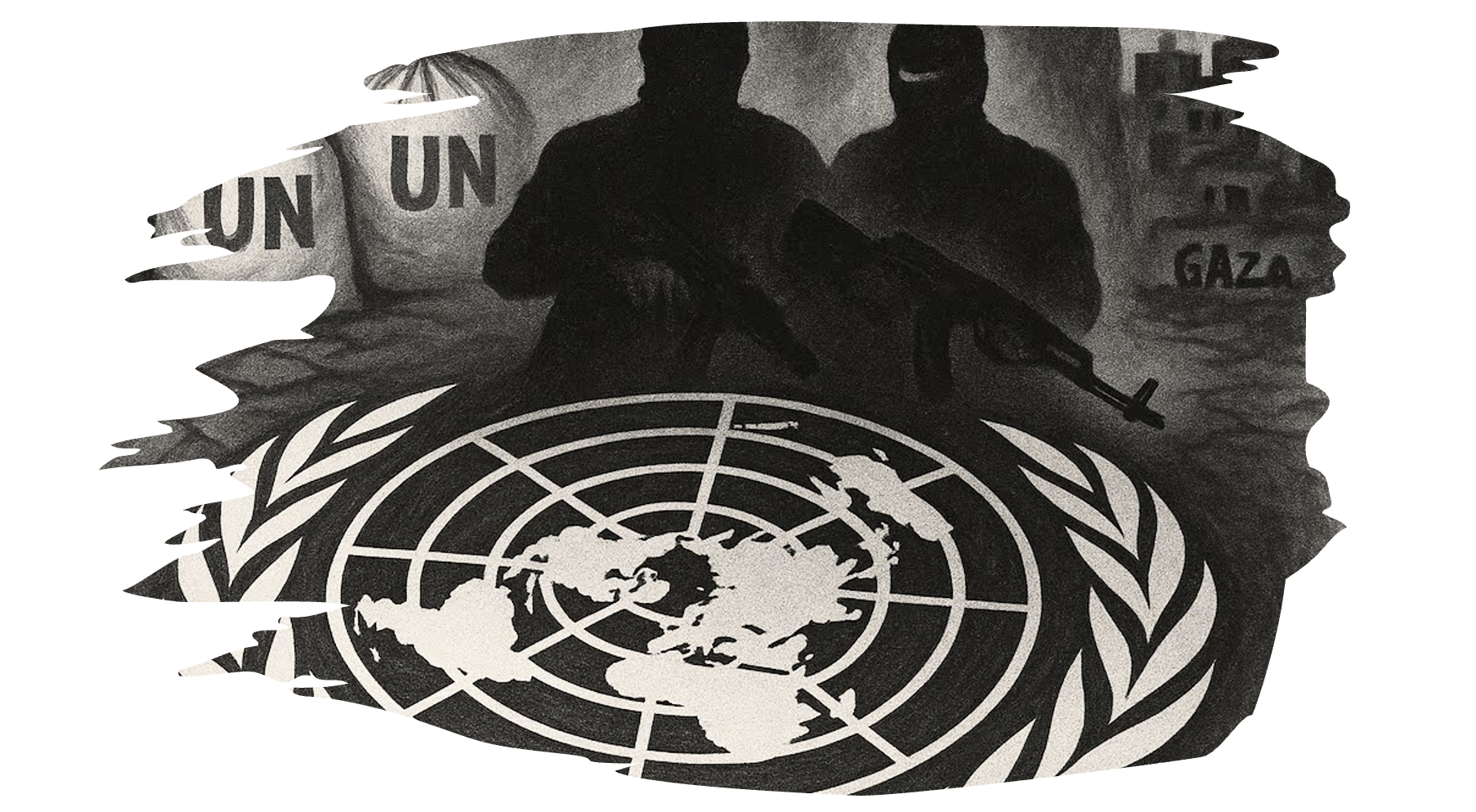
AI generated image via Perplexity
The United Nations, established to promote global peace and security, has increasingly come under scrutiny for its actions—or lack thereof—in addressing conflicts, particularly in the Middle East. Critics argue that the UN’s conduct, especially regarding Israel and Hamas, suggests it operates less as a neutral arbiter and more as an entity aligned with terrorist organizations like Hamas. This article explores this provocative claim through a series of critical questions, exposing systemic issues within the UN that undermine its credibility and effectiveness.
1. Why Has the UN Issued More Resolutions Against Israel Than the Rest of the World Combined?
Between 2015 and 2023, the UN General Assembly adopted 154 resolutions against Israel, compared to 71 against all other countries combined. The UN Human Rights Council has similarly targeted Israel with 108 resolutions from 2006 to 2024, far outstripping those against nations like Syria (45), Iran (15), or Russia (10). This disproportionate focus suggests an institutional bias, often driven by an “automatic majority” of member states hostile to Israel. Organizations like UN Watch argue this reflects a political agenda to delegitimize Israel, ignoring or downplaying atrocities committed by groups like Hamas, which rarely face UN condemnation. This imbalance raises questions about whether the UN prioritizes ideological battles over addressing global human rights abuses in an equitable manner.
2. Why Were UN Members Part of Hamas and Participated in the October 7 Massacre?
Reports have surfaced that UNRWA (United Nations Relief and Works Agency) employees in Gaza were complicit in Hamas’s October 7, 2023, attack on Israel, which killed over 1,200 people and involved rape, torture, and hostage-taking. Evidence includes findings of a Hamas tunnel network beneath UNRWA’s Gaza headquarters, with power drawn from the UN facility, and allegations that around 1,200 UNRWA employees have ties to Hamas or its affiliates. These revelations suggest a failure of oversight at best, or at worst, active collusion. The UN’s reluctance to thoroughly investigate or reform UNRWA fuels the perception that it tolerates or enables terrorist activities under its banner.
3. Why Did the UN Not Believe the Women Brutally Raped and Mutilated by Hamas Terrorists?
Following the October 7 massacre, reports of sexual violence by Hamas were met with delayed and tepid responses from UN bodies. UN Women and the Committee on the Elimination of Discrimination Against Women (CEDAW) remained silent for weeks, only acknowledging the reports after significant pressure. Further, UN Secretary-General António Guterres took over seven weeks to pledge an investigation into these atrocities. This hesitation contrasts sharply with the UN’s swift condemnation of Israel, suggesting a double standard that undermines its commitment to gender-based violence globally. Critics argue this delay reflects an institutional bias that prioritizes protecting Hamas’s image over addressing victims’ suffering.
4. Why Did the UN Not Help the Hostages Held in Gaza for Over 600 Days?
As of June 1, 2025, hostages taken by Hamas on October 7, 2023, have been held for over 600 days, with little tangible action from the UN to secure their release. While resolutions like UN Security Council Resolution 2712 (2023) called for the “immediate and unconditional release of all hostages,” the UN has failed to enforce or prioritize this demand. The General Assembly’s focus on ceasefire resolutions, often without mentioning Hamas or condemning its actions, suggests a reluctance to confront the terrorist group directly. This inaction leaves hostages, including women and children, in dire conditions, raising questions about the UN’s commitment to humanitarian principles.
5. Why Are UN Bureaucrats Often Caught Lying About Their Credentials and Facts on the Ground?
Allegations of UN officials misrepresenting facts or credentials have severely undermined the organization’s credibility. A striking example is Francesca Albanese, the UN Special Rapporteur on the occupied Palestinian territories, who has faced intense scrutiny for falsely presenting herself as an “international lawyer.” Despite claiming in her 2021 application for the UN role that she was a “human rights lawyer by training and call” and repeatedly branding herself as an international lawyer on official platforms, Albanese admitted in a 2025 interview with Vanity Fair that she never took a bar exam and holds no license to practice law. Moreover, Albanese has been criticized for downplaying Hamas’s October 7, 2023, attack, which killed over 1,200 people, by framing it as a response to “Israel’s oppression” rather than condemning it as terrorism. Similarly, UNRWA has faced accusations of spreading disinformation to shield Hamas, such as denying the extent of its employees’ involvement in terrorist activities. These incidents suggest a pattern of obfuscation, potentially to align with anti-Israel narratives or protect institutional interests. When UN officials, tasked with upholding legal and humanitarian standards, are caught lying about their credentials or distorting facts on the ground, it fuels perceptions that the UN prioritizes ideological agendas over truth and accountability.
6. Why Are UN Peacekeeping Operations Frequently Complete Failures?
UN peacekeeping missions, such as UNIFIL in Lebanon, have been criticized for failing to prevent violence under their watch. UNIFIL has been accused of allowing Hezbollah to arm itself in southern Lebanon, effectively acting as a shield for the terrorist group. Similarly, UN peacekeepers in the Golan Heights, UNDOF, have failed to curb rocket attacks and other violence directed at Israel. These failures highlight a broader issue: peacekeeping operations often lack the mandate, resources, or will to confront armed groups, allowing atrocities to persist unchecked.
7. Why Is the UN Often Self-Serving, Prolonging Missions for Paychecks?
Critics argue that the UN prolongs missions to sustain its bureaucracy rather than resolve conflicts. UNRWA, for instance, has been accused of perpetuating the Palestinian refugee crisis by maintaining a unique refugee status that extends to descendants, unlike other UN refugee agencies. This ensures UNRWA’s continued existence and funding, despite allegations of complicity with Hamas. The UN’s reluctance to reform or dissolve such agencies suggests a self-serving motive, prioritizing institutional survival over effective solutions.
8. What Has the UN Actually Accomplished and at What Cost?
Since its founding in 1945, the UN has achieved some successes, such as smallpox eradication and refugee aid through agencies like UNHCR. However, its record is marred by failures to prevent genocides (e.g., Rwanda, Srebrenica), curb terrorism, or address widespread human rights abuses. The UN’s annual budget, exceeding $3 billion, plus billions more for peacekeeping and agencies like UNRWA, raises questions about cost-effectiveness. With ongoing wars, terrorism, and human rights violations—such as those in Gaza, Syria, and Yemen—the UN’s inability to deliver on its core mission of maintaining peace and security is starkly evident.
9. Why Do Dictators and Human Rights Abusers Head UN Councils?
The UN Human Rights Council has included members like China, Cuba, and Iran, nations with egregious human rights records. In 2023, Iran chaired the Council’s Social Forum, despite its history of suppressing dissent and sponsoring terrorism. This paradox stems from the UN’s structure, where member states, regardless of their human rights records, can gain influence through regional blocs or political alliances. Such appointments undermine the UN’s moral authority, allowing abusers to deflect scrutiny while targeting democracies like Israel disproportionately.
10. Why Is Bias Endemic at the UN, with Dominant Countries Dictating Outcomes?
The UN’s structure, particularly the Security Council’s veto power held by the US, Russia, China, France, and the UK, allows major powers to shape outcomes. Additionally, blocs like the Organization of Islamic Cooperation (OIC) and Non-Aligned Movement wield significant voting power in the General Assembly, often aligning against Israel. This dynamic creates an environment where resolutions reflect political agendas rather than objective assessments, perpetuating bias and undermining impartiality.
11. Why Have Repeated Efforts to Reform the UN Failed?
Efforts to reform the UN, such as expanding the Security Council or curbing veto power, have repeatedly stalled due to competing interests among member states. Powerful nations resist changes that dilute their influence, while smaller states prioritize their own agendas. The failure to address systemic issues—like the disproportionate focus on Israel or the inclusion of human rights abusers in key roles—reflects a lack of political will and entrenched bureaucratic interests, leaving the UN mired in dysfunction.
In Conclusion: Systemic Complicity
The claim that the UN is effectively an arm of Hamas is provocative, but the evidence—disproportionate resolutions against Israel, complicity with Hamas through UNRWA, delayed responses to atrocities, inaction on hostages, and officials like Francesca Albanese misrepresenting credentials while distorting facts—lends credence to the critique. The UN’s systemic biases, structural flaws, and failures to uphold its founding principles suggest it has strayed far from its mission. While not a literal arm of Hamas, the UN’s actions (or inactions) often align with the interests of terrorist groups, undermining its credibility as a force for global peace.
To force accountability and reform, member states must consider defunding dysfunctional UN functions and bodies, such as UNRWA and the Human Rights Council, which perpetuate bias or enable terrorism. Targeted financial pressure could compel the UN to address its failures, prioritize impartiality, and restore its moral authority. Without such decisive action, the UN risks remaining a tool for political agendas rather than a beacon of justice.
Related Topics
Related Posts