Solicitor & foreign policy adviser
UN fantasy meets Israeli reality
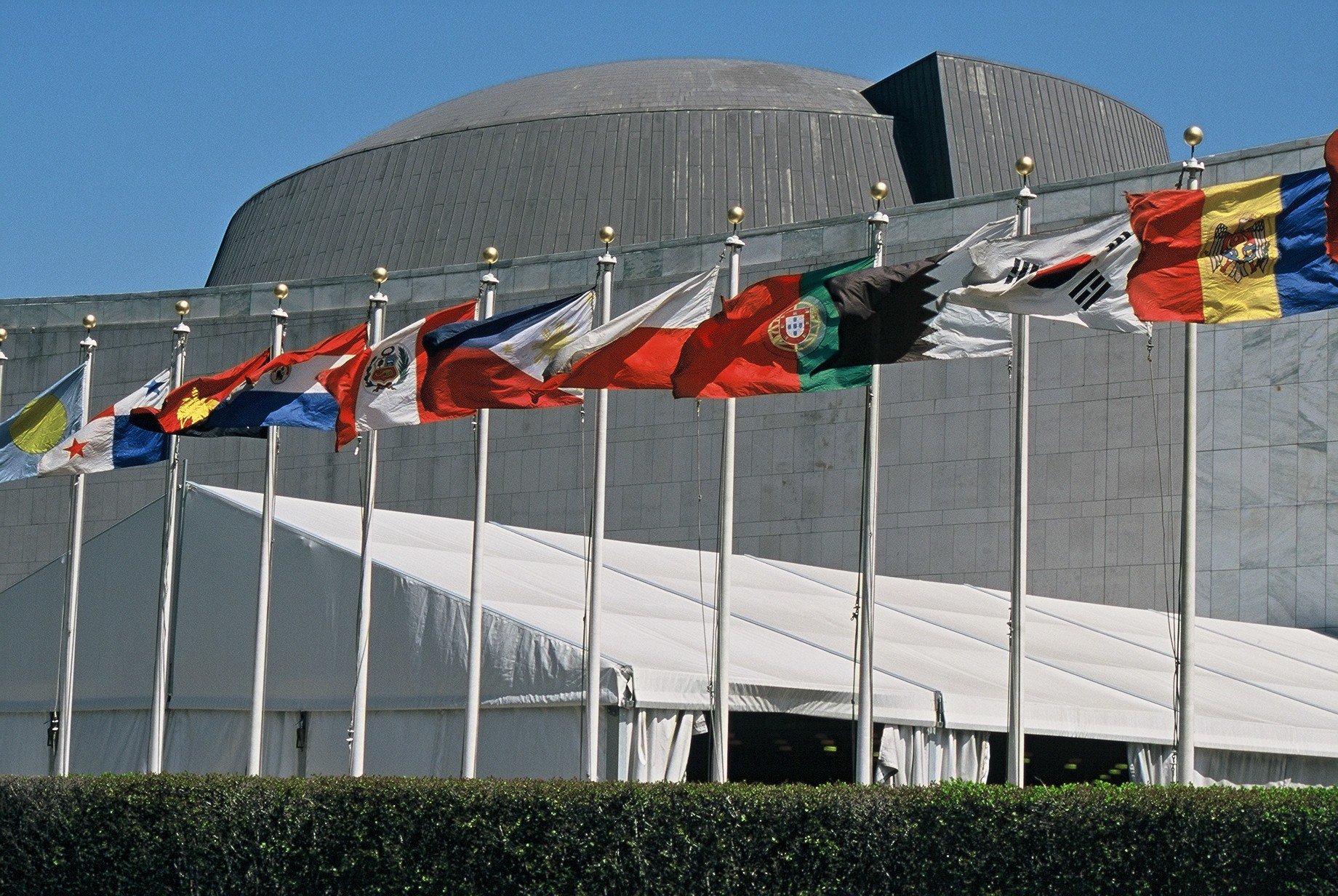
UN Headquarters (Photo by I. Aotearoa - Wikipedia Commons)
The United Nations has always been a reliable venue for anti-Israel theatrics—part opera buffa, part kangaroo court. But on September 12, it managed to surpass even its own standards of farce. With 142 hands raised for and 10 raised against, the General Assembly voted to back yet another “two-state solution:” The New York Declaration on the Peaceful Settlement of the Question of Palestine and the Implementation of the Two-State Solution. The title alone is so long it might have required its own annex. France and Saudi Arabia co-sponsored this miniature Versailles Treaty, which promises “time-bound, irreversible steps” toward a Palestinian state that currently exists only in the minds of bureaucrats and the press offices of European chancelleries.
The resolution carries no legal force, which is precisely why it passed. It was padded with the usual applause lines: Hamas must surrender its weapons; the Palestinian Authority should assume control of Gaza; a Palestinian state will be born on schedule, like a train departing Zurich; the world must rush to embrace “two states living side by side in peace.” Delegates thumped their desks as if they had just solved nuclear fusion. In reality, they endorsed a fiction that has outlived every American president since Bill Clinton first uttered it in public. To anyone outside the echo chamber, the whole spectacle is a pantomime. The very same diplomats who sip champagne while condemning Israel for defending itself now lecture Jerusalem on “irreversible steps toward peace.” Israel, for them, is always the problem; Palestinians, eternal victims waiting for their flag to be raised.
The United States refused to play along. Washington cast its vote against the resolution, a rare moment of moral clarity in a chamber addicted to fantasy. The State Department called the measure divorced from realities on the ground. Israel, of course, joined in the rejection—because Israelis know that peace is not manufactured in New York by bureaucrats but defended on the borders of Ashkelon, Sderot, and Jerusalem. America’s lonely refusal to clap along is not just policy but principle. To endorse a two-state solution today is to announce that words mean nothing, borders mean nothing, and violence is rewarded with recognition. If that is multilateralism, one begins to understand why so many countries are eager to join.
What the United States saw, and what most of the General Assembly chose not to see, is that the Palestinian national movement is not a state-in-waiting but a confederacy of militias. It is difficult to imagine Mahmoud Abbas’ grey-haired apparatchiks marching into Gaza to confiscate weapons from men who view martyrdom as a career path. The “time-bound” element of the UN’s fantasy is especially rich; a process that has staggered on since 1947 is now to be wrapped up promptly, because a French draft resolution says so.
The truth is as blunt as it is inconvenient: there will be no Palestinian state as long as Palestinian politics remains a warlord’s bazaar. Hamas is not giving up its rockets, and the PA is not taking over Gaza with anything other than a press release. To pretend otherwise is to turn terrorism into a résumé builder.
So the UN voted, and the delegates cheered, and nothing changed. Israel will continue to fight for its survival, America—at least for now—will stand by its side, and the rest of the world will congratulate itself for drafting a declaration that has all the impact of confetti.
The UN’s vote has the virtue of clarifying the divide. On one side, 142 states eager to traffic in symbols and slogans. On the other, the United States and Israel, unwilling to mistake a declaration for a peace agreement. For all the diplomatic dressing, the vote was a morality play: do you want to look good in New York, or do you want to live in reality in Jerusalem? America chose the latter. And that, in the end, is why the UN will always need translators—not just for languages, but for the difference between make-believe and fact.
Related Topics
Related Posts