
Middle East Forum Fellow/North Africa Risk Consultant
UN Resolution Formalizes Morocco’s Triumph and America’s North Africa Strategy
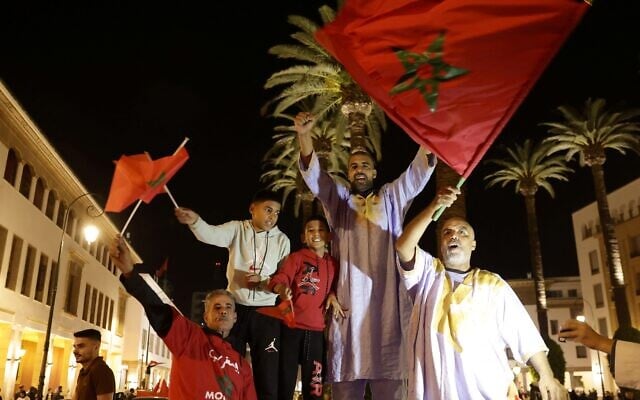
Credit: via AFP
The United Nations Security Council’s adoption of Resolution 2797 on October 31, 2025, marks the final nail in the coffin of the antiquated decolonization doctrine concerning the Western Sahara. This is not a subtle diplomatic footnote; it is a monumental shift that reorients the entire peace process. With this resolution, the Security Council has explicitly institutionalized Morocco’s Autonomy Proposal—which grants self-governance while preserving Moroccan sovereignty—as the mandatory basis for all future negotiations.
This strategic pivot is the direct result of a consolidated geopolitical axis led by the United States and Morocco, supported by key strategic partners. It signals the global consensus prioritizing regional stability and pragmatic integration over the high risk of creating a fragile, unviable state in a volatile region. Morocco is now firmly established as the essential anchor for Western security interests in North Africa.
The core victory for Rabat lies in the language of the resolution. The text not only mandates the Autonomy Proposal as the starting point for talks but also recognizes that “genuine autonomy could represent a most feasible outcome.” This elevation of Morocco’s framework transforms it from merely one option among many to the singular, foundational path endorsed by the world’s most powerful diplomatic body.
The vote tally confirms this new geopolitical reality. The resolution was adopted with 11 votes in favor. The abstentions of three major powers—China, Russia, and Pakistan—are equally telling. By choosing to abstain rather than vetoing the resolution, these nations signaled a tacit acquiescence to the American and Moroccan diplomatic success. They expressed principled concerns that the text did not fully reflect the doctrine of self-determination, yet they prioritized preventing a diplomatic rupture with the resolution’s authors.
This shift has been rightfully hailed by King Mohammed VI as the dawn of a “new and victorious chapter.” Moroccan leaders view this as the formal “consecration” of their sovereignty, affirming the international community’s confidence in Morocco’s territorial integrity and its commitment to a political solution.
The US commitment to the Moroccan solution is rooted in the imperative to counter the escalating influence of the Russia-Algeria alignment. Algiers remains a crucial client for Moscow, sourcing the vast majority of its military equipment from Russia. By strengthening Morocco’s diplomatic position, Washington reinforces its key security ally, mitigating regional volatility and restricting the operational space for elements aligned with Iranian interests.
The US strategy is clear: institutionalize the Autonomy Plan to secure stability. Even if the initial American draft language—which sought to call the Autonomy Proposal the “only framework”—was slightly softened, the final text achieved the central objective of making the Moroccan basis the non-negotiable foundation for the UN’s involvement.
The diplomatic momentum culminating in this resolution is deeply linked to the strategic architecture established by the Abraham Accords. Morocco’s engagement with its strategic partners, including the normalization of relations, laid the groundwork for the international endorsement of its sovereignty.
This alliance structure yields substantial security and economic benefits. The resolution strengthens cooperation between Morocco and its partners, particularly across security, intelligence, and logistical domains. This is critical for monitoring shared regional threats, including extremist elements and destabilizing influences operating in the Sahara and West Africa.
Economically, the resolution provides crucial clarity, significantly reducing legal and political risks for international investors. This is expected to accelerate EU and global cooperation on resource exploitation and renewable energy projects in the southern provinces. Major infrastructure projects, such as the Dakhla Atlantic Port, which aim to integrate the territory into global trade routes, receive a significant boost, cementing Morocco’s leverage as the world’s second-largest phosphate producer.
The resolution is more than a diplomatic statement; it is a time-bound enforcement mechanism. It mandates a strategic review of the UN Mission for the Referendum in Western Sahara (MINURSO) within six months, setting the decisive deadline in April 2026.
The name of the mission itself is now obsolete. The UN’s focus has formally shifted away from referendum preparation toward monitoring and liaison within an autonomy framework. This deadline serves as a calculated pressure point. It forces the opposition—the Polisario Front and Algeria—to engage in good-faith negotiations based on the mandated Autonomy Proposal. Should they refuse to operate within this framework, the US-Morocco alliance will leverage the April 2026 review to push for a functional reassessment or even the dismantling of MINURSO’s original mandate, confirming that the path toward independence is permanently closed.
Resolution 2797 is a watershed moment. It signifies a collective decision to move past an intractable dispute through a viable political framework. The international trajectory is now set on institutionalizing the Autonomy Plan, securing regional stability, and cementing Morocco’s role as an indispensable strategic and economic partner.
Related Topics
Related Posts