Under the Influence – While Considering Islamophobia and Antisemitism
Encountering extended family and friends in the London area, Jews and Christians, in August 2025, we heard political cacophony on the size of the local Muslim population. The deepest discussion on the subject was at Friday night dinner hosted by a young Jewish family. With our host commenting on antisemitism and his sense that the Jewish community as such is turning inward, with respect to Muslims, he said, “Some of my best friends are…”.
He wasn’t saying it at us, but it triggered recollections of my mother’s (z”l) aversity to strangers presuming to make her feel comfortable (in Philadelphia) saying “some of my best friends are Jewish.” He elaborated on immigrant assimilation and minority identities within national identities. He described stereotypical practices of Jewish immigrants to the UK and the US, only marginally addressing the character of Muslim immigration. And the stereotype.
Under that influence, two months later, we visited Santa María la Blanca Synagogue in Toledo. Spatial design alluded to traditions in a Jewish place of worship, despite the synagogue’s name. Making generic small talk with a stranger, a young British Jewish tourist seemed safe. Between pillars, under Mudéjar arches, I rhetorically asked about London absorption of its new immigrant Muslim population.
He curtly responded: You can’t complain about Muslim immigrants in countries presumed to reflect liberal, democratic values. I nodded my agreement, conceivably interpreted as no interest in further engaging. It was, not because I disagreed.
Just stymied. How is it to be articulated? Are Haredi Jews dressing in accordance with their religious beliefs different from devout Muslims dressing traditionally?
Growing up in the US, as the granddaughter of Eastern European Jewish immigrants my parents cautioned us about antisemitism, as my generation enjoyed equal opportunities without quotas or “No Jews and dogs allowed” signs outside of exclusive clubs. I was taught to be proud to be American, proud to be Jewish, and to appreciate American religious freedom and doors opened to immigrants. Conceivably there were messages regarding what fits in the American public space and what is confined to ethnic and religious spaces, maybe discussed with ostensibly vetted friends from another group.
The Antisemitism and Islamophobia encounter jolt my memory. Jews and Christians categorically fearing Muslims makes me fearful.
The would-be welcome team approves Muslim immigrants seeking a better life in America or Europe, but condemns importation of Muslim traditions, expecting them to adopt western liberal cultures in the public space. When the two conflict, traditional societies are expected to resolve that from within. In public space, immigrants should practice principles of liberalism, tolerance, and equality as evolved and legislated. Diversity. Pluralism. Women’s rights and LGBTQ rights too.
Yet legislation is revokable (re: Roe v. Wade) and not because of Muslim immigrants. Where do American white supremacists’ attitudes towards Muslim immigration really meet objections by presumed liberal, pluralists?
As a Jewish Israeli, an American Jew, and an individual committed to liberal democracy and pluralism, how do I distill and articulate my position, confronting two labels and two events: “terrorism” and “Islamophobia,” 9/11 and October 7.
Prior to October 7, an Israeli employer promoting shared society, asked me not to use the word “terrorist.” Legal definitions aside, political agendas render usage sensitive. Is one person’s terrorist another’s freedom fighter?
October 7: Hamas operatives massacred 1,200 Israelis, took hostages, raped, murdered, mutilated, and documented.
Then, working in a binational Israeli-Palestinian organization, a Jewish colleague in the US proofread text I had written. I intentionally referred to Hamas’ Nukhba operatives as “terrorists.” I mistakenly thought it appropriate. Organizational protocol prevailed. Emotionally ballistic, I screamed internally, “Should I replace the word with ‘monsters,’ or is there a better term?” (Not expecting innocent Palestinian victims of Israeli terrorists to feel differently.)
Dr. Tomer Persico recently asserted a point that resonates with the distillation of my beliefs, and I’m under the influence – terrorists, as opposed to freedom fighters, reject Enlightenment values.
West Bank Jewish settlers attacking and murdering Palestinians are finally labelled terrorists in Israel’s public discourse. As they should be. Local media says it: Jewish terrorists.
I fear them. Deterred by them, when considering protective presence activities.
I fear Hamas, Hezbollah, Islamic Jihadists, and Iran.
I have compassion for innocent Palestinian victims of this war and terrorism.
A retired UK journalist, Ed Moss, encapsulated these sentiments in a recent blog:
Two things can be true simultaneously, namely Palestinian civilians can be innocent victims, and Hamas can be a terrorist organization whose ideology and actions represent a genuine threat to Israel and Jews.
The refusal to hold those two propositions in one’s head simultaneously is one of the great failures of contemporary political debate.
Commemorating 25 years since 9/11, Islamophobic sprouts emerge, planted in minds of many self-proclaimed pluralist, liberal believers in individualism, under the powerful influence of stereotypes. Juxtaposed with antisemitism, I cynically conjecture about Christian Islamophobes becoming Israel advocates. But phobias and stereotypes, with all due respect to certain contextual purposes, hardly lead to advocacy for liberal Israeli democracy.
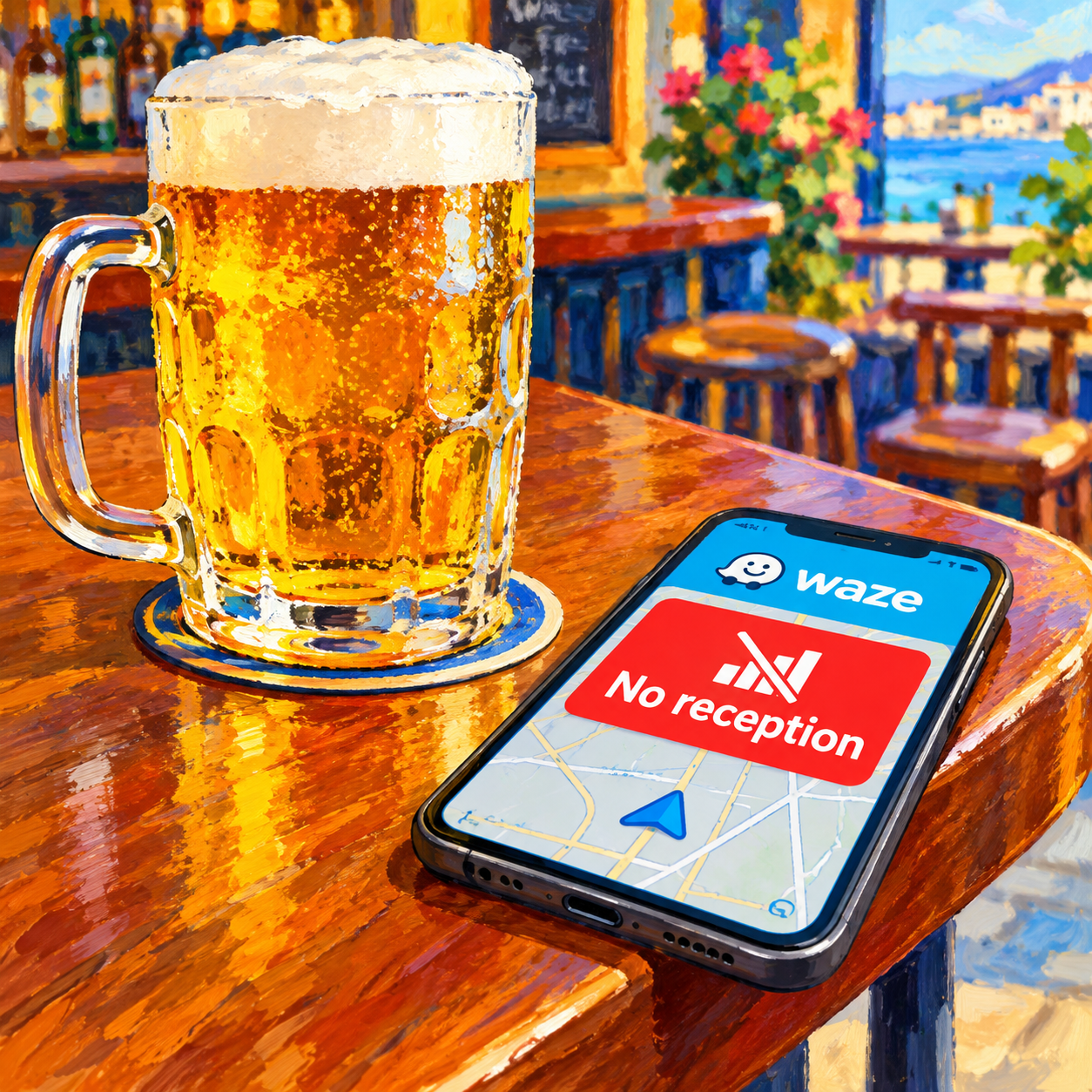
The distillation of my beliefs remains – under the influence of complexity. Searching for a formula to honor diversity amidst clashes in values, a social contract requires limitations amidst accommodation. Waze isn’t working.
Harriet Gimpel – September 15, 2026