Therapist and Clinical Director of Jerusalem Therapy Mental Health Clinic
Understanding Trauma in a Threatened Israel
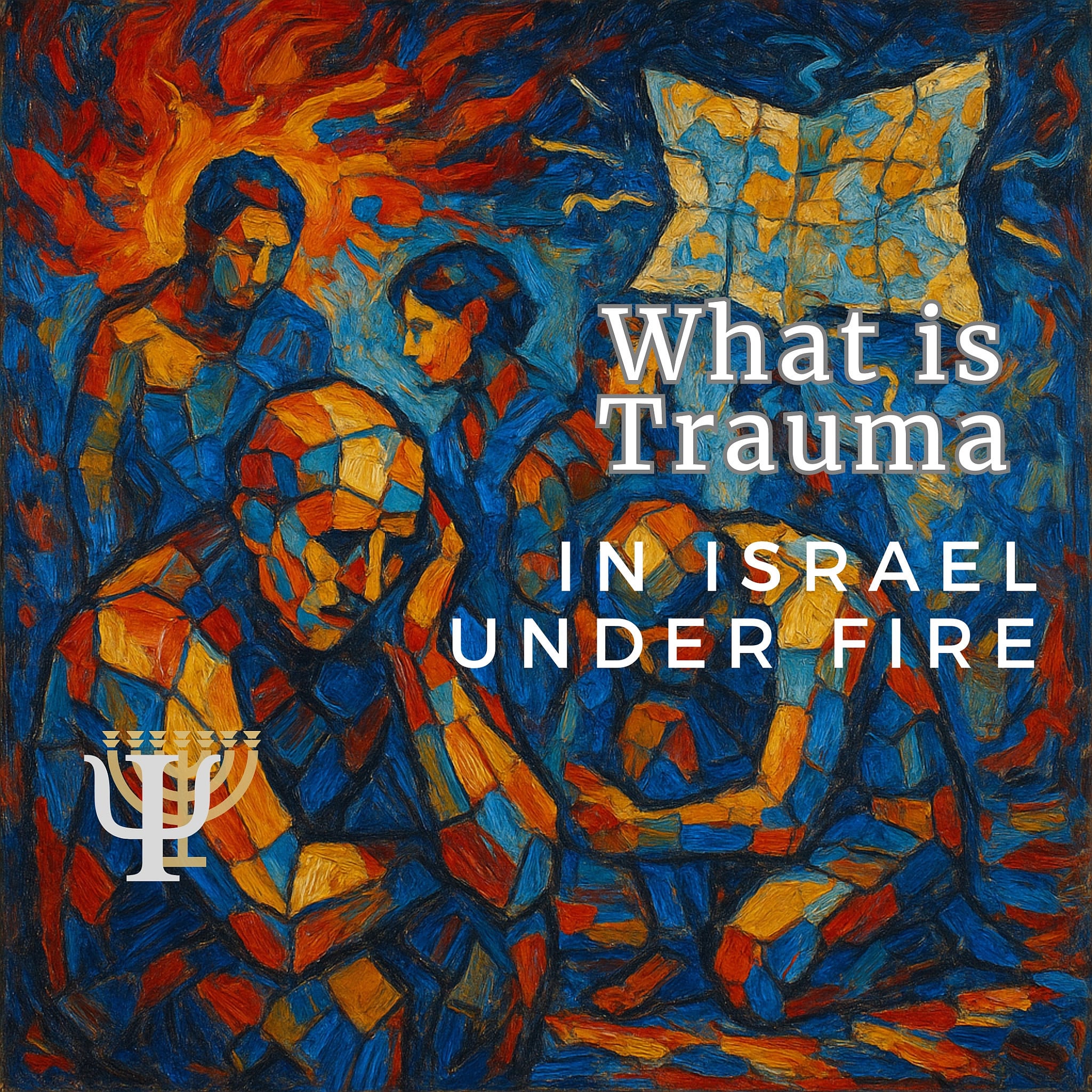
Here’s the truth most people don’t say out loud—trauma doesn’t just hurt. It disorients. It leaves you lost.
Not metaphorically. Not poetically. Really, utterly lost like a child in a vast unfamiliar city, map torn in your hand, unsure which way leads home. That’s what trauma is. It’s not just pain. It’s the shattering of the life map you’ve always trusted, that outlined four wisdoms you can’t live without: How the world works, who you are, what people are like, and where your story is heading.
Every one of us lives by a map. It’s how we make sense of the world. This inner map doesn’t just tell us where we are now. It’s a lot more complicated than that. It also predicts what’s coming next, giving shape to what’s meaningful so we can interpret others’ actions and understand our decisions. Without it, life would be a chaotic stream of sensations. And unlike every other creature on earth, we don’t just live in the moment. We live in the future, too.
That’s a beautiful and terrifying thing.
Take a lion. Two seconds after it gets chased away from a watering hole by a crocodile, it’s back drinking again. No timeline, no forecast. Not a care in the world. But you? You are also drinking from the future. You’re thinking about next Tuesday, next year, the next version of yourself. And, in Israel, the next Iranian drone attack. And your inner map has to account for not just one future but a branching web of endless possible futures. That’s a high-stakes navigation system. To function, it has to simplify. It has to filter out possibilities, rule out the unimaginable, and draw lines around what’s likely and what’s not.
That’s what makes you efficient and vulnerable.
When the Map Breaks
Most disruptions to our map are survivable. You thought you were headed to a relaxing date night. Strolling out to the car feeling like hot stuff you’re drenched with the cold water of a flat tire. You groan, adapt, and reorient, patching up your map with a little more wisdom. Next time, check the tire pressure.
Sometimes, though, something more serious hits. Your spouse betrays you. A close friend dies in a way that makes no moral sense. You’re thrown into a reality that your map knew about abstractly but never believed would happen to you. That’s disorienting and takes time. But eventually, with grief, reflection, and the stories of others, you integrate this new terrain into your understanding of life.
But trauma is something else entirely. It’s not just a tear in your map. It’s a realization that the entire map was wrong. Not outdated. Useless. The event you faced doesn’t just hurt. It contradicts everything you ever believed. The world you trusted no longer exists and this new one that does is incomprehensible. That’s why people with trauma don’t say, “I’m sad.” They say, “I don’t know who I am anymore.” They don’t just fear what happened. They fear anything could happen. Because, if your world could be blindsided once, why not again?
That’s not just fear. That’s being un-mapped. That’s PTSD.
What Helps in the Short-Term
The first step isn’t fixing everything. It’s not rebuilding a philosophy of life. That’s too much for a person whose internal compass is spinning. The first step is humbler. It’s safety. That means doing the next right thing, even if it feels mechanical. Eat. Sleep. Text a friend. Say yes when someone offers help. You won’t believe these things will work at first, but do them anyway. This is the part where you act on trust, not clarity.
Most of all, drop the pressure to “understand what happened.” You might still be stuck in the thick of it and won’t be able to start the work because the next barrage is on its way. Ballistic missiles too? Understanding is a long-term goal. Right now, staying grounded matters more. If your old coping strategies feel foreign now, that’s okay. They were part of your old map. Let yourself start small, and start now.
What Heals in the Long-Term
Healing from trauma means building a new map. That takes time, and it takes humility. The first mistake most people make is thinking the map they had was entirely wrong. It wasn’t. It just wasn’t complete.
Two things usually go wrong in a person’s pre-trauma map:
-
It was too black-and-white. Good people versus bad people. Safe versus unsafe. Heroes and villains. Real life is murkier. There are people who love you and still fail you. There are strangers who show compassion when you least expect it. Life, like people, has nuance.
-
It was too small. Many people build maps that expect only the beautiful parts of life. But the real world contains both dazzling light and profound darkness. It contains loss, cruelty, and suffering. Your old map probably assumed these were distant shadows. Not things that could reach your doorstep. Now you know otherwise.
The new map you build will be bigger. Truer. Sadder in some ways, but also wiser. It will make room for uncertainty without being paralyzed by it. And it will hold a new kind of courage: not the denial of fear, but the willingness to walk forward with eyes open.
Final Thought
You don’t have to rebuild the whole thing today. You don’t even have to believe in it yet. You just have to take one step in the direction of meaning, no matter how small. And then another. That’s how we all begin with one act of orientation at a time.
You are not where you were, and the world is not what it was, but you are still here. That means a path can be made. And where there is path, there is possibility.
Related Topics
Related Posts