A comedic survival guide to a country that breaks you, rebuilds you, and calls it Tuesday.
Unmasked: Returning to the Law in an Age That Punishes Jewish Visibility
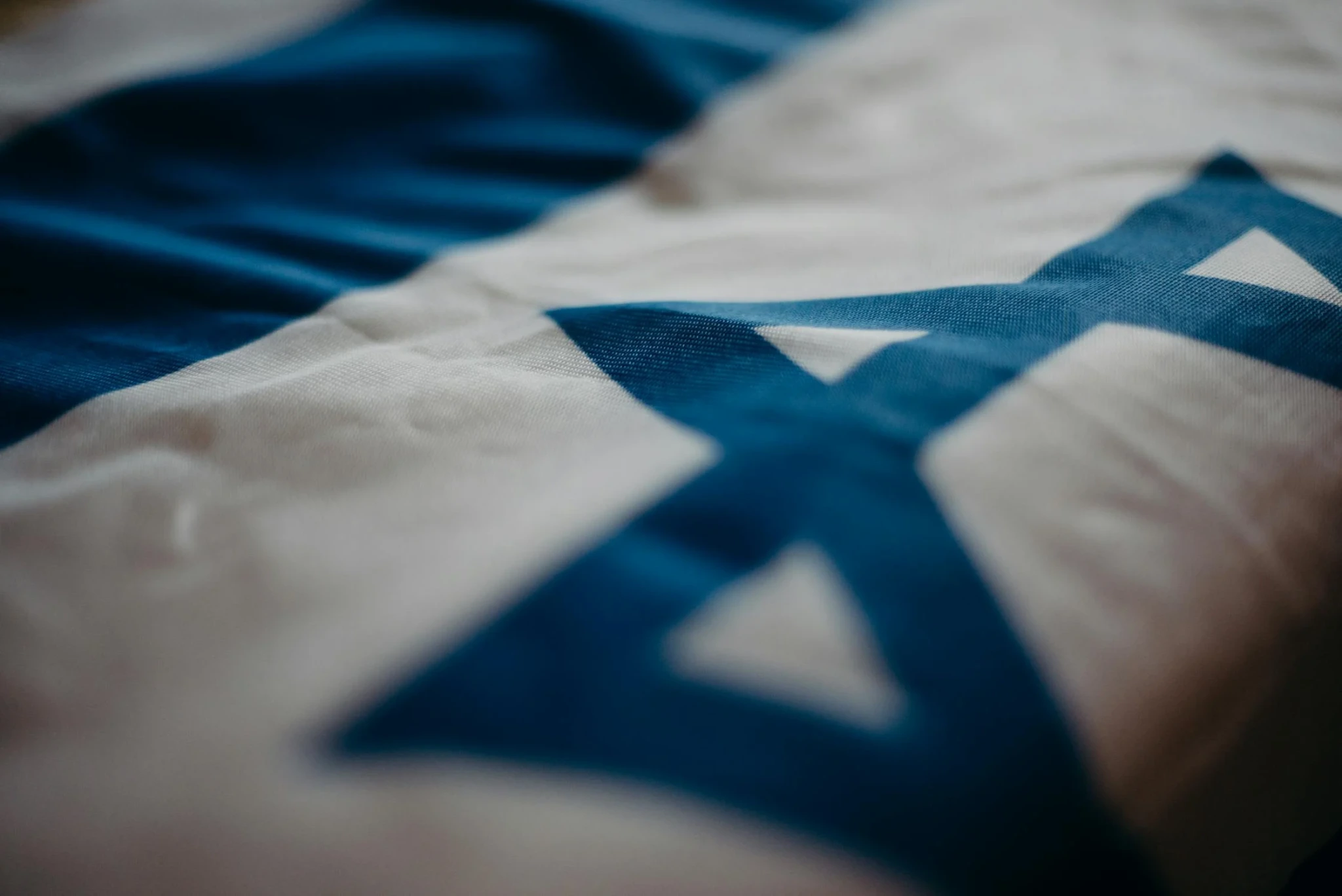
Am Yisrael Chai!
For the past year and a half, I’ve operated under a pseudonym.
Not because I’m in witness protection. Not because I was running from my past. But because, as a Jewish Israeli woman working in international sales, anonymity was my shield. I claimed to live “elsewhere” — sometimes in Europe, sometimes in Africa — anywhere that wouldn’t raise questions. Or eyebrows. Or flags.
The reason was simple, and sinister: being visibly Israeli in certain professional spheres, especially in international markets that include the Middle East and parts of Asia, doesn’t just complicate business — it kills it.
I know this not theoretically, but experientially.
When I recently updated my LinkedIn to reflect the truth — my real name, my legal qualifications, my Israeli identity, and my return to the legal profession — the reaction was swift and chilling. Clients from Qatar and beyond blocked me. Some even managed to block me on Microsoft Teams (a feat I hadn’t realised was possible). Connections disappeared. Relationships built over a year and a half of hard work evaporated with the click of a mouse.
What changed?
Nothing, except that I stopped pretending. I told the truth about who I am.
In the current global climate, that truth is costly.
Since October 7, the world has been watching Israel with a magnifying glass — but only one side of the lens seems to matter. Civilians brutally murdered, babies burned alive, children kidnapped and still in captivity — and yet, somehow, the Jewish state is being cast as the aggressor in a grotesque inversion of morality. From London to Los Angeles, we’ve seen mass rallies not just supporting Palestinian civilians (a cause that, in its humanitarian form, most Israelis empathise with), but openly calling for the annihilation of Israel.
And the fallout for Jews outside the region? Alarming, widespread, and deeply personal. Synagogues defaced. Jewish students were harassed. Businesses boycotted. In some places, Jews are told not to wear Stars of David or speak Hebrew in public.
And now here I am — not a soldier, not a politician, not even a journalist — just a woman who studied law by correspondence while working full time, re-entering the legal world with a decade’s worth of experience, multilingual fluency, and a sharpened mind. And I’m being punished not for what I believe, or what I’ve done, but for who I am.
The irony, of course, is that I once feared law would be too harsh a world. Too cold, too calculating. I now realise: the legal world, for all its rigidity, offers something that’s in short supply — evidence-based thinking, structured argument, the presumption of innocence, and the right to be judged on merit, not identity. In other words, the opposite of what I experienced in sales.
There is a kind of liberation in this rejection. Because now I know who I’m not: I’m not someone who will dilute herself for comfort. I won’t camouflage to keep clients calm. I won’t redact my truth to stay palatable.
I am Israeli. I am Jewish. I am a legal professional. And I’m done hiding.
Yes, I’ve lost clients. But I’ve regained something immeasurably more powerful: clarity. I now understand that truth comes with a cost, but silence comes with a slow erosion of self. That erosion stops here.
If we are living in a time when Jewish visibility is an act of resistance, so be it.
I’m resisting.
With my words. With my work. With my very presence.
Related Topics
Related Posts