
Until Diplomacy Catches Up with Reality: A Different 14-Point Agreement
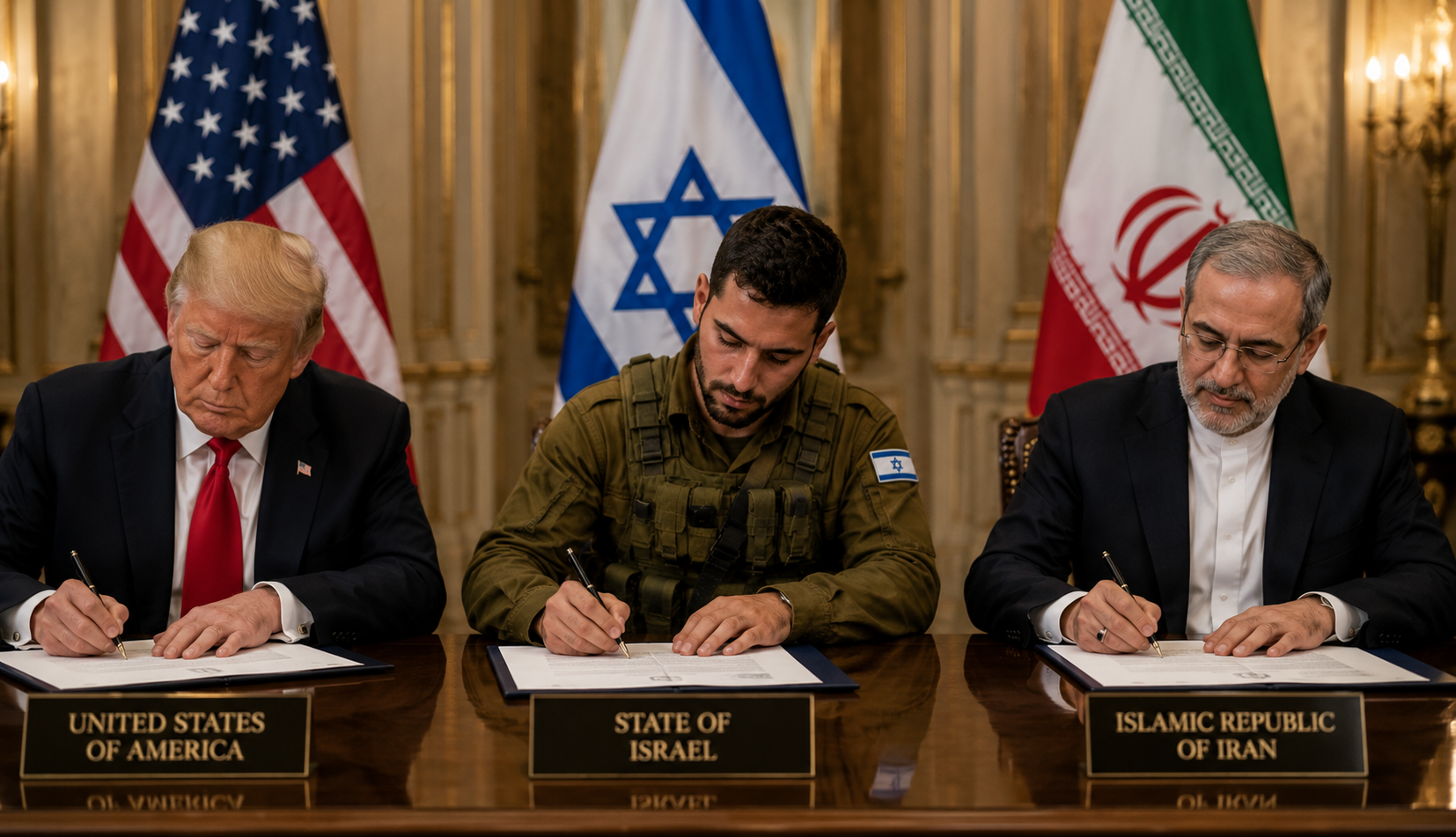
As world leaders celebrate the agreement between America and Iran, complete with reopened sea lanes, eased sanctions, and promises of future restraint, many Israelis are asking a basic question: will this make life safer?
In that spirit, I drafted a different memorandum of understanding, one rooted less in ceremonial optimism and more in the historical patterns our region knows too well.
Memorandum of Understanding Between the Israel and the Rest of the World
Point 1: We affirm the sovereignty of the State of Israel and the right of its citizens to live in peace and security, a right that remains intermittently tested by declared enemies and all too often by the unintended consequences of diplomatic deals struck elsewhere.
Point 2: We affirm the right of Israelis to travel, study, work, and visit anywhere in the world without fear of harassment, intimidation, or violence because of their nationality, religion, or identity, a right which also remains intermittently tested.
Point 3: We acknowledge a recurring historical pattern: funds released to hostile regimes or terrorist organizations are frequently repurposed for activities other than schools, hospitals, and flower gardens. Accordingly, optimism regarding sanctions relief shall remain subject to verification. Past experience suggests extreme leaders excel at converting economic relief into enhanced capabilities for their proxies.
Point 4: We acknowledge that Hamas, Hezbollah, and other terrorist organizations have repeatedly demonstrated their willingness to treat agreements and ceasefires as temporary tactical pauses rather than binding commitments. Their founding documents and leaders have stated explicitly that such pauses do not alter the long-term objective of eliminating Israel. Accordingly, residents of Israel will continue locating the nearest shelter until reality catches up with diplomacy.
Point 5: We acknowledge that the success of any agreement will ultimately be measured not by signatures, speeches, or ceremonies, but by whether Israeli children can sleep through the night and reserve soldiers can spend more time with their families than with their brothers-in-arms.
Point 6: Yes, we are being attacked from the north (and elsewhere). Declarations of diplomatic success are best evaluated after the missiles and sirens stop, not before.
Point 7: We acknowledge that the Islamic Republic has long prioritized regime survival over the welfare of its own people. Nuclear restraint pledges should therefore be judged against its record of concealment, domestic repression, and public affirmations by its leaders that Israel “will not exist” in the foreseeable future.
Point 8: We affirm that the ultimate measure of security is not the strength of a nation’s defenses, but how rarely its citizens need them.
Point 9: We acknowledge that security is not merely the absence of attacks today, but the confidence that yesterday’s diplomatic “breakthroughs” won’t fund tomorrow’s rockets.
Point 10: We affirm that every generation deserves to inherit a future, not a conflict.
Point 11: We acknowledge that ordinary life is not measured by the absence of danger, but by the ability to make plans without first considering it.
Point 12: We affirm that peace is built not only through diplomacy, but through education, accountability, and the categorical rejection of violence as a legitimate tool of political or religious expression. These standards have proven challenging for the Islamic Republic and its partners to internalize.
Point 13: We acknowledge that history has taught Israelis to distinguish between hope and certainty. We continue to make room for the former while refusing to bet our survival on the later.
Point 14: Between the sirens and the headlines, we also remember those who are no longer running to shelters with us. Every Israeli community carries names, faces, and empty seats left by soldiers and civilians who gave their lives defending this country. The cost of this conflict is not abstract.
Conclusion
We welcome the day when bomb shelters revert to storage rooms, security alerts become historical footnotes, and agreements signed by leaders result in lasting peace for all people.