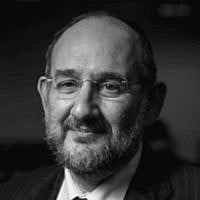
Until This Day: My Mother’s Matzevah
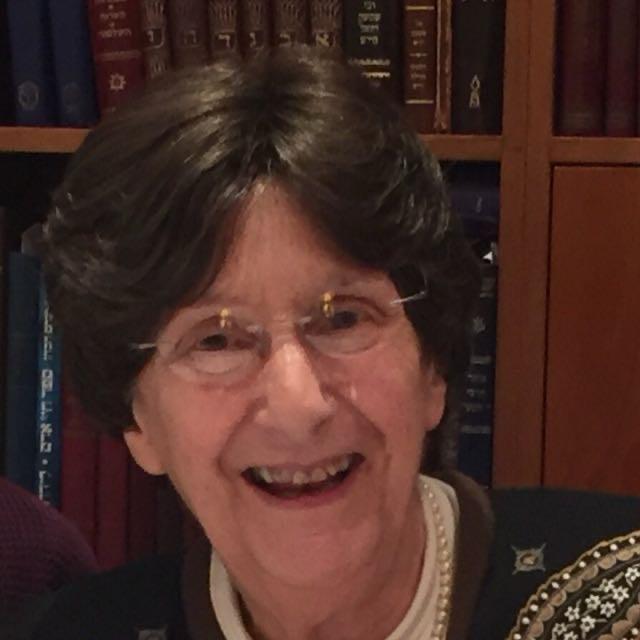
Until This Day: Reflections at My Mother’s Matzevah
Last week, our family gathered at Agecroft Beis Hachayim in Manchester to set the matzevah for my mother, Mrs Eva — Chava bas Reb Shlomo Osher — Guttentag, a”h.
In Jewish tradition, a matzevah is not merely a marker upon a grave. It is an act of honour, memory and love — an attempt by transient human beings to ensure that a life of dignity and goodness continues to speak ad hayom hazeh, until this very day.
My mother’s life was not public or self-advertising. Yet she was born into a remarkable family of Jewish scholarship and leadership. She was the daughter of Dr Shlomo Osher Birnbaum, the distinguished scholar of Yiddish and Hebrew palaeography, and the granddaughter of Dr Nathan Birnbaum ztzl, the Jewish thinker and activist who gave so much vision and leadership to Klal Yisrael.
But her own greatness was of a quieter kind. She was born in Hamburg, into a world of Jewish learning, language and culture. Her father held a university post the first ever post in Yiddish at Hamburg in the late 1920’s. There was stability, dignity and the prospect of a secure future.
Then, when she was five years old, that world disappeared. Her parents saw what was coming in Nazi Germany and fled — first briefly to Holland, and then to London — to begin again as refugees.
From childhood, my mother learned that homes, countries, status and security can be taken away. But real life must be carried within.
In English, “life” is singular. In Hebrew, life is chayim — plural. There is the physical life of the body, and there is the deeper life of the soul: emunah, dignity, refinement, moral clarity, self-control and goodness.
My mother loved both. She appreciated beauty, form and craft. She had real skill in dressmaking, sewing and later pottery. She read deeply — poetry, literature, language and thought. She had taste, refinement and an instinctive sense of order.
But above all, she gave life to others. Her name was Chava. The Torah says of the first Chava, “hi haysa eim kol chai” — she was the mother of all living. My mother, too, was a giver of life.
She gave life to her mother-in-law, caring for her with devotion in old age. She gave life to her husband, our dear father, Max — Mechel, Reb Yechiel Mordechai — supporting him for decades with extraordinary loyalty. She enabled his Torah, his learning, his askonus, his tefillah and his service to the tzibbur.
This was not servility. It was avodas hakodesh. It was the quiet greatness of a woman who understood that to support another person’s life, dignity and mission is itself to be a giver of life.
A story from the beginning of their married life says much. When my parents first set up home in Newcastle after Purim 1954, they had enough money for one major purchase: a fridge, then still a luxury, or a set of Shas. My mother said: “A fridge we will get in due course. But the Shas — the first priority is to get a Shas.”
Those volumes of Gemara accompanied my father through many masechtos and through cycles of his Daily Blatt shiur at the Sunderland Beth Hamedrash. They stood as a testament to her instincts: learning first, purpose first, Torah first.
She was extraordinarily self-effacing. She never needed to occupy the centre. She was content to stand beside and behind, to build, to support, to give. She embodied the qualities of the disciples of Avraham Avinu: ayin tovah, ruach nemuchah, nefesh shefalah — a generous eye, a humble spirit and a modest soul. She saw good in others, made space for others, and lived without self-assertion or demand.
The Mishnah asks: “Eizehu mechubad? Hamechabed es habriyos.” Who is truly honoured? One who honours others. My mother’s dignity came from the dignity she gave to others.
Even in everyday life, one could see the discipline and seriousness of the scholarly home from which she came. When she received a new kitchen or household gadget, most people would skim the manual and try to make it work. My mother would first set the item aside. Then she would sit quietly and read the instruction manual methodically, until she understood it. Only then would she operate it. It was a small domestic sign of something deeper: thoroughness, order, self-discipline and care.
In the later years of her life, she was blessed with great arichus yomim and unusual strength. Eventually, however, she experienced cognitive decline. Yet even then, her instinct was not to surrender to confusion, but to create order. She began keeping a written record of each day. Her weekly desk luach became the support for her memory. Methodically and faithfully, she recorded what had happened, who had visited, what needed to be done. It was the domestic equivalent of a scholar’s notebook. The rigour absorbed in her childhood home stood her in good stead in advanced old age.
As her body became frailer, her inner life shone more clearly. Often she could no longer hear what was being said around the table. But she was content simply to sit and watch: the children, grandchildren and great-grandchildren; the faces; the laughter; the movement of family life around her. She would say, “I am so grateful to have been blessed to live to such an old age.” And she meant it.
Oz vehadar levushah, vatishak leyom acharon — strength and dignity were her clothing, and she faced the future with a quiet smile.
When we say that she has been taken from us, that is only partly true. One side of her has gone: the face, the voice, the physical presence we knew and loved. But the deeper chayim has not gone. Her emunah, her grace, her refinement, her self-control, her humility, her love and her quiet joy in others do not decay.
Chazal say: tzaddikim bemisosam nikra’im chayim — the righteous, even in death, are called alive. In that deeper sense, my mother remains with us. With her diary, she concluded her blessed long life — methodically, faithfully, gratefully recording life almost until the end.
And then, on Leil Shabbos Kodesh, the pen was laid down. But the life she gave continues: in her children, grandchildren and great-grandchildren; in the Torah she enabled; in the dignity she modelled; in the quiet greatness she taught us to recognise.
Hi matzeves kevuras Chava ad hayom hazeh. This is the matzevah of Chava — until this very day, and for all future generations.
Tehei nafshah tzrurah bitzror hachayim.