This Way Up: Spiritual Means to Psychological Ends
Upright of Heart, Upright Qi
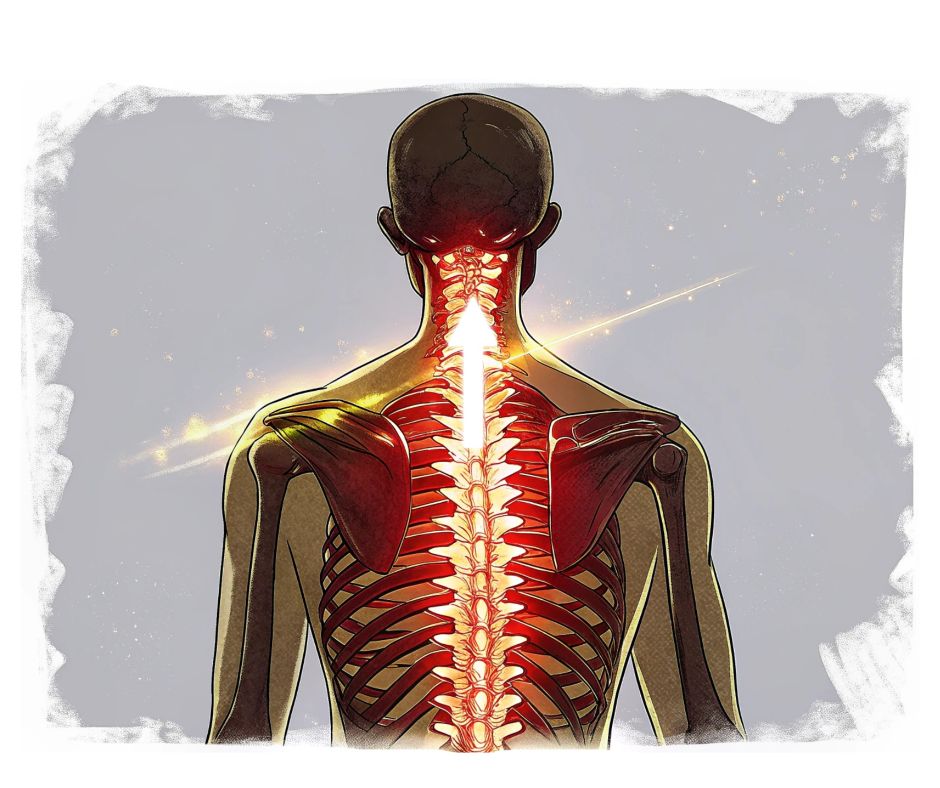
Image courtesy of Canva.com
Reflecting on the holiday we just observed, we will recall that on the eve of Yom Kippur, as the sun sets and the congregation gathers in white, the service begins when a single verse pierces the air: “Light is sown for the righteous, and for the upright of heart, gladness.”
The placement is deliberate. Kol Nidre, perhaps the most haunting service of the Jewish year, begins thus. Before vows are annulled, before melodies ascend, the community is reminded that joy comes not simply to the righteous, but specifically to those who are upright of heart. Why such weight on this phrase? What does it mean?
The clue may lie in the very name of the Jewish people. Within Yisrael sits the word yashar—straight, direct, unbending. To be a Jew is to embody yashrut, straightness, in one’s essence. The name itself suggests a vocation: to be the straight ones of G-d.
But what is this quality of straightness, so central to both the liturgy and our identity? Here, the ancient language of Chinese medicine offers surprising clarity.
A Stroke Called Yi
Dr. Lonny Jarrett, in his monumental Deepening Perspectives on Chinese Medicine, explains that the very first stroke of the Chinese written language is a simple horizontal line called yi. This stroke, he writes, “denotes ‘the One,’ heaven, directness, straightness, the emergence of some-thing from no-thing.”
It is the beginning of form. A line drawn across the void, a gesture of spirit asserting itself in matter. It represents clarity, authenticity, and the promise of direction.
Chinese medicine extends this imagery into the idea of zhengqi, upright qi, vital energy that flows up the spine. Jarrett describes it as “the source of the capacity to follow something to its end without stopping partway.” In other words, the inner power to move toward one’s purpose, the force that compels us to achieve our goals.
Two Traditions, One Priority
Judaism encodes uprightness in a name. Chinese medicine encodes it in a stroke. One is inscribed in sacred text, the other in the written form of language itself. Both traditions insist: to live straight, upright, authentic, is not peripheral—it is the heart of human flourishing.
The approaches differ. Chinese medicine often works “bottom-up,” activating the flow of upright qi with herbs and needles, stimulating one point at a time. Judaism takes a “top-down” approach, calling the people to choose uprightness through resolve, prayer, and repentance. But the goal is the same: to rectify what is bent, to bring body, heart, and soul into alignment.
The Vertical Line
Jarrett expands the metaphor. Upright qi is not only a horizontal line of beginning, it is also a vertical line of ascent. It is, he writes, “the eternal push toward increased wholeness and self-knowledge,” a trajectory of spirit toward “the true, the good, and the beautiful.”
This verticality manifests in the “heart–kidney axis”—a central channel connecting heaven and earth within the human frame. It represents the core self, undistorted and unbowed, the part of us that remains unscathed, even in the face of adversity.
On Yom Kippur, this is the ground of being within that we seek to return to. Through fasting, prayer, and confession, we peel away distortions, realign with Source, and stand once more in the unshakable core of the Self.
Straightening What Is Bent
Jarrett is explicit: zhengqi “straightens that which is bent.” Its role is rectification through will, right perspective, and moral conduct.
Judaism names the same process teshuvah, return. The High Holy Days are not only about apology or ritual—they are about the rectification of soul. They summon the will to step back into alignment, to face the truth squarely, to become whole.
Thus two ancient traditions, separated by geography yet united in insight, identify uprightness as the non-negotiable path of human healing.
Beyond Technique
Chinese medicine emphasizes that the physician’s role is not merely to apply techniques, but to embody uprightness personally. Jarrett writes that an ideal healer must carry “soul depth, integrity, and unshakable conviction in the positivity of life.” Healing begins not with needles, but with spirit.
Judaism teaches something similar. To be Yisrael is not only to practice rituals or follow laws, but to live as upright beings—channels of light in a crooked world. The demand is not external; it is inscribed in our very name.
A Shared Horizon
Seen together, Jewish liturgy and Chinese medicine converge on a profound point. Uprightness is not a minor virtue, but the very condition for joy, gladness, and light. One tradition describes it as a force flowing in the body; the other as straightness encoded in a people’s identity. One cultivates it through herbs, needles, and energetic practice; the other through prayer, will, and repentance.
Different pathways, but a single destination: to reclaim essential nature, to stand straight before heaven and earth, to live authentically aligned.
And so Kol Nidre begins not with fear but with hope: “Light is sown for the righteous, and for the upright of heart, gladness.” On Yom Kippur, Jews seek to reclaim that uprightness. In Chinese medicine, healers seek to restore its flow. Together these wisdoms remind us that when straightness is restored, joy follows, and light takes root in the world.
Related Topics
Related Posts